
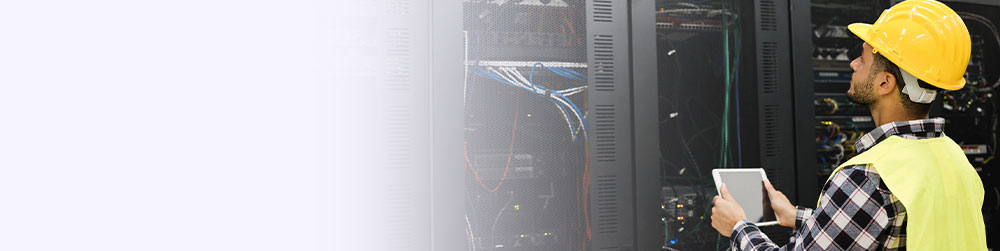
DCIM – Data Center Infrastructure Management
Intelligent Data Center Management through DCIM – Data Center Infrastructure Management
Operating a data center requires constant oversight, precision, and fast response times. Any outage, overheating, or performance degradation can have serious consequences—from reduced service availability and increased costs to risks to data security. That’s why modern data centers need accurate real-time data, a unified overview, and the ability to act immediately. This is exactly what DCIM (Data Center Infrastructure Management) is designed for—a system that provides complete visibility and control over the entire data center infrastructure.
DCIM – What is it and how does it work?
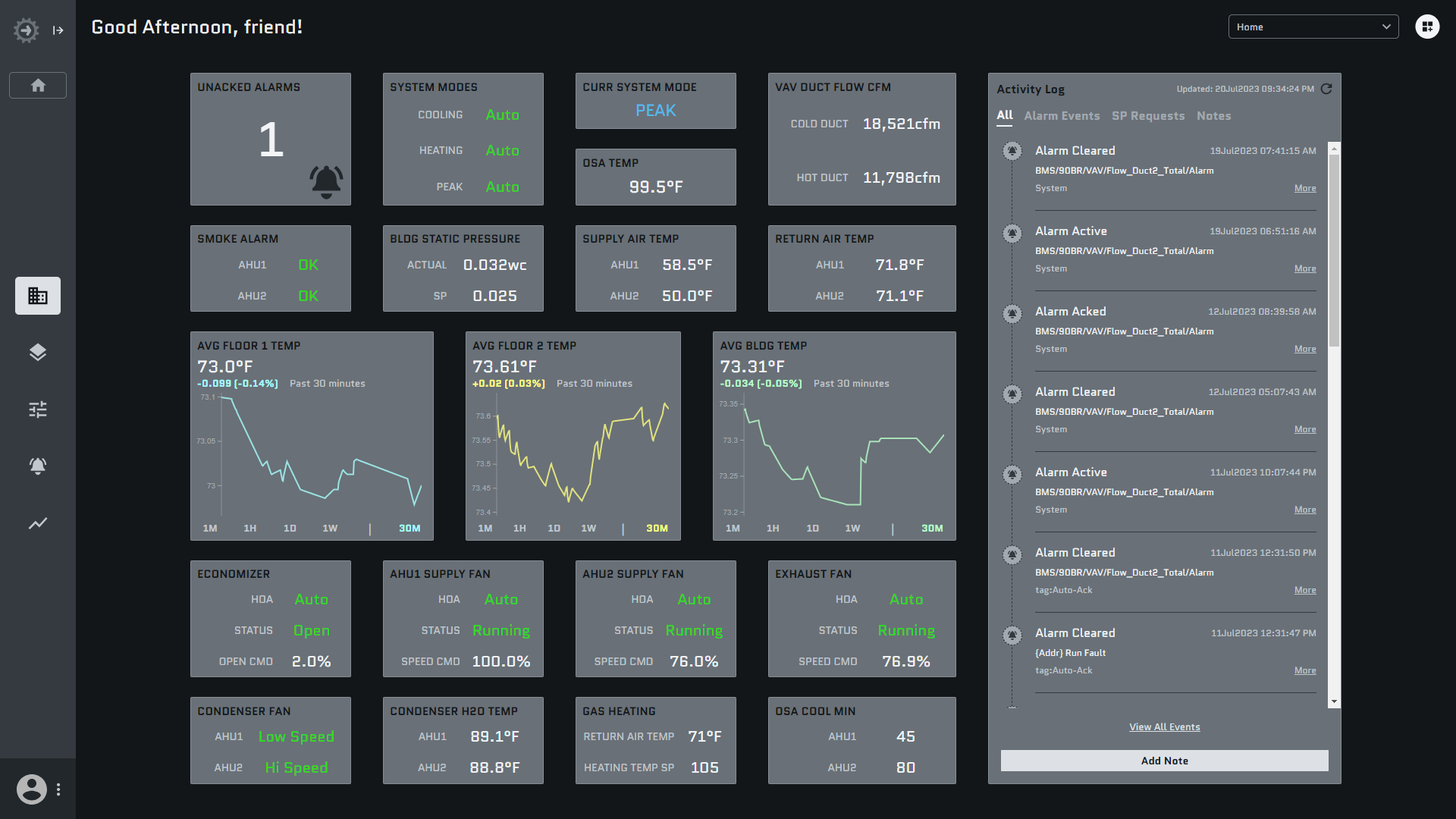
DCIM (Data Center Infrastructure Management) integrates the IT infrastructure and the operational infrastructure (OT) of the data center into a single, unified ecosystem.
Portfolio
- SCADA/MES – Production Process Management
- Industrial IoT – Data Collection and Analysis
- Building and Data Center Monitoring
- Predictive Maintenance and OEE Monitoring
- Digitalization/Optimization of Manufacturing Processes
- Reporting and Business Intelligence
- High Performance HMI Interface design
- Energy Consumption Monitoring
- Connecting Enterprise Systems, Databases and SAP ERP
- Consulting / Advisory
What problems does DCIM solve?
A data center generates thousands of signals every day. Without a centralized system, monitoring them becomes difficult, inaccurate, and often even risky. Among the most critical problems that manufacturing companies face are:
❌ Manual monitoring of operational data
Spreadsheets, paper checklists, or tracking multiple separate applications lead to data entry errors, inconsistencies between systems, outdated information, and ultimately delayed responses. Operators may have data, but without proper context, their ability to identify risks before they escalate into incidents is significantly reduced.
❌ Lack of visibility into energy consumption and power load
Without DCIM, there is often no accurate insight into the actual energy consumption of individual devices, where power peaks occur, which circuits are overloaded, or whether there is a risk of power failure. The result is unnecessarily high operating costs as well as unpredictable outages.
❌ Overheating and uneven heat distribution
❌ Cumbersome maintenance and delayed response to failures
❌ Inefficient capacity planning (power, energy, space)
What are the main functions of a DCIM system?
DCIM addresses these challenges comprehensively. It centralizes automatically collected, accurate data into a single system where it is immediately available and clearly visualized, automatically evaluates risks, and helps you make decisions based on facts rather than assumptions.
✅ Comprehensive monitoring and control of the data center
✅ Energy management and consumption optimization
✅ Real-time alerts and alarms
✅ Capacity management and planning
✅ Integration with other systems
What benefits can DCIM bring to your organization?
- A unified view of the entire infrastructure
- Reduction of energy costs by up to 20%
- Increased reliability and availability of the data center
- Better capacity planning and management
- Easier audits and reporting
Why implement DCIM with IoT Industries?
At IoT Industries, we understand that data center reliability is built on accurate data, secure architecture, and immediate response. Our DCIM solutions (Data Center Infrastructure Management) are built on the Ignition platform, which offers an unlimited number of users and connections, a web-based interface accessible from any device, advanced data analytics and visualization, integration with existing IT/OT systems, and a high level of cybersecurity.
Every data center is unique, differing in size, technologies, and operational requirements. That’s why IoT Industries delivers fully customized DCIM solutions—from architecture design and implementation to integration with other systems and long-term support. Contact us to discover how DCIM can help you build an intelligent, stable, and sustainable data center of the future.
