Zber dát a analýza dát | Ako získať kontrolu nad výrobou, nákladmi a rozhodovaním? | Data Collection and Data Analysis | How to Gain Control Over Production, Costs, and Decision-Making?

Data Collection and Data Analysis | How to Gain Control Over Production, Costs, and Decision-Making?

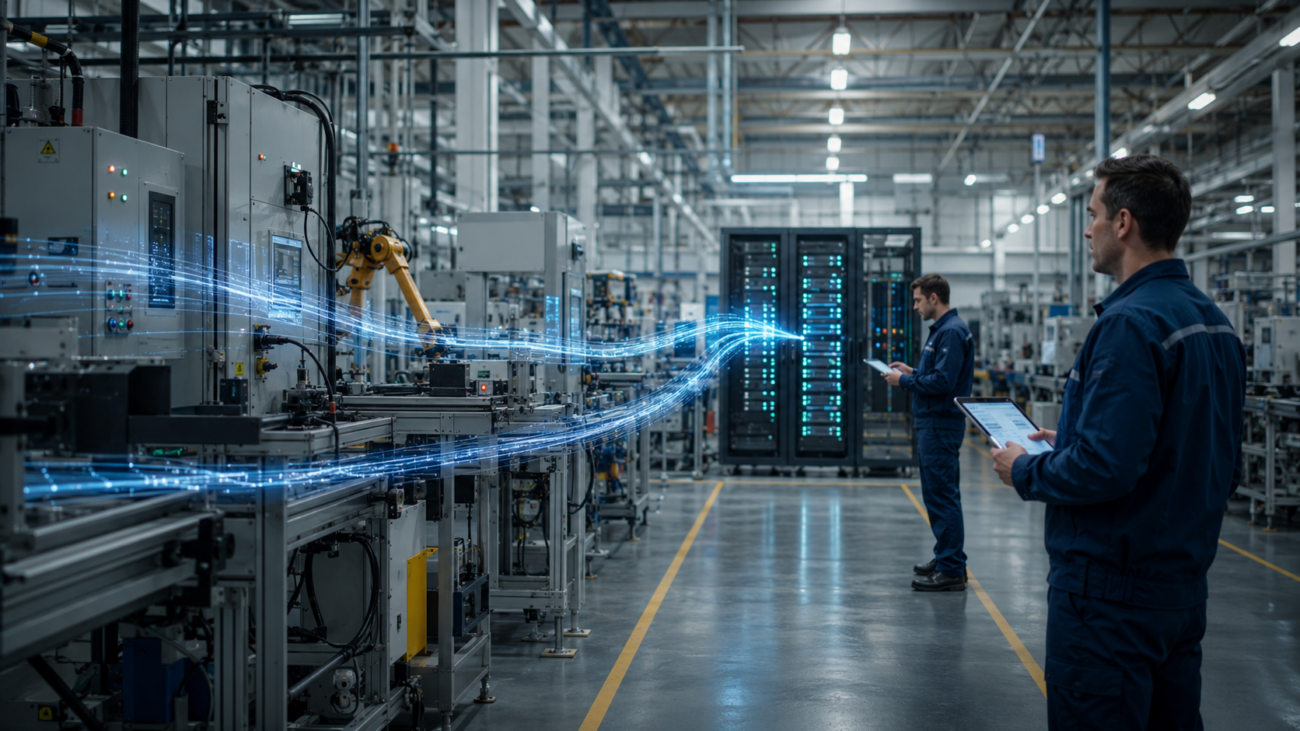
If you manage a manufacturing company, you are probably already working with large amounts of data today. Machines produce, operators record information, orders are registered in the system, maintenance handles failures, energy management tracks consumption, and management expects accurate reports. The problem is therefore often not that the company does not have data. The problem is that it cannot collect, connect, and evaluate it in a way that turns it into usable information. And this is exactly where data collection and subsequent data analysis begin to gain strategic importance. As a practical tool for better production management, cost reduction, and decision-making based on reality rather than impressions.
Zber dát a analýza dát | Ako získať kontrolu nad výrobou, nákladmi a rozhodovaním? | Data Collection and Data Analysis | How to Gain Control Over Production, Costs, and Decision-Making?

Why do companies often fail to see the true state of production?

In many companies, decisions are still made based on data that is incomplete, distorted, or delayed. Operators record downtime on paper forms, data is transferred into Excel after each shift, and reports are prepared once a day or once a week. At first glance, this may seem like a functional system. Production is running, data is being recorded somewhere, and management receives regular reports. In practice, however, this way of working often creates a false sense of control. The company has numbers, but does not know whether they are accurate. It has data, but lacks context. It has reports, but cannot respond in time. And the greatest risk arises when strategic decisions are made based on this type of information.

Data analysis alone is not enough. The foundation is high-quality, reliable, and systematic data collection.

Well-designed data analytics can reveal where downtime occurs, why production line performance is declining, which equipment consumes the most energy, where failures keep recurring, what the actual status of production orders is, or whether implemented improvements have really delivered results. However, to gain this level of insight, it is not enough to simply purchase an analytics tool. Such tools are excellent at visualizing data, comparing trends, and highlighting deviations, but they cannot fix poor-quality inputs. If the input data is inaccurate, delayed, or incorrectly structured, the result will be a professional-looking report with unreliable content.

That is why every meaningful data analysis project should begin with the following questions:

  • Where does the data come from?
  • How is it collected?
  • Who enters it into the system?
  • How often is it updated?
  • Can we trust it?

What does high-quality data collection mean in practice?

In practice, data collection means the systematic acquisition of information from relevant sources so that it is accurate, up to date, consistent, and suitable for further evaluation. In a manufacturing company, this may include machine operating data, downtime, quality metrics, energy consumption, equipment failures, or production plan fulfillment. However, what matters is not only that this information is collected. It is equally important that its meaning is clearly defined. High-quality data collection therefore includes not only the technical integration of equipment, but also a well-designed data model.

For example, if the system detects that a machine is not producing, this alone is not enough. You need to know whether it is due to a planned break, equipment failure, missing material, setup, cleaning, or a safety stop. Only then does raw data become information that can actually be used.

It is equally important that data is not collected in isolated departmental silos. Production often has its own spreadsheets, maintenance keeps separate records, sales works in the ERP system, energy management tracks consumption independently, and management receives aggregated reports that no longer allow detailed analysis. The result is that each department may have a different version of reality. That is why the goal of high-quality data collection should also be the creation of a Single Source of Truth (SSoT) — an environment where relevant data is integrated, cleansed, structured, and made available across all management levels.

The greatest improvement comes when a company replaces manual data collection with an automated system. Instead of paper records and manual transcription, data is collected directly from machines, sensors, PLCs, measuring devices, or existing enterprise systems. This approach significantly reduces errors, accelerates data availability, and eliminates subjective bias. Automated data collection also has an important psychological effect. Once problems become visible, they stop being anonymous. The company can identify specific causes, measure their impact, and evaluate whether corrective actions are actually working.

When does data become real value?

Once data is accurate, properly labeled, and integrated into a coherent whole, the next step is interpretation. Data alone does not create value. Value is created only when a company can interpret it correctly and use it for decision-making. Data analysis is therefore not just about creating charts. It is the process of discovering relationships, root causes, and patterns that would otherwise remain hidden. In practice, data analysis can answer questions such as:

  • Which equipment causes the most downtime?
  • Which types of failures occur most frequently?
  • How does energy consumption change under different production conditions?
  • Where are the production bottlenecks?
  • What impact did a specific improvement have on productivity?

These answers represent the true value of data analytics. A company stops reacting only to consequences and starts understanding root causes. Instead of simply saying that “production is falling behind,” it can precisely identify that a specific production line loses 47 minutes every day due to missing materials, or that a particular type of failure always occurs after exceeding a specific operating parameter.

Which systems support data collection and analysis?

➡️ IoT and IIoT solutions connect machines, sensors, measuring devices, and enterprise systems into a unified data environment, making it possible to gradually build a robust data architecture.

➡️ SCADA systems collect data directly from machines, production lines, PLCs, sensors, and other equipment. At the same time, they help monitor and control industrial processes in real time.

➡️ MES systems connect production planning with the reality on the shop floor. They monitor and manage production operations.

➡️ OEE solutions help measure Overall Equipment Effectiveness. They evaluate availability, performance, and quality, allowing companies to see how much of their true production potential is being utilized and where the greatest losses occur.

➡️ EMS systems focus on measuring and analyzing energy consumption. They help identify which production lines, machines, facilities, or operating modes generate the highest costs.

➡️ BMS/BAS systems monitor and control building infrastructure, including heating, cooling, and ventilation. In industrial facilities, they have a major impact on operating costs, comfort, and safety.

➡️ CMMS systems help plan and manage maintenance. They record failures, maintenance activities, spare parts, and equipment history.

➡️ Business Intelligence tools transform prepared and integrated data into clear dashboards, reports, and management analyses. They help monitor trends, compare time periods, evaluate KPIs, and support decision-making based on accurate information.

However, the real value of these tools is not created when they operate independently. It emerges only when they communicate with each other. SCADA delivers production data, MES provides production context, OEE identifies losses in availability, performance, and quality, EMS and BMS contribute energy and facility data, CMMS adds maintenance information, and BI tools transform all of this into clear decision-making insights.

Only through this level of integration can a company understand not only what happened, but also why it happened, what impact it had, and what needs to change. That is when data collection and data analysis evolve from technical activities into a practical tool for managing performance, costs, and competitiveness.

How should you approach implementing a data solution?

1️⃣ If you want data collection and data analysis to deliver real results, do not start by asking what can be measured or which new technologies you need. Start by asking what you want to improve. Select one specific business or operational problem, such as production downtime, inaccurate planning, rising energy consumption, recurring equipment failures, or a lack of visibility into production performance.

2️⃣ The next step is a data source audit. You need to identify which equipment already provides data, which systems can be integrated, where manual inputs still exist, and where the biggest gaps are. An equally important part is verifying data quality, because not everything that is measured is automatically useful. Data may be incomplete, delayed, incorrectly labeled, or missing the context required for proper interpretation.

3️⃣ Only after this stage does it make sense to design the data architecture. This means determining how data will be collected, where it will be stored, which systems will be integrated, what dashboards and visualizations will be created, and who will actually use them.

4️⃣ In practice, it is advisable to start with a pilot project. This makes it possible to verify whether data collection is technically reliable, whether the data is of sufficient quality, and whether the outputs genuinely support better decision-making. After evaluating the pilot, the solution can then be scaled to additional production lines, machines, facilities, or business areas. The advantage of this gradual approach is that the company does not invest blindly. Every next step is based on verified data, real experience, and clearly demonstrated benefits.

5️⃣ Implementing a data solution does not end with launching a dashboard. To deliver long-term value, it must be continuously evaluated, refined, and expanded according to the company’s evolving needs. If production processes change, new equipment is introduced, or management priorities shift, the data architecture must evolve accordingly. A truly effective system is therefore not a one-time project, but the foundation for continuous improvement.

Data alone will not transform a business. Real transformation comes from the ability to work with data systematically. High-quality data collection ensures that a company has accurate and up-to-date information. Data analysis helps uncover relationships, identify root causes, and reveal concrete opportunities for improvement. Data analytics then turns these insights into a foundation for both day-to-day and strategic decision-making.

Comprehensive solutions from IoT Industries

At IoT Industries, we help you analyze your current situation, identify the biggest gaps, and design a solution that integrates data collection, data analysis, and decision-making into one unified system. Schedule a non-binding consultation.

Why Choose IoT/IIoT Implementation with IoT Industries?

Traditional companies typically specialize in OT (operational technologies, such as production lines and devices) or classic enterprise IT systems. However, we are able to connect both of these worlds. Our unique expertise in integrating OT and IT allows us to deliver innovative solutions in digital transformation, enhancing efficiency, reliability, and competitiveness for manufacturing companies.
Prečo sú dnes elektronický zber údajov a analýza údajov kľúčom k udržaniu konkurencieschopnosti? | Why Are Electronic Data Collection and Data Analysis Essential for Maintaining Competitiveness Today?

Why Are Electronic Data Collection and Data Analysis Essential for Maintaining Competitiveness Today?

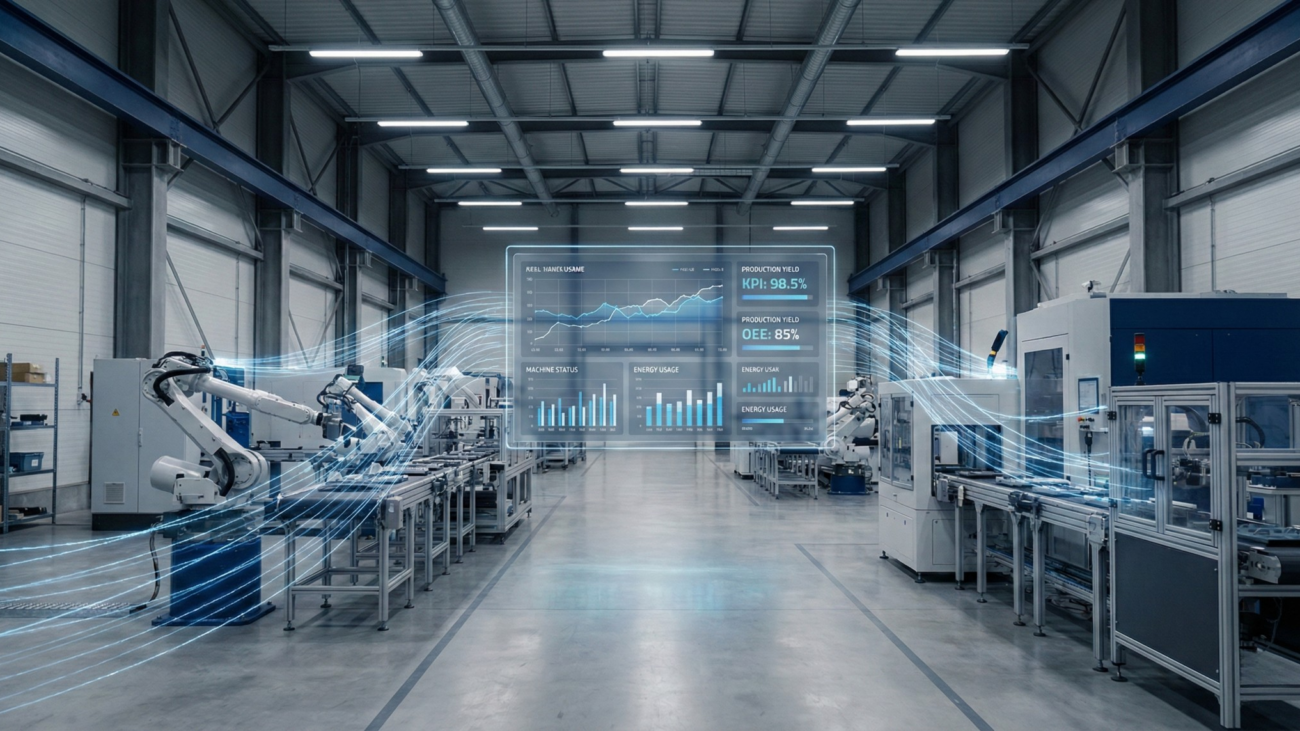
If you manage a manufacturing company, you likely make dozens of decisions every day. About orders. About capacities. About failures. But do you base these decisions on accurate and up-to-date data? Or do you make decisions based on estimates and delayed reports? If you lean more toward the latter option, you are not alone, however this approach is no longer sufficient today. For modern manufacturing, electronic data collection and real-time data analysis are a key condition for maintaining competitiveness. Because without them it is not possible to effectively manage performance, costs, or quality.
Prečo sú dnes elektronický zber údajov a analýza údajov kľúčom k udržaniu konkurencieschopnosti? | Why Are Electronic Data Collection and Data Analysis Essential for Maintaining Competitiveness Today?

What exactly happens in a company where electronic data collection and data analysis are missing?

Even a company where electronic data collection and systematic data analysis are missing may at first glance appear stable and under control. The problem is not that production does not work. The problem is that no one knows exactly how well, or how poorly, it actually works.

You may find this situation familiar:

  • The operator records downtime manually.
  • Reasons for failures are entered generically, such as “repair” or “cleaning”.
  • Performance is evaluated only after the shift ends.
  • Energy consumption is known only from the monthly invoice.
  • There is no single source of truth, so each department works with different numbers.

And the result?

  • ❌ Outdated, inaccurate and incomplete data
  • ❌ Unclear causes of problems with no ability to correct them
  • ❌ Hidden unused production potential
  • ❌ Increasing costs without a clear explanation
  • ❌ Decisions based on assumptions instead of facts

Production may be running, but significantly below its real potential. Problems are solved retrospectively and corrective measures arrive only after the costs have already been incurred. The enterprise operates in an environment of uncertainty where there is no clear picture of what is actually happening in production.

What is electronic data collection?

Electronic data collection means that production data is not collected through manual recording on paper or in Excel, but automatically, directly from machines, sensors, production lines and enterprise systems. Without manual transcription, without delays and without the risk of errors.

Electronically collected data can be divided into several groups:

1️⃣ Production process data, which shows what and how much was actually produced, for example production counts, cycle times and real operation times, and information about which order or reference the machine is currently processing.

2️⃣ Availability and downtime data, meaning when a machine is producing, when it is stopped and why. This includes downtime data (both planned and unplanned), specific reasons for downtime (missing material, failure, tool change, waiting for operator) and various fault and alarm states.

3️⃣ Quality data, which shows how much of the produced output is actually compliant. Typically this includes the number of good and defective pieces, types and categories of defects or information about batches in which deviations repeat.

4️⃣ Consumption and cost data, which connects production with the economic reality of the enterprise. This mainly includes energy consumption (electricity, gas, water…), consumption of materials and semi-finished products, or data from EMS and BMS systems.

5️⃣ Order and production flow data, which connects production with planning and sales, for example order status (what is running, what is finished, what is delayed), the progress of individual operations over time or comparison of plan versus reality.

Such an automated data collection setup creates a consistent data foundation, the Single Source of Truth (SSOT), meaning a single source of truth for the entire enterprise. Only on this basis does data analysis make real sense, because it works with accurate, complete and up-to-date information.

Data collection alone is not enough. Data analysis is the key.

Electronic data collection is the foundation, not the final solution. Many enterprises today already collect data, but despite that they are unable to extract real value from it. The reason is simple. Real impact comes only through systematic data analysis.

Properly configured data analysis makes it possible to answer questions such as:

  • Which shift achieves the lowest efficiency and why?
  • Which machine generates the most unplanned downtime? And what are the main causes?
  • Why does quality fluctuate at certain times or with specific products?
  • Where do hidden costs arise that are not visible in standard reports?
  • How does the planned production flow differ from the real one?

And the answers to these questions immediately translate into enterprise management:

  • ✔ Increase productivity without the need to invest in new machines
  • ✔ Reveal hidden reserves and sources of savings
  • ✔ Enable informed decision-making
  • ✔ Reduce uncertainty in planning
  • ✔ Strengthen the competitiveness of the enterprise

The difference between a company that only collects data and a company that actively analyzes it is fundamental. The first reacts only after a problem occurs. The second can identify the problem at its earliest stage and gradually prevent it.

And this is exactly where automated data collection and data analysis merge into a single functional system. While data collection creates an accurate picture of reality, analysis turns that picture into a management tool.

How to start with electronic data collection and analysis?

The implementation of electronic data collection and subsequent data analysis should not be a technological experiment. It should be a managed project with a clear objective, measurable benefits and gradual expansion.

If you do not know where to start, we recommend a systematic approach:

1️⃣ Define a clear objective

The most common mistake manufacturing companies make during implementation is starting with technology instead of the objective. First answer the question what exactly you want to improve. Do you want to reduce downtime? Do you want to optimize energy consumption? Do you want to increase OEE by 10%?

Without a clear objective, electronic data collection can become uncontrolled accumulation of data without a concrete impact. The objective, on the other hand, determines which data you will collect, which KPIs you will track and which reports will actually make sense.

2️⃣ Perform an audit of existing systems

Many enterprises already possess a large amount of data today, they just often do not realize it. Therefore it is important to map what data you already collect, where this data is located, whether it is interconnected and most importantly whether it is accurate and consistent.

Such an audit often reveals duplicate records, different versions of the same numbers, missing timestamps or insufficient categorization. Only on the basis of this overview does it make sense to design a new system or expand an existing one.

3️⃣ Start with a pilot project (PoC)

There is no need to digitalize the entire enterprise at once. A more effective approach is a pilot project on a single production line or within one department. A pilot project brings several advantages, such as lower risk, faster return on investment and easier internal communication of results.

The goal of the pilot is to set up data collection and data analysis correctly from the beginning, verify the functionality of the solution in practice and quantify the first measurable benefits. If the pilot demonstrates real value (for example an 8% reduction in downtime), it then becomes much easier to expand the project across the entire plant.

4️⃣ Connect electronic data collection with data analysis

As mentioned earlier, electronic data collection without subsequent analysis does not bring value. It is therefore important to define which KPIs will be monitored, how data will be visualized, who will be responsible for evaluating it and above all how the insights will translate into decision-making.

High-quality data analysis should clearly answer management questions: Why did efficiency drop today? Which line is currently the most loaded? Where does the deviation from plan occur? If a manager opens the dashboard and immediately sees the answer, the system is functioning correctly.

5️⃣ Scale the solution and create a continuous improvement process

If the pilot demonstrates measurable results, the next step is gradual expansion of the solution to other production lines, departments or areas of the enterprise. Such gradual scaling also allows risk to be minimized, investments to be spread over time and return on investment to be continuously evaluated.

However, automated data collection and data analysis should not be a one-time project. Their real value lies in creating a continuous improvement cycle:

  1. You collect data in real time.
  2. You analyze it and identify the causes of deviations.
  3. You implement specific corrective measures.
  4. You evaluate the impact of those measures.
  5. You optimize processes and the cycle repeats.

Electronic data collection and analysis are not the objective. They are a tool for systematically increasing enterprise performance year after year. In this way electronic data collection becomes a permanent part of enterprise management. Production is not optimized once, but systematically and continuously.

Electronic data collection as the foundation of digital transformation

Electronic data collection and data analysis are no longer a technological luxury. They are a fundamental prerequisite for a manufacturing enterprise to gain control over performance, costs and quality, the ability to respond faster than competitors, and a stable competitive advantage.

At IoT Industries we help manufacturing companies design and implement tailor-made solutions. From the initial audit of data readiness, through a pilot project, to gradual scaling across the entire plant. Not as a one-time IT project, but as a systematic tool for improving performance.

If you want to find out where unused potential is hidden in your production, contact us and we will be happy to take a look together with you.

Why Choose IoT/IIoT Implementation with IoT Industries?

Traditional companies typically specialize in OT (operational technologies, such as production lines and devices) or classic enterprise IT systems. However, we are able to connect both of these worlds. Our unique expertise in integrating OT and IT allows us to deliver innovative solutions in digital transformation, enhancing efficiency, reliability, and competitiveness for manufacturing companies.