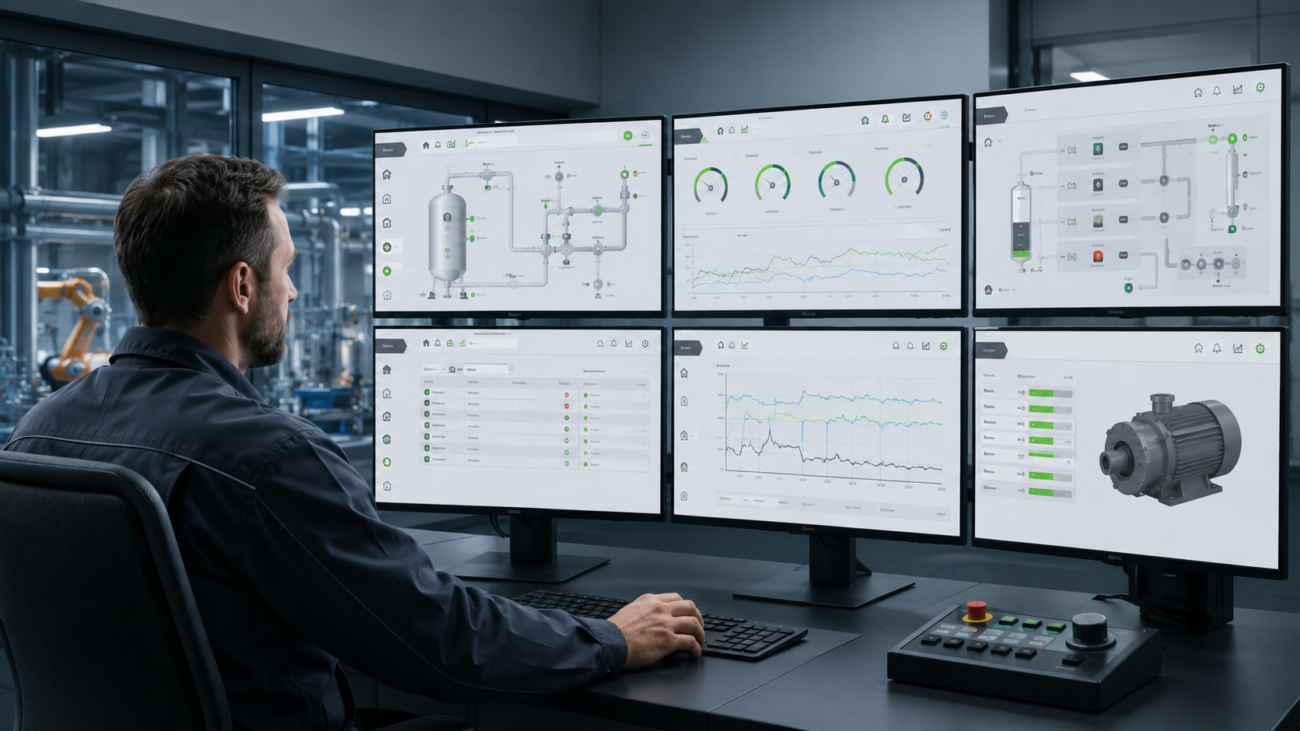
PLC ako základ pre meranie efektivity zariadení (OEE) | Realita z praxe, ktorú v škole neuvidíte | PLC as the Foundation for Measuring Equipment Efficiency (OEE) | Real-World Insights You Won’t Learn at School

PLC as the Foundation for Measuring Equipment Effectiveness (OEE) | Real-World Practice You Will Not See at School

If you study electrical engineering, automation, or computer science, you probably encounter diagrams, algorithms, and control logic on a daily basis. The question, however, is whether you know how these things work in real manufacturing.

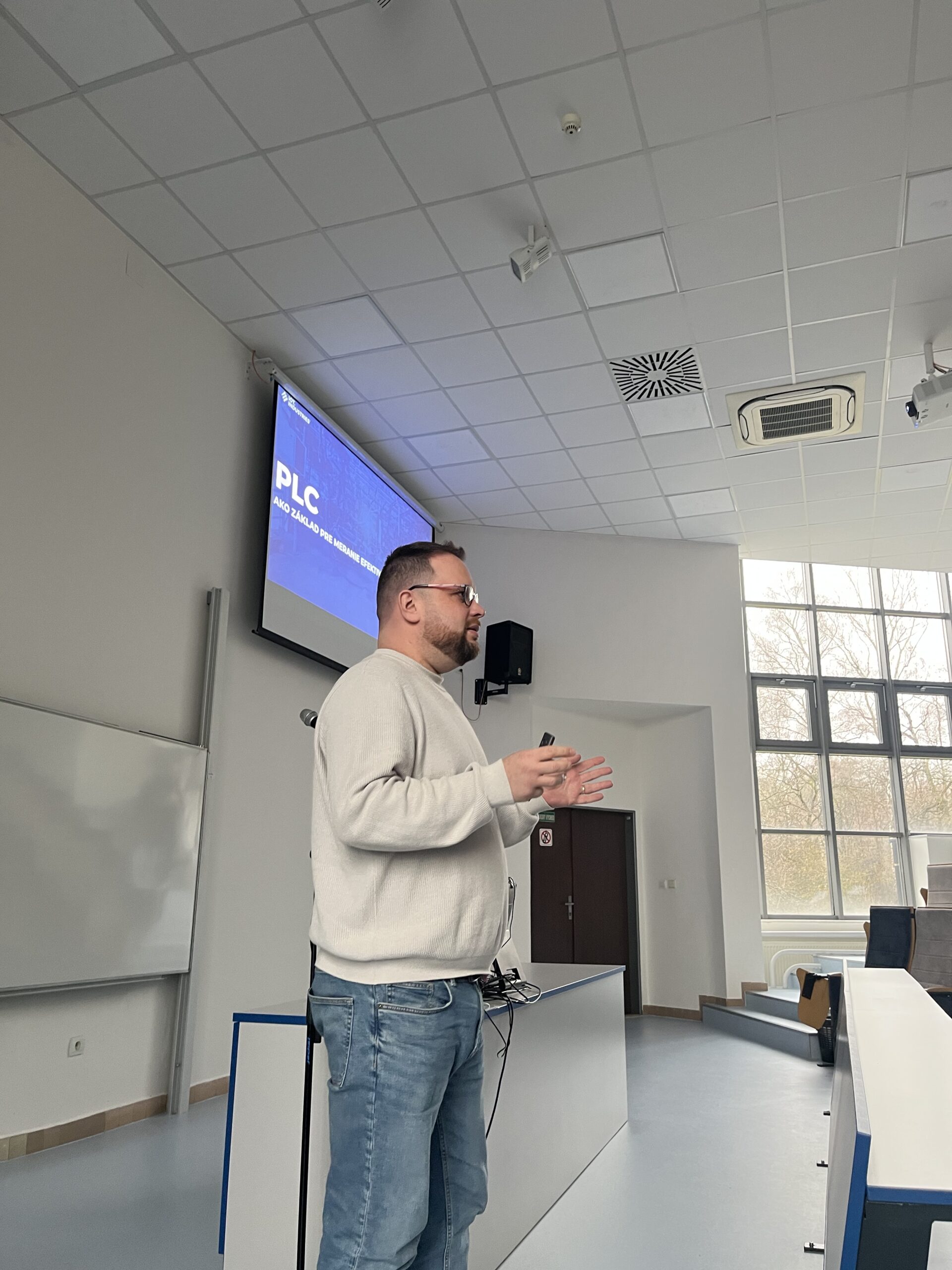
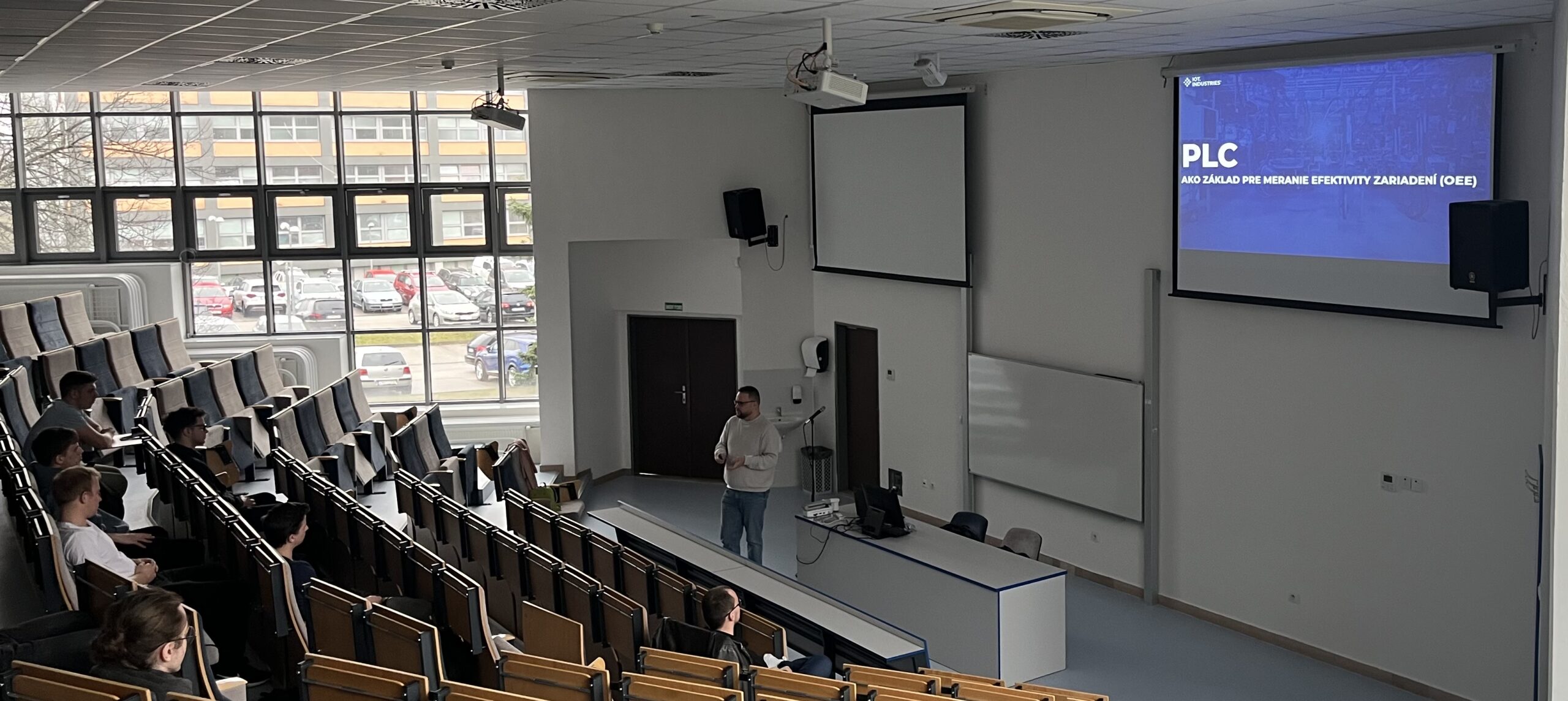
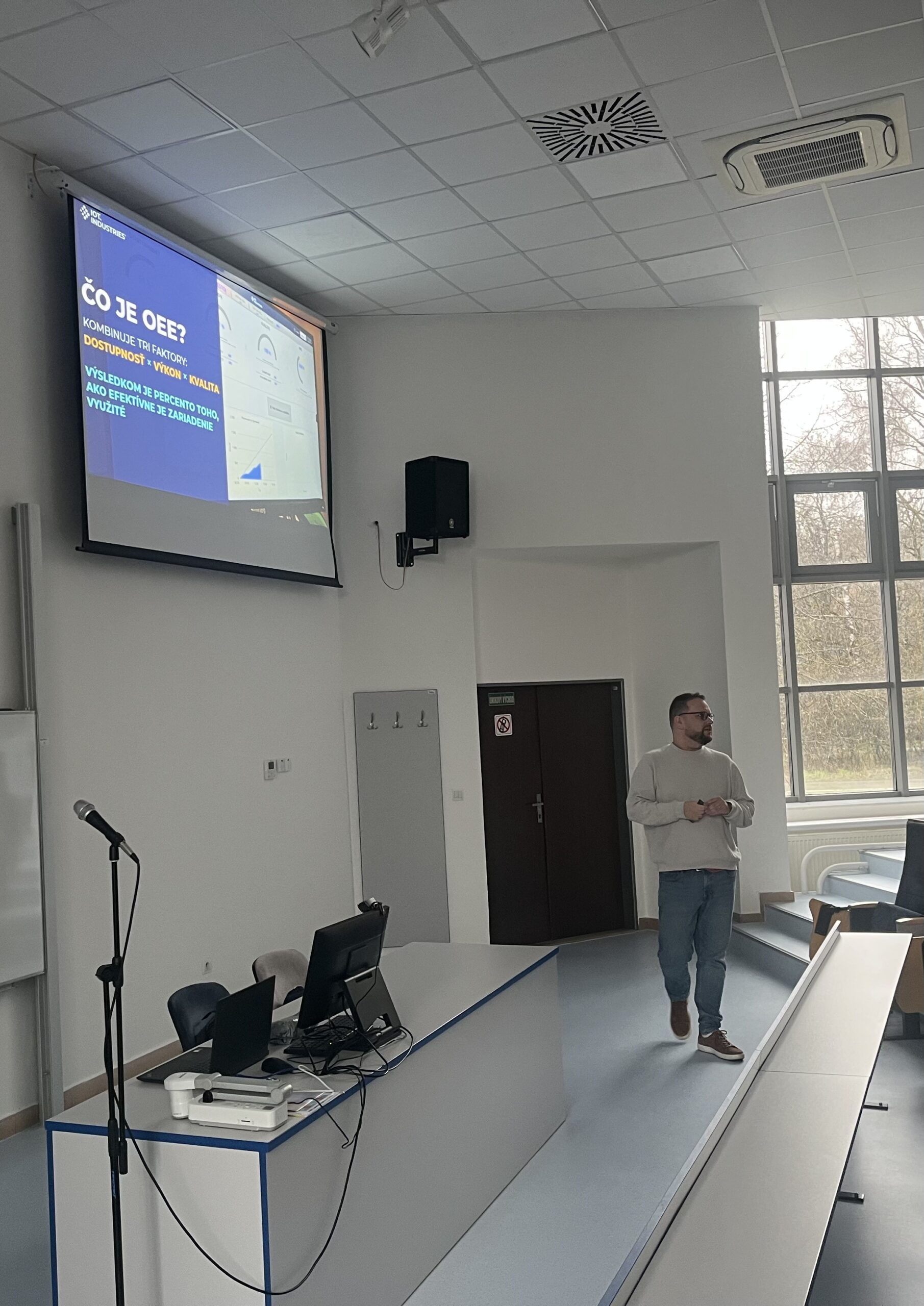
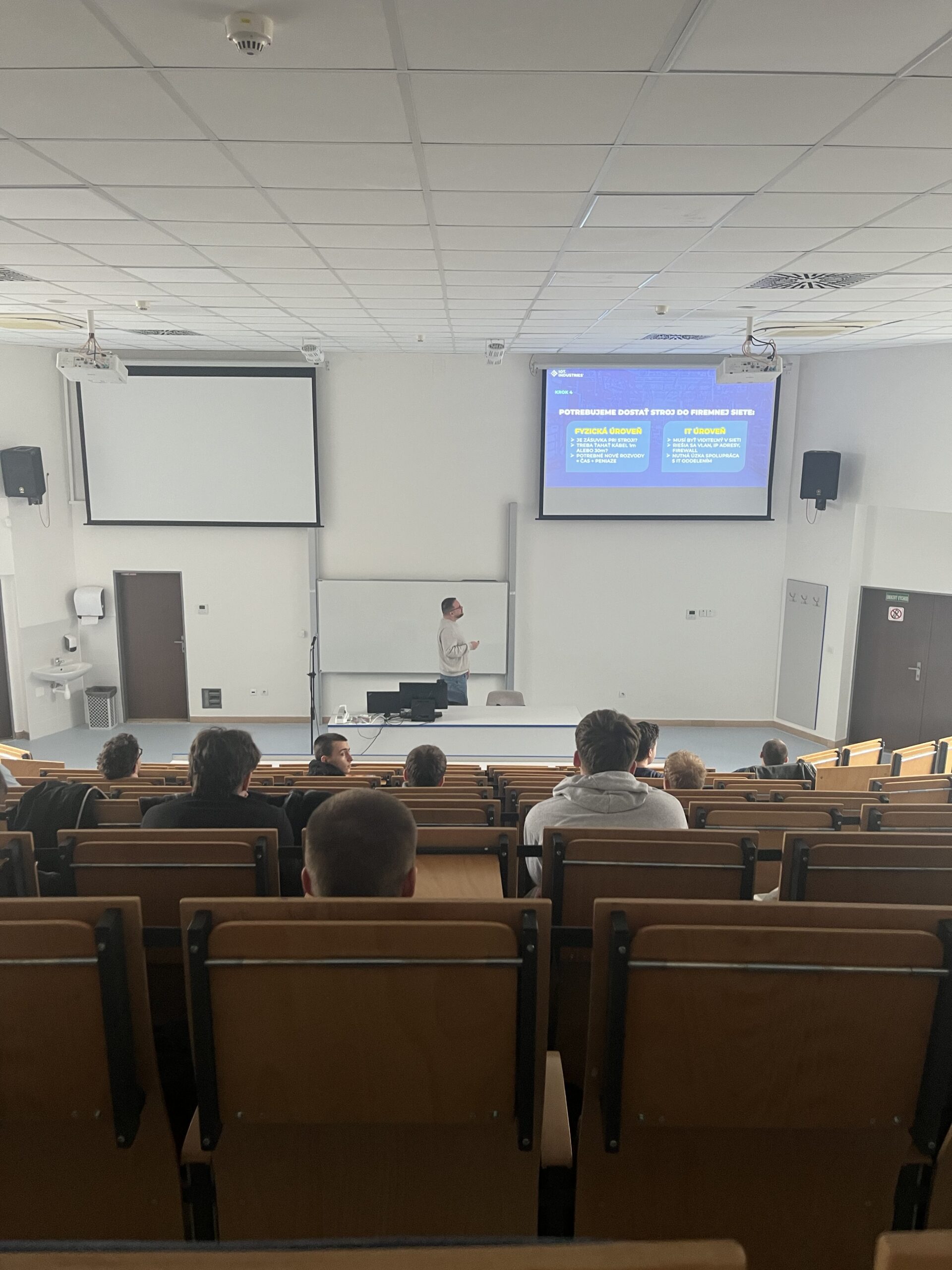
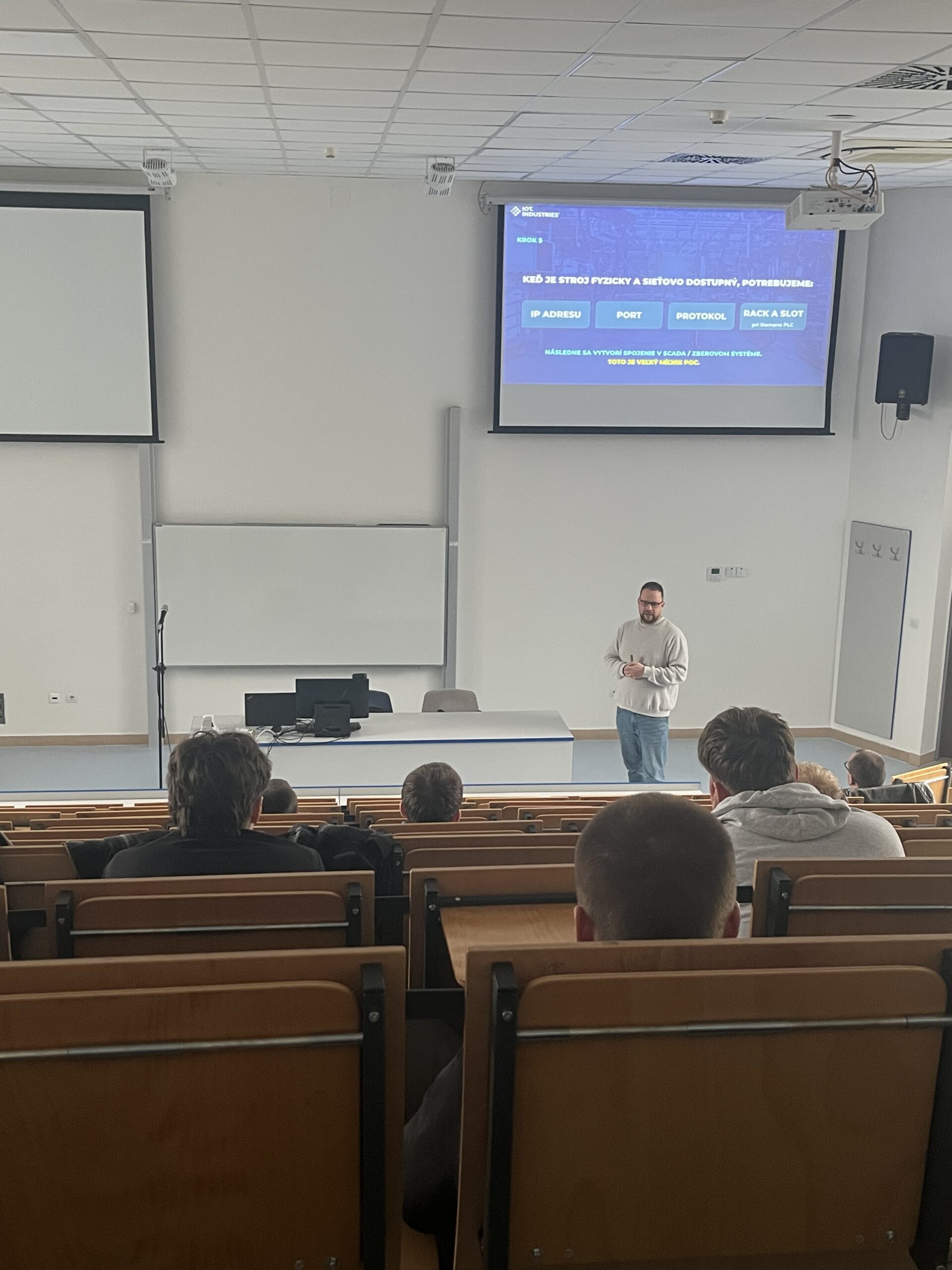
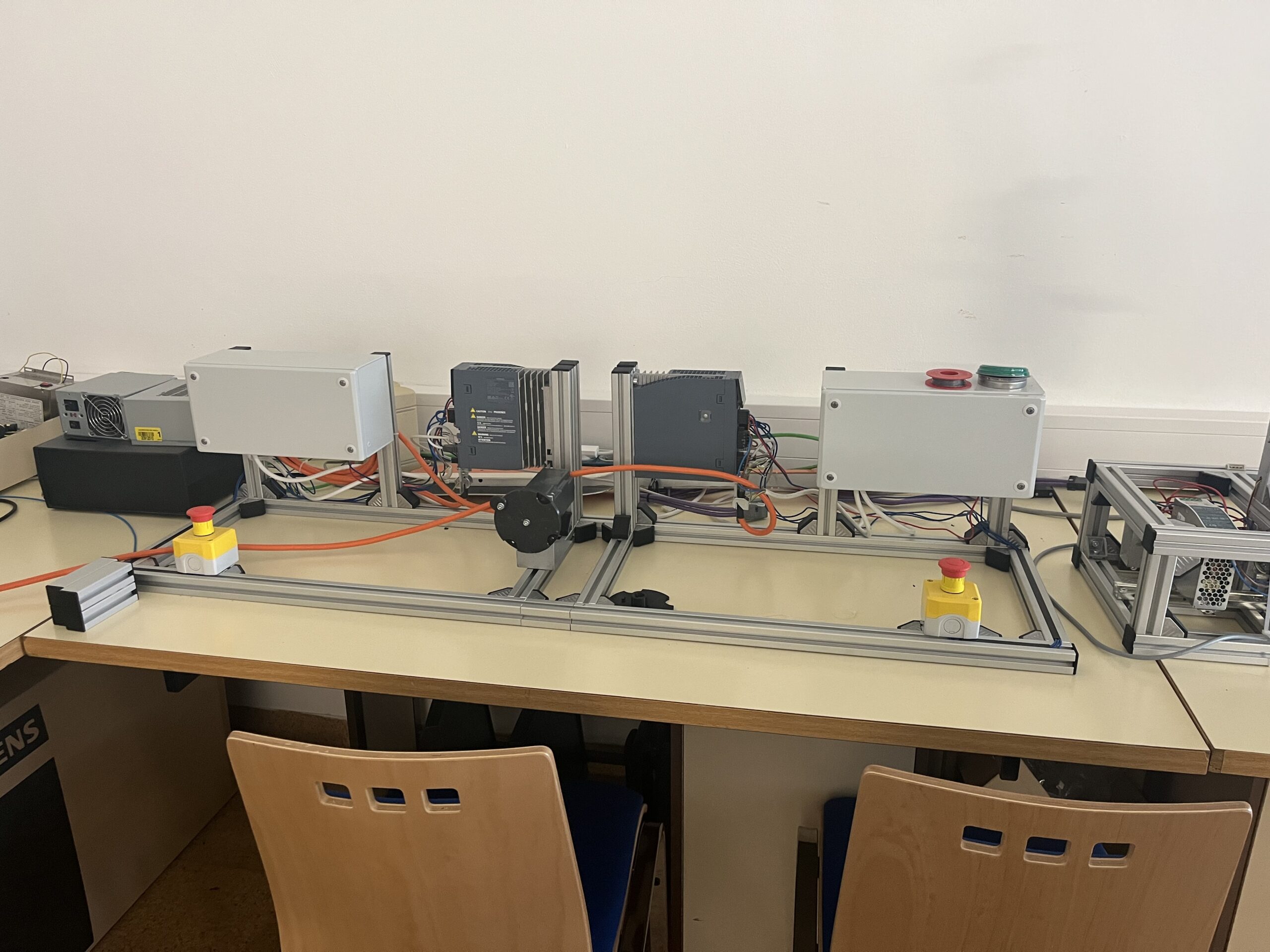
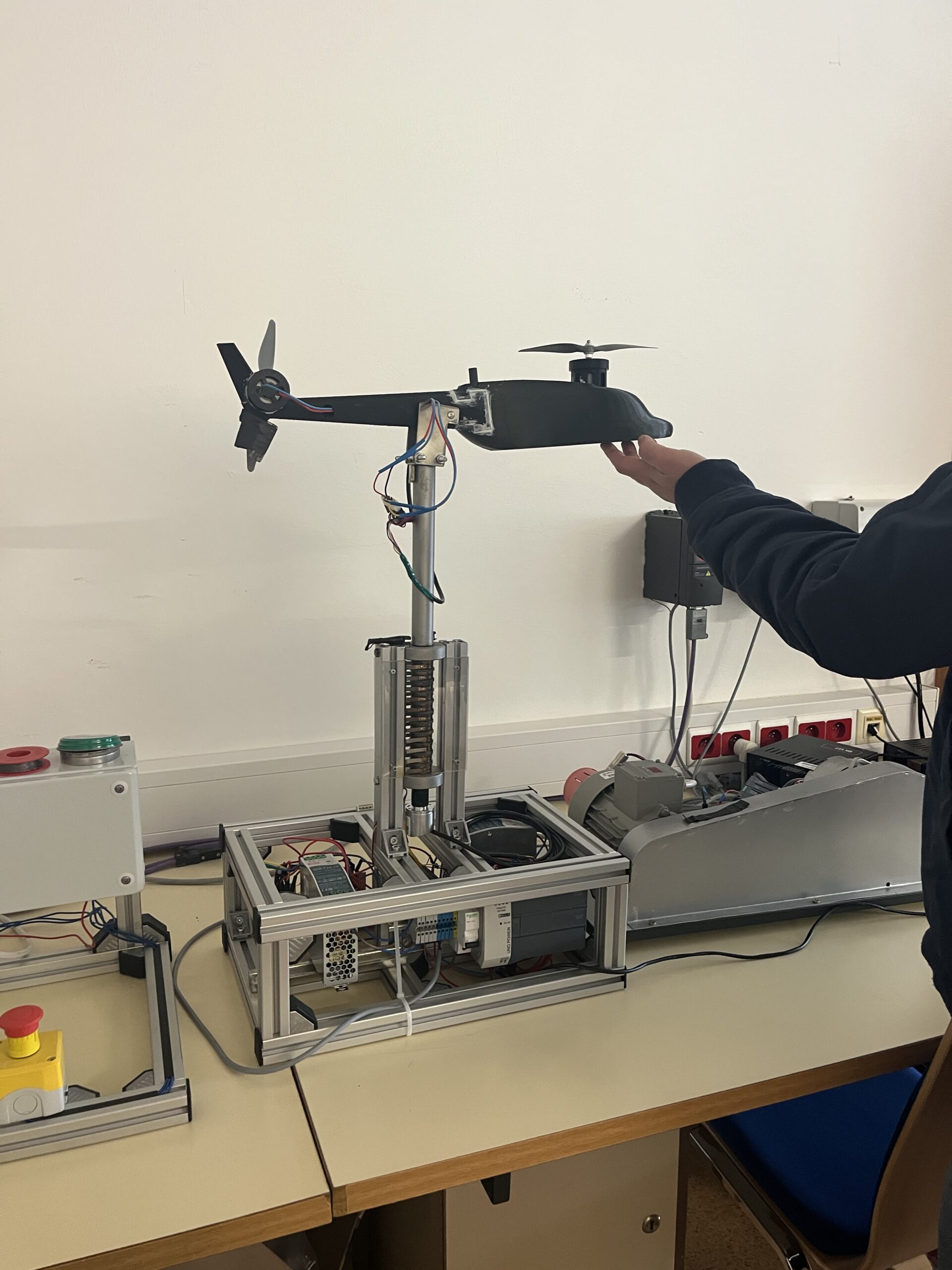
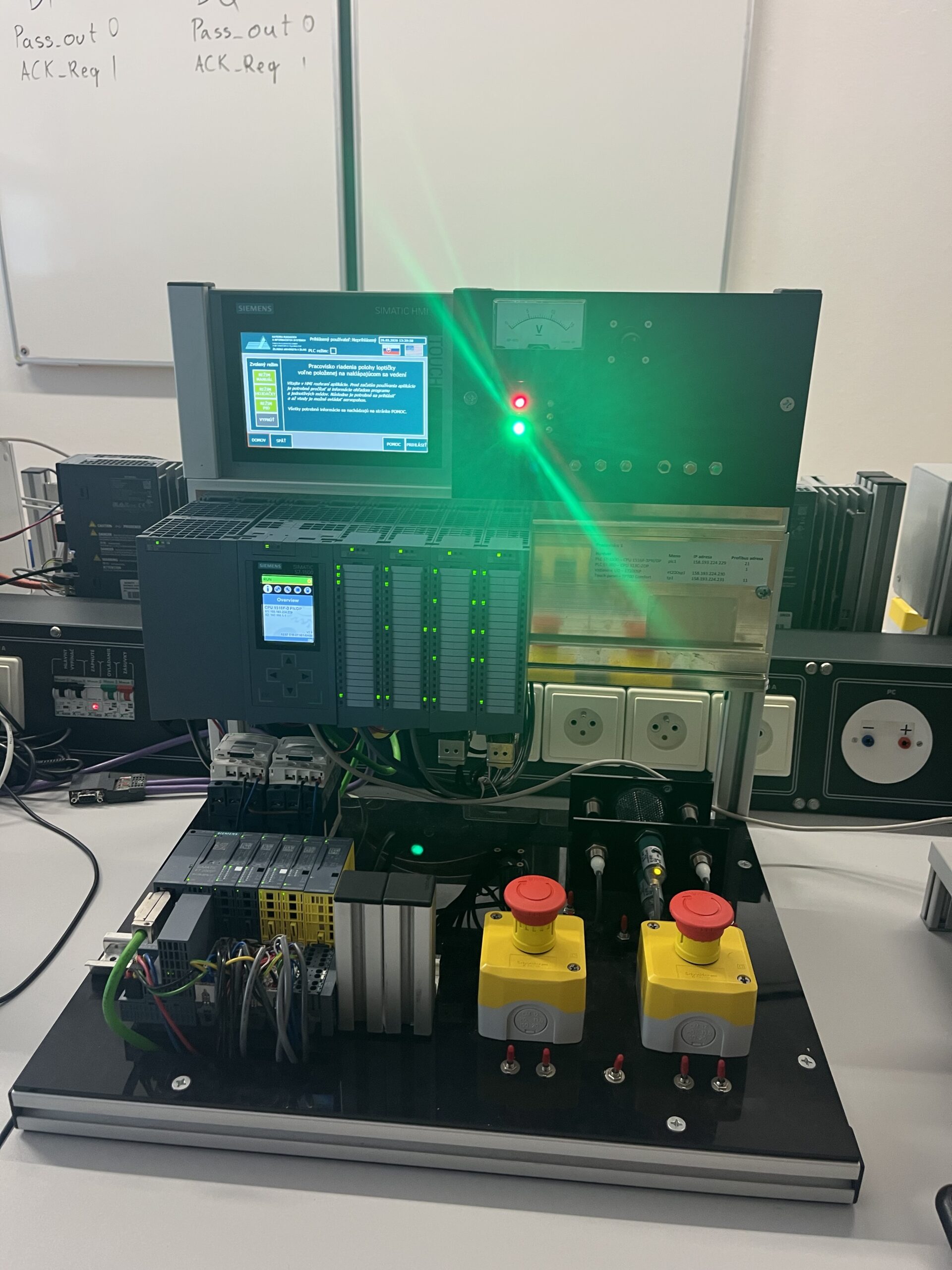
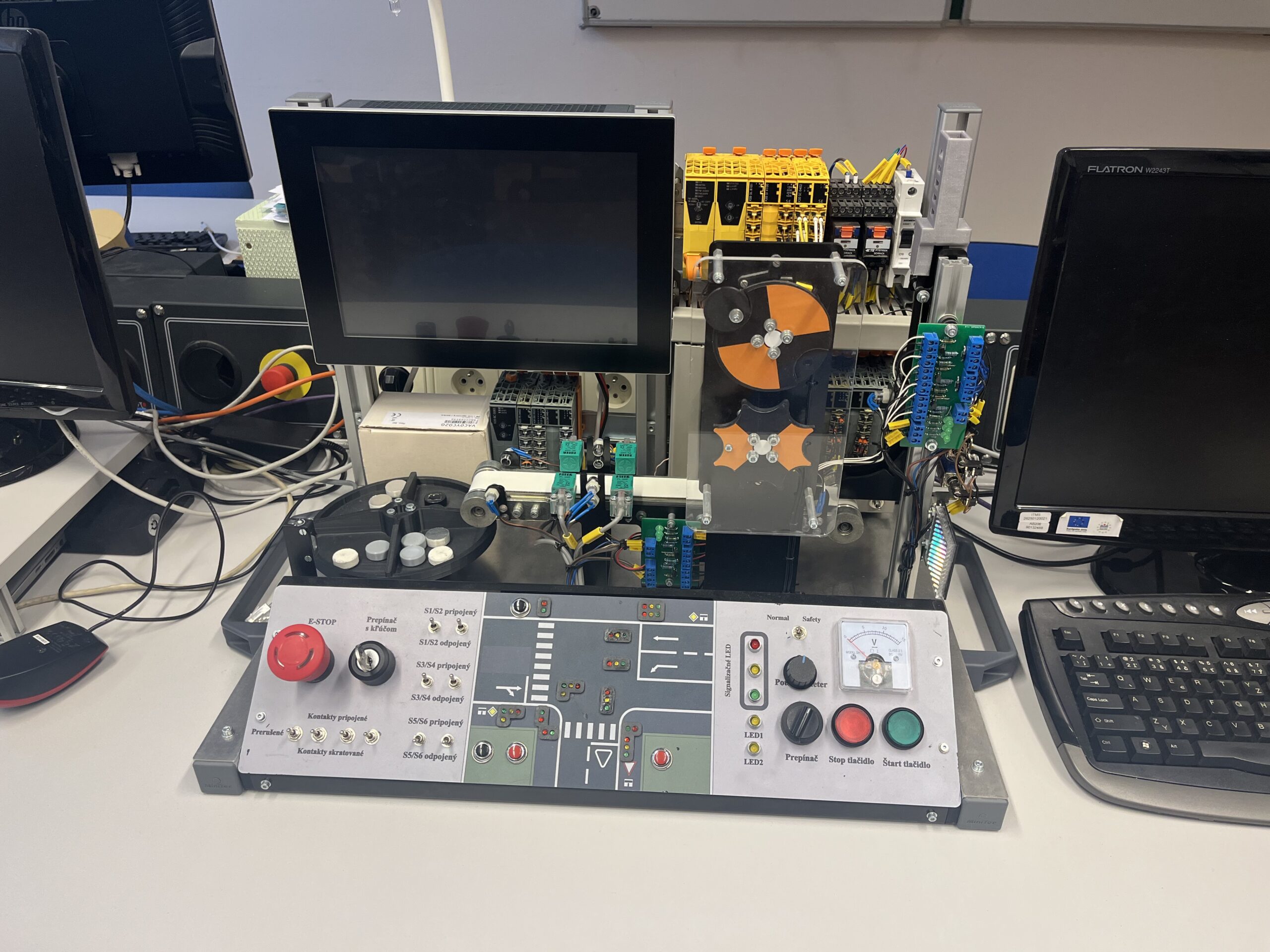
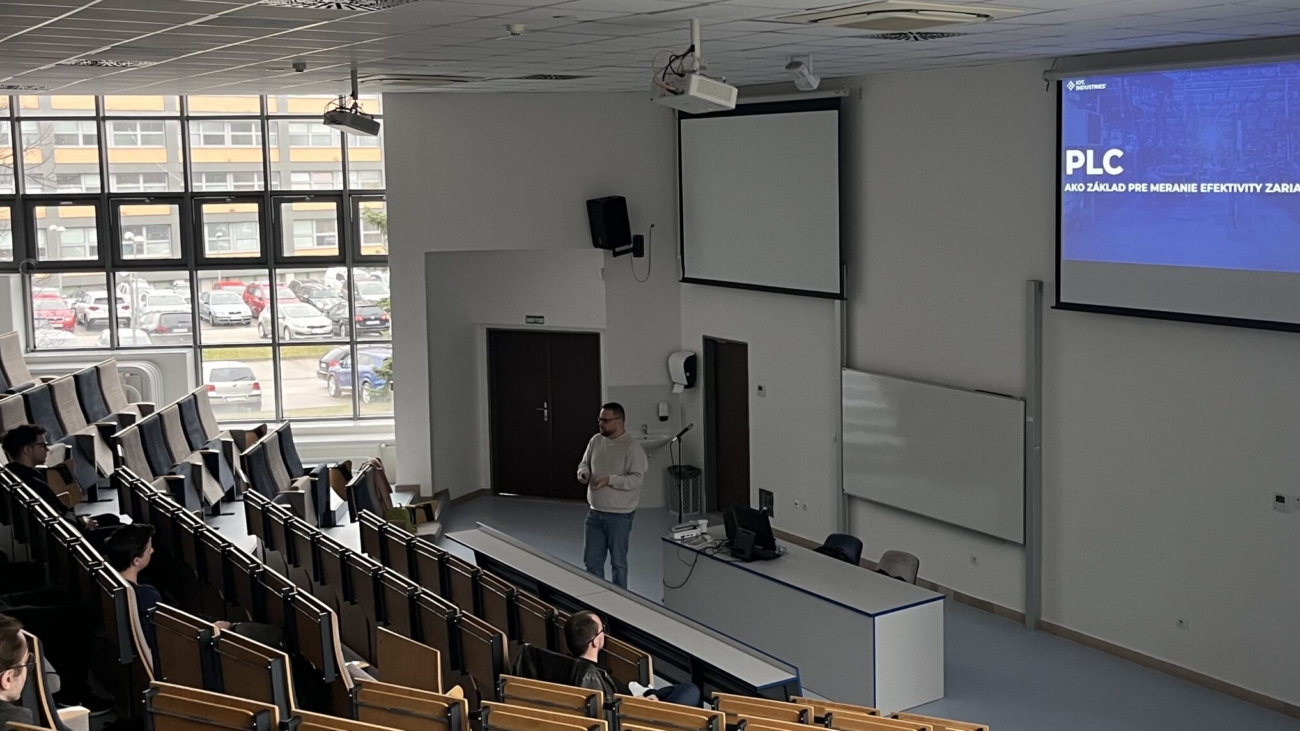
We answered this very question during a lecture at the Faculty of Electrical Engineering and Information Technology of the University of Žilina. The goal was simple – to show students what the implementation of production efficiency measurement looks like in practice. Not company marketing, not recruitment, but the actual work a PLC programmer does every day. And their feedback was surprisingly honest:

“We expected something much worse. This was finally something from real practice.”

PLC ako základ pre meranie efektivity zariadení (OEE) | Realita z praxe, ktorú v škole neuvidíte | PLC as the Foundation for Measuring Equipment Efficiency (OEE) | Real-World Insights You Won’t Learn at School

PLC – A data source for decision-making across the entire enterprise

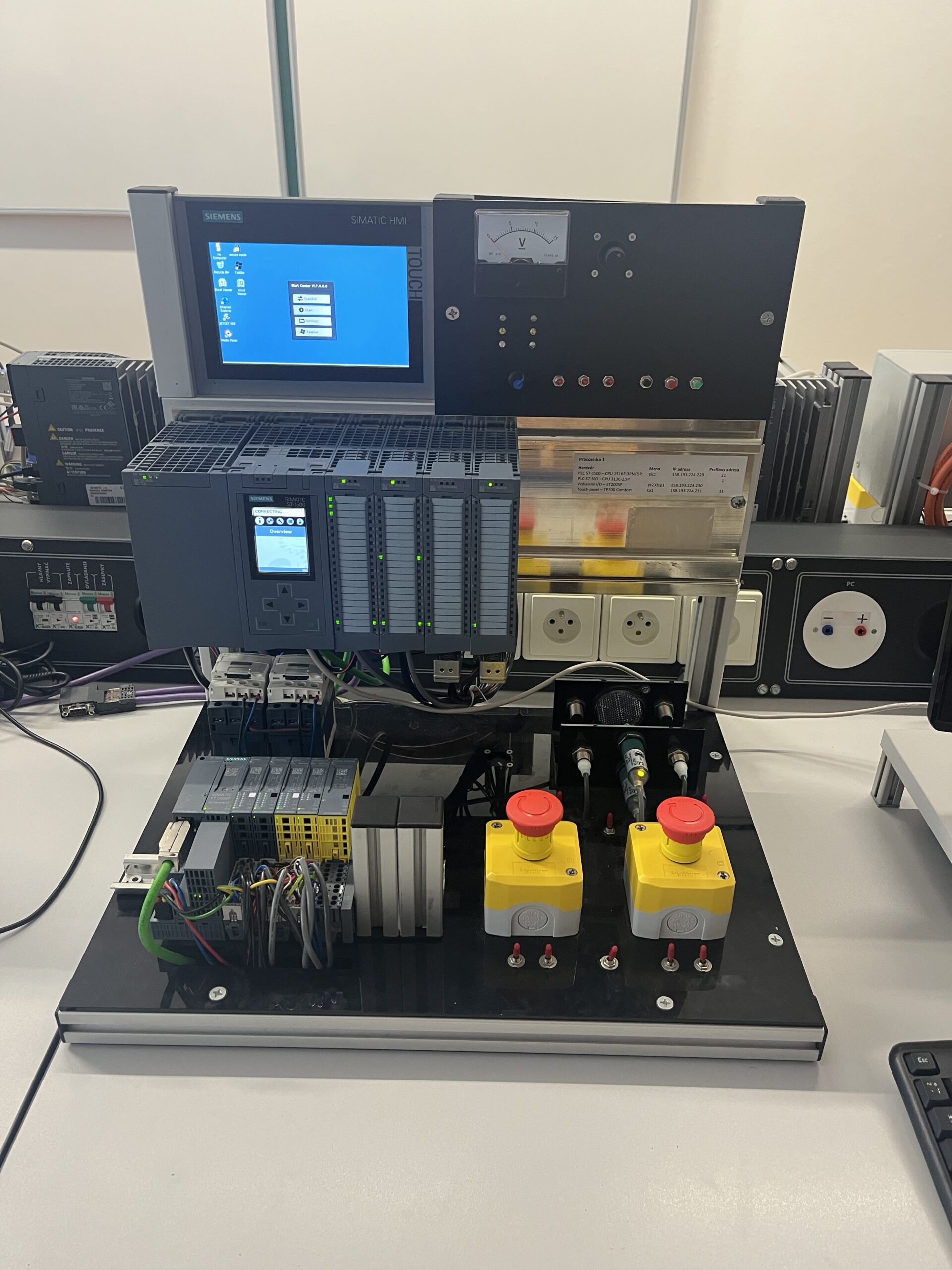
PLC (Programmable Logic Controller) is often referred to as the “brain of the machine.” It controls its operation, responds to inputs, and ensures safety. All of that is true, but in modern manufacturing, its importance goes much further. Today, PLC is above all a source of data. Without it, you cannot know when a machine is actually producing, when it is idle and why, what its performance is, or what quality it achieves… And without this information, it is impossible to manage production effectively. A modern manufacturing company does not rely on estimates, but on accurate and up-to-date data.

OEE – The indicator that reveals the reality of production

When we talk about production efficiency, sooner or later we arrive at the indicator OEE (Overall Equipment Effectiveness). OEE combines three key factors: availability (whether the machine is actually producing), performance (how fast it produces), and quality (how many units meet the required standards). The result is a single number that reveals how efficiently the equipment is utilized. However, OEE is only as accurate as the input data. If the input data is inaccurate or incomplete, the result has no real explanatory value. And that is exactly why PLC is the absolute foundation.

Why do most OEE projects fail?

From a practical perspective, the biggest problem is not calculating OEE. That part is relatively simple. The problem is data collection. Many companies still operate in a way where operators record data manually, downtime is categorized based on estimates, and performance is calculated from plans, not reality. The result? OEE may look good on paper, but it does not reflect the actual state of production. The company believes it operates efficiently, while in reality it is losing a significant portion of its potential.

What does OEE implementation look like in practice?

Today, students have access to modern laboratories and technologies, which is undoubtedly a great advantage. The problem, however, lies in the scope of real-world experience. Practical training hours are limited, and there is often a lack of exposure to real projects. As a result, graduates may understand the theory, but lack context and do not see how technology impacts real business. That is why, during the lecture, we showed students the process of OEE implementation. Not an ideal scenario from a presentation, but the real process we deal with in manufacturing companies.

Pilot project as the foundation

We always start implementation in the form of a pilot project, a so-called Proof of Concept (PoC). Its goal is not the immediate deployment of the system across the entire production, but to verify whether we can obtain relevant data from the equipment, whether it has sufficient quality, and whether it makes sense in the context of real operations. At the same time, we verify the technical feasibility of the solution and its initial real benefit on a small scale. It is common for the PoC alone to reveal 10–20% of hidden performance.

Equipment selection and understanding reality

The first step is understanding the existing technology. In practice, you work with machines that are already operating in production, often for many years. This means dealing with older technologies without modern communication, incomplete or outdated documentation, or non-standard modifications made during the machine’s lifecycle.

At the beginning, we focus mainly on two things. On one hand, we need to verify whether it is even possible to obtain the data required for OEE calculation from the equipment. On the other hand, we examine the technical possibilities for connection. We identify the PLC manufacturer, the specific model, available modules, and communication interfaces. Only the combination of these two perspectives – process and technical – determines whether it makes sense to start measuring OEE on a given machine.

Connection and communication in real conditions

Theory talks about protocols such as OPC UA, Modbus, or Profinet. Reality, however, is usually much more complex. You often find that the PLC has no free port, a communication module is missing, or the system was simply not designed for integration with other tools. In such cases, it is necessary to find solutions, from adding hardware to modifying the existing infrastructure.

Connecting a machine to the network is therefore not just about physical wiring. We enter an environment where it is necessary to address IP addressing, network segmentation (VLAN), security policies, and firewalls. It is precisely in this phase that the biggest delays often occur, because the project interferes with the existing IT infrastructure and requires coordination with the IT department.

Identification, data collection, and analysis

Documentation will, in most cases, not tell you what individual signals actually mean. Therefore, it is necessary to monitor them in real time, compare them with machine behavior, and gradually understand the logic of their combination. Only through this process can you reliably determine when the machine is actually producing, when a unit is created, and when it is defective.

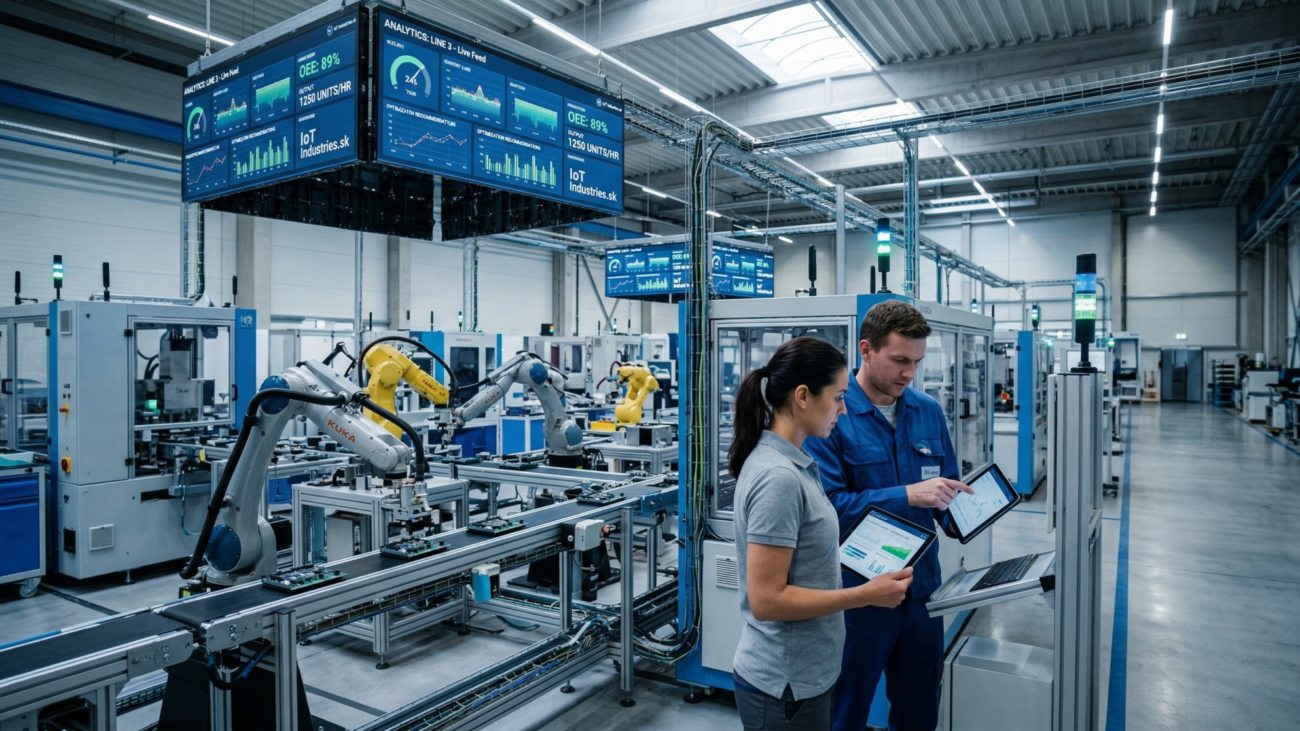
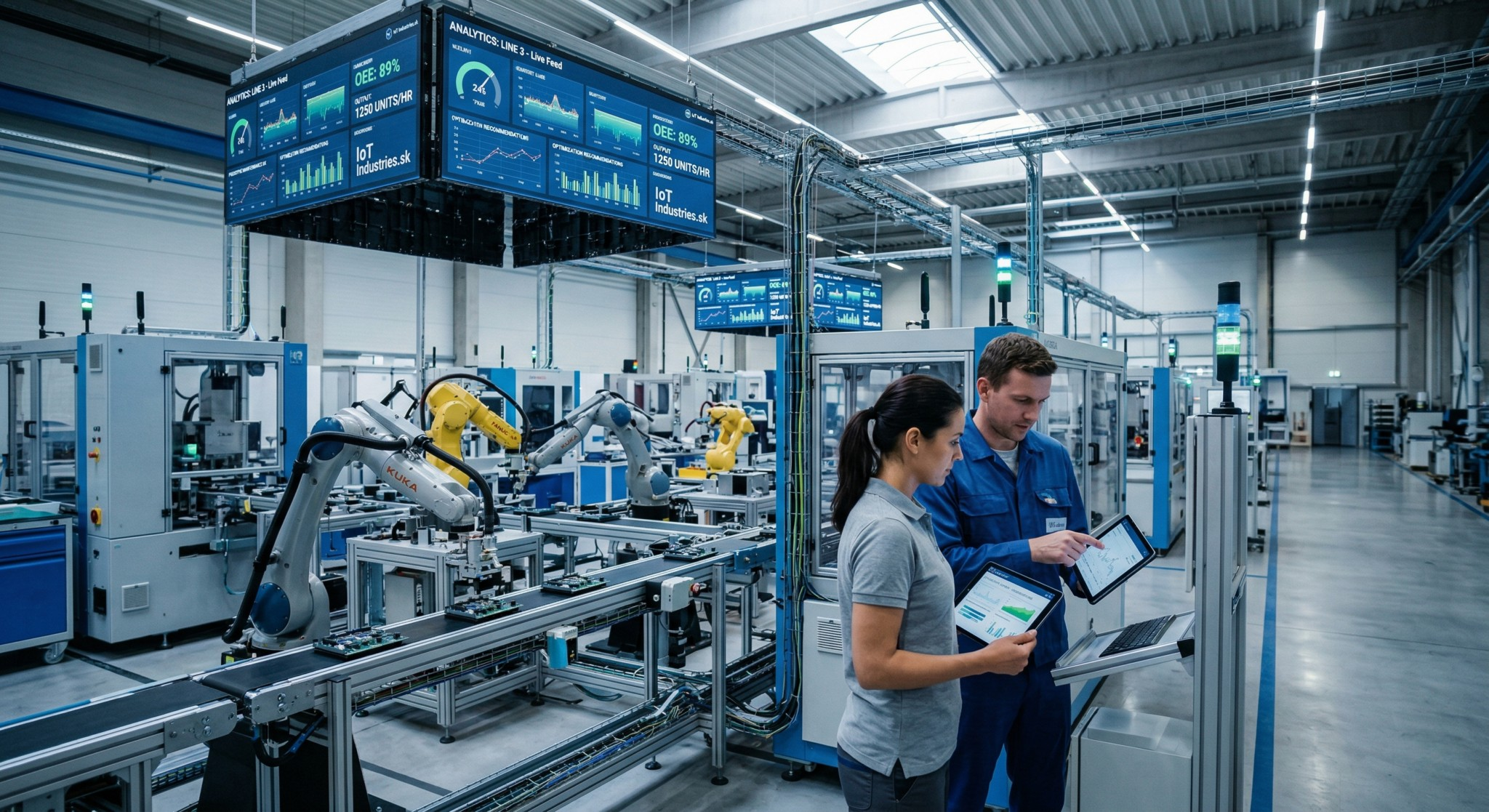
Once the relevant signals are identified, continuous data collection begins. The data is stored in a database and visualized in real time. At this stage, production becomes “visible” for the first time. What was previously hidden in estimates or paper records turns into accurate and instantly available information.

From data to real solutions

However, data collection is not the goal. It is only the beginning. The real value arises when the company starts actively working with the data. Suddenly, it clearly sees why machines stop, where they slow down, where defects occur, and where unused capacity is hidden.

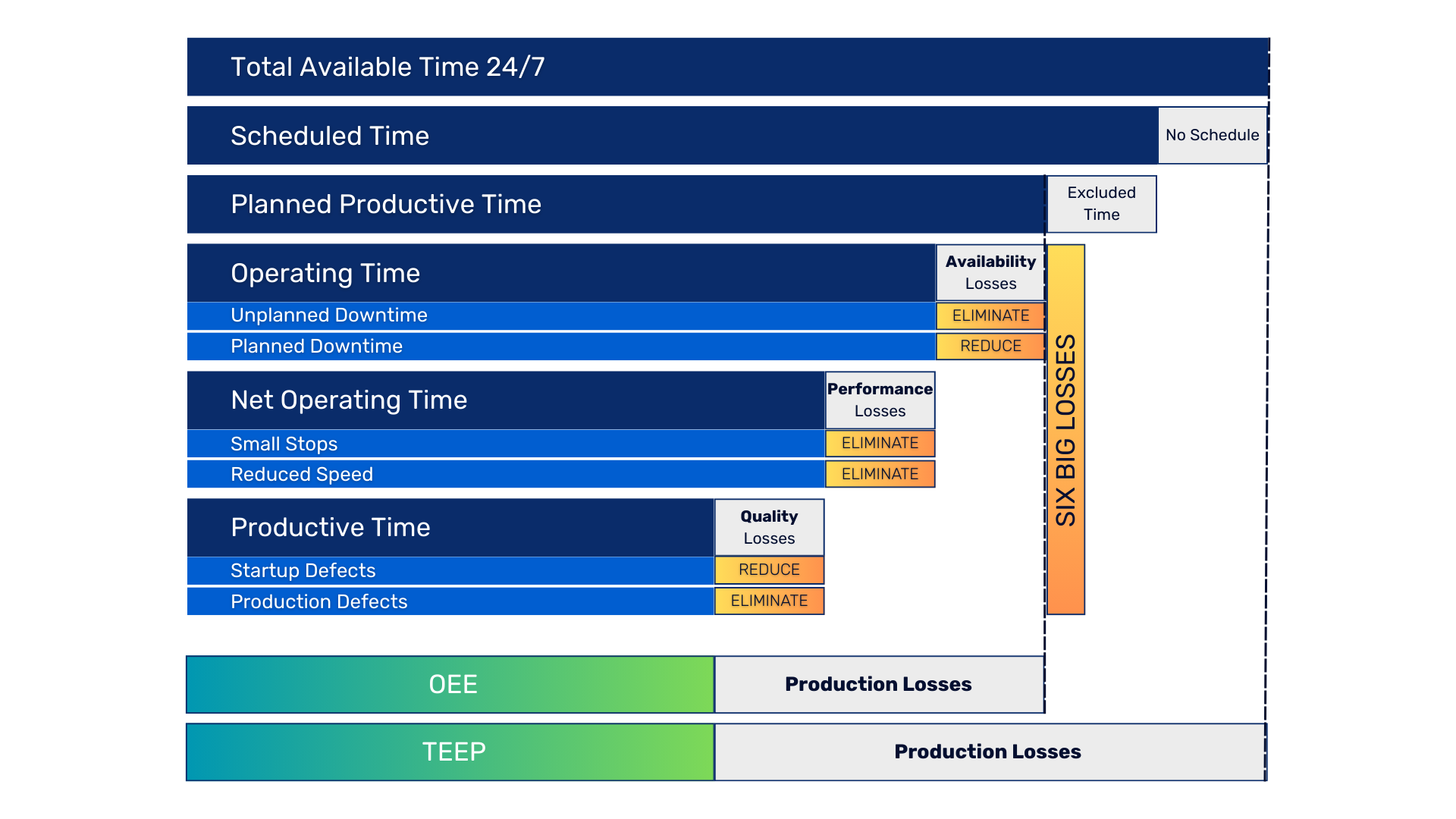
At this point, systematic work with losses in production comes into play. We most often rely on the Six Big Losses model, which divides losses into six main categories, from failures and downtime, through reduced speed, to production defects. But it is not just about naming these losses. The key is that, thanks to data, you can quantify them precisely, evaluate their impact, and assign a specific elimination target.

Based on this, a natural cycle of improvement is created. First, you identify the biggest problem, then implement a specific measure, track its impact in the data, and repeat the process. Production optimization thus shifts from a one-time initiative to a continuous, data-driven process, not one based on estimates.

Why is a skilled PLC programmer essential?

At the end of the lecture, we returned to the original question: What does a PLC programmer actually do? It is not just programming. It is a professional who understands technology, understands data, and indirectly influences decision-making across the entire company. And this is precisely the perspective that is often missing in education, even though it is crucial in practice. It also confirmed that connecting theory with practice has enormous value for students. Not because they learned something entirely new, but because they started to understand the connections.

The feedback from the university captured this perfectly:

“Connecting theory with practice is extremely important – these kinds of meetings give students a perspective they will not find in textbooks. I am glad they had the opportunity to meet someone who works daily in the field they are studying. Thank you for your time, openness, and inspiring sharing of experience!”
– Mário Michálik

And that is exactly what manufacturing digitalization is about today. Not about the technologies themselves, but about the ability to understand how the different parts of the system are connected – from PLC all the way to strategic decision-making.

Comprehensive solutions from IoT Industries

If you would be interested in a similar lecture or expert knowledge sharing from real practice at your school or organization, we would be happy to get involved. We believe that connecting theory with real projects brings the greatest value – both for students and for the industry itself.

Why Choose IoT/IIoT Implementation with IoT Industries?

Traditional companies typically specialize in OT (operational technologies, such as production lines and devices) or classic enterprise IT systems. However, we are able to connect both of these worlds. Our unique expertise in integrating OT and IT allows us to deliver innovative solutions in digital transformation, enhancing efficiency, reliability, and competitiveness for manufacturing companies.
Efektivita práce | Ako ju správne merať, počítať a dlhodobo zvyšovať | Work Efficiency | How to Measure, Calculate, and Continuously Improve It

Work Efficiency | How to Measure, Calculate, and Improve It Long Term

If you manage a manufacturing company, you are probably facing growing pressure from several directions at once. Costs are rising, deadlines are getting shorter, competitors are moving faster, and expectations for results keep increasing. In such a situation, it is only natural that sooner or later you arrive at the question that determines both profitability and the future development of your business: What is the actual work efficiency in your production?

Work efficiency is not a matter of feeling or an abstract concept. It is a measurable variable that can reveal with great accuracy whether you are using your resources to their full potential or whether part of that potential is slipping away without being visible at first glance. And the good news is that efficiency can not only be measured, but also systematically improved. The condition, however, is that you understand it correctly and rely on quality data rather than estimates.

Efektivita práce | Ako ju správne merať, počítať a dlhodobo zvyšovať | Work Efficiency | How to Measure, Calculate, and Continuously Improve It

What is work efficiency and why is it important for a manufacturing company?

Work efficiency expresses how effectively a company can transform available resources into a real result. In other words, it answers the question of how much value you can create from the resources you have available.

That is exactly why this indicator is so important. It does not simply tell you whether “work is being done,” but whether the work is being carried out in a way that makes economic and operational sense. From a management perspective, it is therefore not just an internal performance indicator. It is a direct factor that affects costs, the ability to meet deadlines, and the overall competitiveness of the company.

🔵 Work efficiency – calculation

The basic formula for calculating work efficiency is: Work efficiency = output / input

Output may represent the number of units produced, revenue, or completed tasks.
Input may be time, number of employees, or costs.

At first glance, this is a clear and logical formula that is used quite often. In practice, however, it is one of the most frequently misinterpreted indicators in manufacturing.

Imagine the following situation:

An operator produces 100 units in 8 hours.
After a process adjustment, they produce 120 units in the same amount of time.
According to the simple calculation, efficiency increased by 20%.

But this result says nothing about what is actually happening in the process. It does not take into account whether the machine was producing the whole time or had downtime, whether it was operating at maximum performance, or what portion of the output had real value. It also fails to capture the actual potential of the equipment, that is, whether under ideal conditions it could have produced 160 units instead of 120.

And this is where the biggest problem arises. Work efficiency is very often evaluated without context. And numbers without context are, at best, inaccurate, and at worst, misleading.

What actually affects work efficiency?

If you want to understand work efficiency correctly, it is not enough to see it as a single number. In reality, it is a combination of several factors that together create the overall picture of production performance.

➡️ Actual production time

The first key factor is the time during which production is actually taking place. Not planned time, but the real time when the company is producing value. In reality, almost no production runs continuously. There is downtime, whether planned, such as changeovers or maintenance, or unplanned, caused by failures, waiting for material, or waiting for an operator. Every such interruption means a loss that does not appear at all in a simple efficiency calculation. The result is a situation in which the company appears busy, but in reality produces only during part of the available time.

➡️ Actual performance compared to the ideal

The second factor is actual performance compared to the ideal state. Even when a machine is running, it may not be operating at its maximum potential. It may run more slowly than its technical parameters allow, or its performance may decrease due to wear, incorrect settings, or inefficient operation. This type of loss is especially dangerous because it is not visible at first glance. Production is running, the numbers are growing, but actual performance is falling short of what could be achieved. The difference between actual and ideal performance therefore represents one of the greatest sources of unused potential in manufacturing.

➡️ Output quality

The third factor is output quality. Work efficiency is not only about quantity, but also about how much of the produced volume has real value. If part of the production does not meet requirements, it has to be reworked or scrapped entirely. That means that time, energy, and capacity were indeed used, but did not deliver the expected result. In that case, the production volume may look satisfactory, but actual efficiency declines.

Only the combination of these three factors – actual production time, actual performance, and quality – provides a complete picture of how efficiently production is operating. If even one of them is missing, the resulting number stops reflecting reality and becomes more of an indicative estimate than a reliable basis for decision-making.

How is work efficiency measured in practice?

If we want not only to understand work efficiency, but also to manage it, we must be able to measure it specifically. In practice, however, there is no single universal indicator that fits every company and every situation. Different types of calculations, from simple operational metrics to complex indicators, answer different questions, and each has its own limitations.

👷 Productivity per employee or per hour worked

The most basic approach is measuring labor productivity per employee or per hour worked. It is a simple ratio between output and input that is often used as an initial indicative metric.

Imagine a production operation where five employees produce a total of 2,000 units during an eight-hour shift. In that case, productivity per employee comes to 400 units per shift. If we convert this result into time, we get productivity of approximately 50 units per hour worked.

2,000 units / 5 employees = 400 units per shift
2,000 units / (5 employees × 8 hours) = 50 units per hour worked

This type of calculation is fast, clear, and especially useful where human labor plays the dominant role. Its major disadvantage, however, is that it ignores the technological reality of production. It does not take downtime into account, does not see the difference between slow and optimal equipment performance, and cannot work with output quality. The result is a number that may look precise, but does not speak to the actual efficiency of the process.

💵 Productivity expressed as value created

At a higher level, indicators based on value created are used, such as productivity expressed as value added per employee or per hour worked. This approach is typical especially for economic analyses, where the focus is on how much value a company can create from its available resources.

If a company creates €3,000,000 in value annually and has 60 employees, productivity per employee is €50,000 per year. And if the employees work a total of 96,000 hours, then productivity per hour is €31.25.

€3,000,000 / 60 employees = €50,000 annually per employee
€3,000,000 / 96,000 hours = €31.25 per hour

The difference between productivity per employee and productivity per hour worked is significant. While productivity per employee can be influenced, for example, by organizational structure, productivity per hour worked goes deeper and better reflects actual work performance. That is why it is considered a more accurate indicator. Even these indicators, however, cannot capture the most important thing, namely what is happening directly on the shop floor.

⚙️ OEE as the most practical indicator in manufacturing

In an industrial environment, efficiency is not created only at the level of people, but above all at the level of equipment. And that is precisely why OEE (Overall Equipment Effectiveness), or overall equipment efficiency, is used as a key indicator.

OEE is based on the principle we explained earlier. It tracks three core areas – availability, performance, and quality. These three key factors are combined into a single figure that shows what share of its maximum potential the equipment is actually utilizing.

If, during the shift, the equipment does not run for part of the planned time, its availability decreases. If it runs, but more slowly than its parameters allow, it loses performance. And if it produces defects, quality decreases. Each of these losses is multiplied, which means that even relatively small deviations have a significant impact on the overall result.

Imagine equipment with 85% availability, 90% performance, and 95% quality. At first glance, that looks very good. But the resulting OEE is 73%. That means that more than one quarter of the production potential remains unused.

And that is where the power of OEE lies. Unlike simple calculations, it does not only show the result, but also helps reveal its cause. It makes it possible to precisely identify whether efficiency is declining بسبب downtime, reduced performance, or quality defects. That is why it becomes not only an analytical tool, but above all a practical production management tool.

Why is the calculation alone not enough?

This brings us to the most important point of the entire article. Even the best indicator will not help you if it is based on bad data. The work efficiency calculation itself is only a tool. Its value always depends on the data it is based on. It is often the case that even companies that measure efficiency work with incomplete, delayed, or distorted data. The result is a situation in which even a sophisticated indicator looks trustworthy, but in reality does not reflect the actual state of production.

✅ Quality data as the foundation of real efficiency

If measuring work efficiency is to have real meaning, it must be built on data that is collected directly in production, automatically, accurately, and in real time.

That means three fundamental things. First, data collection must not depend on manual recording, which is naturally prone to errors and delays. Second, data from production, maintenance, warehouse, quality, and sales must be interconnected so that the company works with one version of reality (the so-called Single Source of Truth), not several parallel interpretations. And third, information must be available continuously, not only at the end of the shift or in a weekly report.

This is what creates the difference between estimated efficiency and managed efficiency.

✅ Loss identification

Once you have quality data available, the second key step is to understand where efficiency is actually leaking away. This is what the Six Big Losses model is for, one of the most widely used approaches in modern production management. It divides losses into six main categories and helps identify them precisely.

With the Six Big Losses model, the point is not to memorize all six categories. What matters is understanding the principle. Efficiency is not lost in one major problem. It is lost in dozens of smaller situations that repeat every day. The model helps not only to identify these losses, but also to assign them a specific goal, whether that means eliminating them completely or at least reducing them significantly.

In combination with accurate data, improving efficiency thus stops being a random process and becomes a managed activity. The company knows exactly where losses arise, what their impact is, and which ones make sense to address first.

✅ A continuous process of improving efficiency

But even identifying losses alone is not enough. Data without action has no value. The key is to know how to act based on it, then evaluate the result and act again. In practice, this means that the company not only identifies a problem (for example, frequent downtime), but also implements a specific measure, tracks its impact, and adjusts it based on the result. And this cycle repeats continuously.

Work efficiency is therefore not improved by one single decision, but by a series of small, systematic steps. Every improvement needs to be verified by data. Every decision must have feedback. And it is precisely this cycle – act, evaluate, adjust, and act again – that distinguishes companies that merely monitor efficiency from those that can manage and improve it over the long term.

5 practical steps to higher efficiency

1️⃣ Identify the problem

The first step is not to look for a solution, but to understand the problem. In many companies, there are multiple areas where losses occur, but not all of them have the same impact. That is why it is important to focus on those that affect performance the most. Typically, these are frequent equipment downtime, reduced production line performance, or recurring production errors. The goal is not to analyze everything at once, but to identify one specific area where improvement has the greatest potential.

2️⃣ Start with a pilot project

Instead of trying to change the entire company at once, focus on one line, one machine, or one process. A pilot project allows you to set the right method of collecting and evaluating data, verify the benefits of the solution in real conditions, and identify potential issues before rolling it out further. This step significantly reduces risk while also delivering quick initial results that can convince other parts of the organization.

3️⃣ Set up the data architecture

If data is to have real value, it must be accurate, connected, and available at the right time. In practice, this means automated data collection directly from equipment, integration of production, maintenance, quality, and other systems, and a unified data structure that ensures consistent evaluation. Without this foundation, efficiency may be “measured,” but it will not be possible to manage it reliably.

4️⃣ Launch measurement and evaluation

Data collection is only the beginning. Real value arises only when the data begins to be actively used. At this stage, it is important to regularly monitor key indicators, identify deviations and their causes, and then take specific measures to eliminate them. Every measure should have a clear objective and measurable impact. Only then is it possible to objectively evaluate whether the change delivered the expected result.

5️⃣ Scale the solution

Once the pilot project proves its results, it is time to expand it. At that point, the company already knows what works and what does not, has processes and a data structure in place, and has concrete results on which to build. The solution can then gradually be extended to additional lines, operations, or the entire company.

Comprehensive solutions from IoT Industries

At IoT Industries, we help manufacturing companies go through this entire process – from identifying the biggest losses, through designing a pilot solution, all the way to gradually expanding it across the entire company. If you want to gain a clear overview of where unnecessary losses arise in your production and how to start systematically eliminating them, contact us. We will be happy to show you a concrete approach tailored to your operation.

Why Choose IoT/IIoT Implementation with IoT Industries?

Traditional companies typically specialize in OT (operational technologies, such as production lines and devices) or classic enterprise IT systems. However, we are able to connect both of these worlds. Our unique expertise in integrating OT and IT allows us to deliver innovative solutions in digital transformation, enhancing efficiency, reliability, and competitiveness for manufacturing companies.

Váš kompletný sprievodca Industry 4.0 | Your Complete Guide to Industry 4.0

Your complete guide to Industry 4.0

Most manufacturing companies today still manage their processes through a “rear-view mirror.” They deal with problems that happened yesterday, analyze downtime that occurred last week, and make important business decisions based on incomplete and delayed data. If you manage a modern production environment, you know that the pressure to increase productivity and reduce costs is relentless. And this is exactly where Industry 4.0 comes into play. A strategic tool that helps transform data into performance, transparency into control, and technology into real results.

Váš kompletný sprievodca Industry 4.0 | Your Complete Guide to Industry 4.0

Industry 4.0: What is it and why does it matter?

The concept of Industry 4.0, also known as the fourth industrial revolution, represents a fundamental shift from isolated automation to a fully interconnected digital ecosystem. While the previous stage introduced computers and PLC systems into production halls, i 4.0 goes one step further, where data, machines, and systems are integrated into a single intelligent ecosystem.

The Industry 4.0 concept is therefore not about purchasing a single specific software or technology. It is a comprehensive management philosophy where Operational Technology (OT) meets Information Technology (IT). The goal is to achieve a state where production is not optimized retrospectively based on reports, but continuously and dynamically according to the current situation on the production line.

The foundation of an Industry 4.0 Factory is the integration of:

  • production equipment (OT – Operational Technology),
  • enterprise information systems (IT – Information Technology),
  • automated data collection,
  • data analytics
  • and intelligent control.

Historical context: When and how did it all begin?

The starting year of Industry 4.0 is officially considered to be 2011, when this term was introduced at the Hannover Messe trade fair in Germany. Since then, it has evolved from a national digitalization strategy into a global standard for every modern factory 4.0, built on four historical pillars of development:

  • First industrial revolution – mechanization of production using steam
  • Second industrial revolution – electrification and the introduction of assembly line production
  • Third industrial revolution – automation using electronics and computers
  • Fourth industrial revolution (I 4.0) – digitally interconnected, data-driven production

Industry 4.0 automation pyramid

A key architectural element of the entire concept is the Industry 4.0 automation pyramid, which illustrates the hierarchy of production control. The difference compared to the past is that these layers no longer operate in isolation. I 4.0 connects them into a single data ecosystem, where information flows bidirectionally and in real time.

  1. Field level – devices and sensors that collect data directly from machines
  2. Control level – control systems and PLCs that ensure local control
  3. Supervisory level – SCADA systems that monitor production in real time
  4. Planning level – MES systems that connect planning with real operations
  5. Management level – ERP systems that provide a strategic view of production
  6. Business Intelligence and advanced analytics

Industry 4.0 technologies and their benefits

If we look at Industry 4.0 only as a technological trend, we miss its true meaning. The real value is not delivered by the technologies themselves, but by their practical implementation. The ideal outcome should therefore be a Smart Factory 4.0, where production operates based on accurate, real-time data.

1️⃣ IoT and IIoT (Industrial Internet of Things)

The foundation of Smart Factory 4.0 lies in IoT and IIoT technologies, which ensure automated data collection directly from machines, production lines, and equipment, thereby creating a reliable foundation for the entire digital transformation. The company no longer has to wait until the end of a shift, manual reports, or retrospectively completed spreadsheets, but instead works with reality as it happens.

2️⃣ SCADA (Supervisory Control and Data Acquisition)

These data are then processed by SCADA systems, which enable real-time monitoring and control of production. As a result, production is no longer a “black box.” Management has instant visibility into everything that is happening. Instead of waiting for reports, they see problems as they occur and can respond immediately.

3️⃣ MES (Manufacturing Execution System)

Smart Factory 4.0 also fundamentally changes the way production is planned. The integration of production with MES eliminates the gap between plan and reality. Production is no longer just an executor of plans, but a dynamic system that can adapt to current conditions.

4️⃣ OEE (Overall Equipment Effectiveness)

One of the most significant benefits of Smart Factory 4.0 is the ability to increase productivity without the need to invest in new machines. Accurate performance measurement (using OEE) often reveals that production operates at only 50–60% of its potential. By eliminating hidden losses, it is possible to achieve a significant performance increase without capital expenditure.

5️⃣ CMMS (Computerized Maintenance Management System)

These insights are further supported by maintenance management. CMMS systems enable a shift from reactive maintenance to planned or predictive maintenance. Machines are no longer repaired only after they fail, but interventions are carried out based on their actual condition. This allows companies to reduce the risk of unplanned downtime and extend the lifespan of equipment.

6️⃣ EMS (Energy Management System) and BMS (Building Management System)

Energy efficiency also plays a significant role. In a Smart Factory 4.0 environment, energy consumption data is integrated with production processes, enabling optimization of consumption without negatively impacting performance. Companies thus gain not only lower costs, but also better readiness for ESG requirements and future regulations.

7️⃣ Business Intelligence

At the top of the entire ecosystem is Business Intelligence. Tools such as Power BI transform all this data into clear dashboards and provide management with a clear picture of company performance. Smart Factory 4.0 is therefore not about having more technologies. It is about production finally being managed based on reality, not assumptions.

However, the key is not the ownership of technology itself. What matters is how these tools are interconnected and whether they work with high-quality data. Once your production stops relying on assumptions and starts relying on reality, Smart Factory 4.0 will bring these key benefits in practice:

  • ✅ Greater production flexibility
  • ✅ Better cost control
  • ✅ Higher productivity
  • ✅ More accurate planning
  • ✅ Increased competitiveness

Industry 4.0 – real-world examples

To prevent the Industry 4.0 concept from remaining purely theoretical, it is best to look at specific real-world examples. Real projects clearly demonstrate that digital transformation in manufacturing is not about more technologies, but about better data, greater transparency, and the ability to make faster and more accurate decisions.

➡️ One such example is a pilot OEE project in Slovak automotive production, where the company needed to verify whether it was possible to implement digital performance measurement even on older equipment. Before implementation, part of the production relied on paper forms, Excel spreadsheets, and manual data entry into SAP, which was slow, inaccurate, and practically did not allow real-time data analysis.

After implementing the solution, the company was able to collect and evaluate dozens of machine parameters in real time, measure availability, performance, and quality more accurately, and significantly improve visibility into the real causes of downtime. The result was highly convincing. Within just a few weeks, productivity increased by 20%, average OEE rose from 56% to 70%, and the number of units produced per shift increased by 25%.

➡️ Another strong example is a project at the ECCO Slovakia plant, where the key focus was material flow, coordination between warehouse and production, and eliminating picking errors. Before digitalization, production relied on paper plans, Excel spreadsheets, manual calculations, and personal communication between departments. This led to time losses, errors in material preparation, downtime, and process chaos.

By implementing an Electronic Delivery System (EDS), the company achieved a single source of information and significantly improved and accelerated material flow. Error rates in material preparation decreased by 20%, losses from missing components were reduced by approximately €25,000 annually, unnecessary movements and communication were eliminated, resulting in approximately 15% time savings per employee per shift, and total annual savings reached approximately €69,000.

Both of these implementations demonstrate the same principle. Smart Factory 4.0 does not arise from one major technological leap, but from gradually building an environment where data is available in real time, processes are transparent, and decisions are based on reality, not assumptions. If you want to explore the detailed progress of both projects, you can find them HERE.

Common mistakes in Industry 4.0 implementation

Many companies today consider implementing Industry 4.0, yet the results often fall short of expectations. The reason is usually not the technology itself, but the way digitalization is approached. What matters most is whether the entire project is built on clear objectives, high-quality data, and a realistic implementation plan.

❌ One of the most common mistakes is starting with technology instead of the goal. A company invests in a specific system without a clear understanding of the problem it should solve. The result is a technically functional solution that fails to deliver real value to production. If the company does not know its goal from the beginning, it is very difficult to expect measurable results.

❌ Another frequently underestimated factor is the quality of input data. If data is collected manually, inaccurately, or with delays, any analysis loses its value. Decision-making then once again relies on assumptions rather than reality. Smart Factory 4.0 is built precisely on the principle that companies work with accurate, real-time data.

❌ In practice, technical readiness of the environment is also often underestimated. Smart Factory 4.0 solutions depend on reliable network infrastructure, which is not always guaranteed in industrial environments. Production halls, metal structures, or remote locations can significantly affect connectivity quality, complicating the entire project.

❌ A separate chapter is IT security. Requirements for data encryption, device certification, or data localization are justified, but in practice, they slow down implementation. Without close cooperation with the IT department, the project can take months. However, if security requirements are considered already in the design phase, the risk of delays can be significantly reduced.

❌ Companies also often expect fast results without changing processes. However, Industry 4.0 is not just about technology, but also about changing the way work, decision-making, and production management are approached. A new system alone does not guarantee better results if no one learns how to work with data and if the company does not also focus on adjusting processes, responsibilities, and daily operations.

Step by step towards Smart Factory 4.0

Starting with Industry 4.0 does not mean implementing a complex solution across the entire company. The most effective approach is gradual, data-driven, and based on real production needs. This is why it can be suitable not only for large corporations, but also for small and medium-sized manufacturing companies.

🎯 The foundation is to clearly define your goal. The company should answer simple but essential questions: What do we want to improve? Do we want to reduce downtime? Increase production efficiency? Optimize energy consumption? Or gain better real-time visibility into production? Without this phase, choosing technology makes no sense.

🔎 This is followed by an initial audit and solution design. It is necessary to identify the equipment that will be integrated into the system, verify network availability, and determine which data should be collected. It is also crucial to think about the future. The solution should be scalable and ready for expansion with additional systems.

🚀 A very effective step is a pilot project (Proof of Concept). This allows verification of the solution on a smaller part of production, testing data quality, and obtaining the first measurable results. This step significantly reduces risk and helps set the right direction before full-scale implementation.

🔁 However, the project does not end after implementation. Daily work with the system is key. This includes employee training, regular monitoring of device functionality, verification of data accuracy, and continuous system improvement. Only then does Industry 4.0 become a tool that delivers long-term value, rather than a one-time project.

Industry 4.0 towards future industrial opportunities and challenges

Remember, Industry 4.0 is not a goal in itself. It is a way to gain greater control over production, eliminate unnecessary losses, and base decision-making on accurate data instead of assumptions. For some, it may start with measuring OEE on a single production line; for others, with digitalizing material flow, energy management, or maintenance. What matters is starting the right way. With a clear goal, a high-quality design, and a partner who understands both technology and real manufacturing.

At IoT Industries, we help manufacturing companies design and implement solutions that connect the OT and IT worlds into one functional whole. If you want to discover where the greatest potential lies in your production and how Industry 4.0 can work specifically in your company, contact us. We will be happy to explore solutions with you that make sense both technically and economically.

Why Choose IoT/IIoT Implementation with IoT Industries?

Traditional companies typically specialize in OT (operational technologies, such as production lines and devices) or classic enterprise IT systems. However, we are able to connect both of these worlds. Our unique expertise in integrating OT and IT allows us to deliver innovative solutions in digital transformation, enhancing efficiency, reliability, and competitiveness for manufacturing companies.

Prečo sú dnes elektronický zber údajov a analýza údajov kľúčom k udržaniu konkurencieschopnosti? | Why Are Electronic Data Collection and Data Analysis Essential for Maintaining Competitiveness Today?

Why Are Electronic Data Collection and Data Analysis Essential for Maintaining Competitiveness Today?

If you manage a manufacturing company, you likely make dozens of decisions every day. About orders. About capacities. About failures. But do you base these decisions on accurate and up-to-date data? Or do you make decisions based on estimates and delayed reports? If you lean more toward the latter option, you are not alone, however this approach is no longer sufficient today. For modern manufacturing, electronic data collection and real-time data analysis are a key condition for maintaining competitiveness. Because without them it is not possible to effectively manage performance, costs, or quality.
Prečo sú dnes elektronický zber údajov a analýza údajov kľúčom k udržaniu konkurencieschopnosti? | Why Are Electronic Data Collection and Data Analysis Essential for Maintaining Competitiveness Today?

What exactly happens in a company where electronic data collection and data analysis are missing?

Even a company where electronic data collection and systematic data analysis are missing may at first glance appear stable and under control. The problem is not that production does not work. The problem is that no one knows exactly how well, or how poorly, it actually works.

You may find this situation familiar:

  • The operator records downtime manually.
  • Reasons for failures are entered generically, such as “repair” or “cleaning”.
  • Performance is evaluated only after the shift ends.
  • Energy consumption is known only from the monthly invoice.
  • There is no single source of truth, so each department works with different numbers.

And the result?

  • ❌ Outdated, inaccurate and incomplete data
  • ❌ Unclear causes of problems with no ability to correct them
  • ❌ Hidden unused production potential
  • ❌ Increasing costs without a clear explanation
  • ❌ Decisions based on assumptions instead of facts

Production may be running, but significantly below its real potential. Problems are solved retrospectively and corrective measures arrive only after the costs have already been incurred. The enterprise operates in an environment of uncertainty where there is no clear picture of what is actually happening in production.

What is electronic data collection?

Electronic data collection means that production data is not collected through manual recording on paper or in Excel, but automatically, directly from machines, sensors, production lines and enterprise systems. Without manual transcription, without delays and without the risk of errors.

Electronically collected data can be divided into several groups:

1️⃣ Production process data, which shows what and how much was actually produced, for example production counts, cycle times and real operation times, and information about which order or reference the machine is currently processing.

2️⃣ Availability and downtime data, meaning when a machine is producing, when it is stopped and why. This includes downtime data (both planned and unplanned), specific reasons for downtime (missing material, failure, tool change, waiting for operator) and various fault and alarm states.

3️⃣ Quality data, which shows how much of the produced output is actually compliant. Typically this includes the number of good and defective pieces, types and categories of defects or information about batches in which deviations repeat.

4️⃣ Consumption and cost data, which connects production with the economic reality of the enterprise. This mainly includes energy consumption (electricity, gas, water…), consumption of materials and semi-finished products, or data from EMS and BMS systems.

5️⃣ Order and production flow data, which connects production with planning and sales, for example order status (what is running, what is finished, what is delayed), the progress of individual operations over time or comparison of plan versus reality.

Such an automated data collection setup creates a consistent data foundation, the Single Source of Truth (SSOT), meaning a single source of truth for the entire enterprise. Only on this basis does data analysis make real sense, because it works with accurate, complete and up-to-date information.

Data collection alone is not enough. Data analysis is the key.

Electronic data collection is the foundation, not the final solution. Many enterprises today already collect data, but despite that they are unable to extract real value from it. The reason is simple. Real impact comes only through systematic data analysis.

Properly configured data analysis makes it possible to answer questions such as:

  • Which shift achieves the lowest efficiency and why?
  • Which machine generates the most unplanned downtime? And what are the main causes?
  • Why does quality fluctuate at certain times or with specific products?
  • Where do hidden costs arise that are not visible in standard reports?
  • How does the planned production flow differ from the real one?

And the answers to these questions immediately translate into enterprise management:

  • ✔ Increase productivity without the need to invest in new machines
  • ✔ Reveal hidden reserves and sources of savings
  • ✔ Enable informed decision-making
  • ✔ Reduce uncertainty in planning
  • ✔ Strengthen the competitiveness of the enterprise

The difference between a company that only collects data and a company that actively analyzes it is fundamental. The first reacts only after a problem occurs. The second can identify the problem at its earliest stage and gradually prevent it.

And this is exactly where automated data collection and data analysis merge into a single functional system. While data collection creates an accurate picture of reality, analysis turns that picture into a management tool.

How to start with electronic data collection and analysis?

The implementation of electronic data collection and subsequent data analysis should not be a technological experiment. It should be a managed project with a clear objective, measurable benefits and gradual expansion.

If you do not know where to start, we recommend a systematic approach:

1️⃣ Define a clear objective

The most common mistake manufacturing companies make during implementation is starting with technology instead of the objective. First answer the question what exactly you want to improve. Do you want to reduce downtime? Do you want to optimize energy consumption? Do you want to increase OEE by 10%?

Without a clear objective, electronic data collection can become uncontrolled accumulation of data without a concrete impact. The objective, on the other hand, determines which data you will collect, which KPIs you will track and which reports will actually make sense.

2️⃣ Perform an audit of existing systems

Many enterprises already possess a large amount of data today, they just often do not realize it. Therefore it is important to map what data you already collect, where this data is located, whether it is interconnected and most importantly whether it is accurate and consistent.

Such an audit often reveals duplicate records, different versions of the same numbers, missing timestamps or insufficient categorization. Only on the basis of this overview does it make sense to design a new system or expand an existing one.

3️⃣ Start with a pilot project (PoC)

There is no need to digitalize the entire enterprise at once. A more effective approach is a pilot project on a single production line or within one department. A pilot project brings several advantages, such as lower risk, faster return on investment and easier internal communication of results.

The goal of the pilot is to set up data collection and data analysis correctly from the beginning, verify the functionality of the solution in practice and quantify the first measurable benefits. If the pilot demonstrates real value (for example an 8% reduction in downtime), it then becomes much easier to expand the project across the entire plant.

4️⃣ Connect electronic data collection with data analysis

As mentioned earlier, electronic data collection without subsequent analysis does not bring value. It is therefore important to define which KPIs will be monitored, how data will be visualized, who will be responsible for evaluating it and above all how the insights will translate into decision-making.

High-quality data analysis should clearly answer management questions: Why did efficiency drop today? Which line is currently the most loaded? Where does the deviation from plan occur? If a manager opens the dashboard and immediately sees the answer, the system is functioning correctly.

5️⃣ Scale the solution and create a continuous improvement process

If the pilot demonstrates measurable results, the next step is gradual expansion of the solution to other production lines, departments or areas of the enterprise. Such gradual scaling also allows risk to be minimized, investments to be spread over time and return on investment to be continuously evaluated.

However, automated data collection and data analysis should not be a one-time project. Their real value lies in creating a continuous improvement cycle:

  1. You collect data in real time.
  2. You analyze it and identify the causes of deviations.
  3. You implement specific corrective measures.
  4. You evaluate the impact of those measures.
  5. You optimize processes and the cycle repeats.

Electronic data collection and analysis are not the objective. They are a tool for systematically increasing enterprise performance year after year. In this way electronic data collection becomes a permanent part of enterprise management. Production is not optimized once, but systematically and continuously.

Electronic data collection as the foundation of digital transformation

Electronic data collection and data analysis are no longer a technological luxury. They are a fundamental prerequisite for a manufacturing enterprise to gain control over performance, costs and quality, the ability to respond faster than competitors, and a stable competitive advantage.

At IoT Industries we help manufacturing companies design and implement tailor-made solutions. From the initial audit of data readiness, through a pilot project, to gradual scaling across the entire plant. Not as a one-time IT project, but as a systematic tool for improving performance.

If you want to find out where unused potential is hidden in your production, contact us and we will be happy to take a look together with you.

Why Choose IoT/IIoT Implementation with IoT Industries?

Traditional companies typically specialize in OT (operational technologies, such as production lines and devices) or classic enterprise IT systems. However, we are able to connect both of these worlds. Our unique expertise in integrating OT and IT allows us to deliver innovative solutions in digital transformation, enhancing efficiency, reliability, and competitiveness for manufacturing companies.
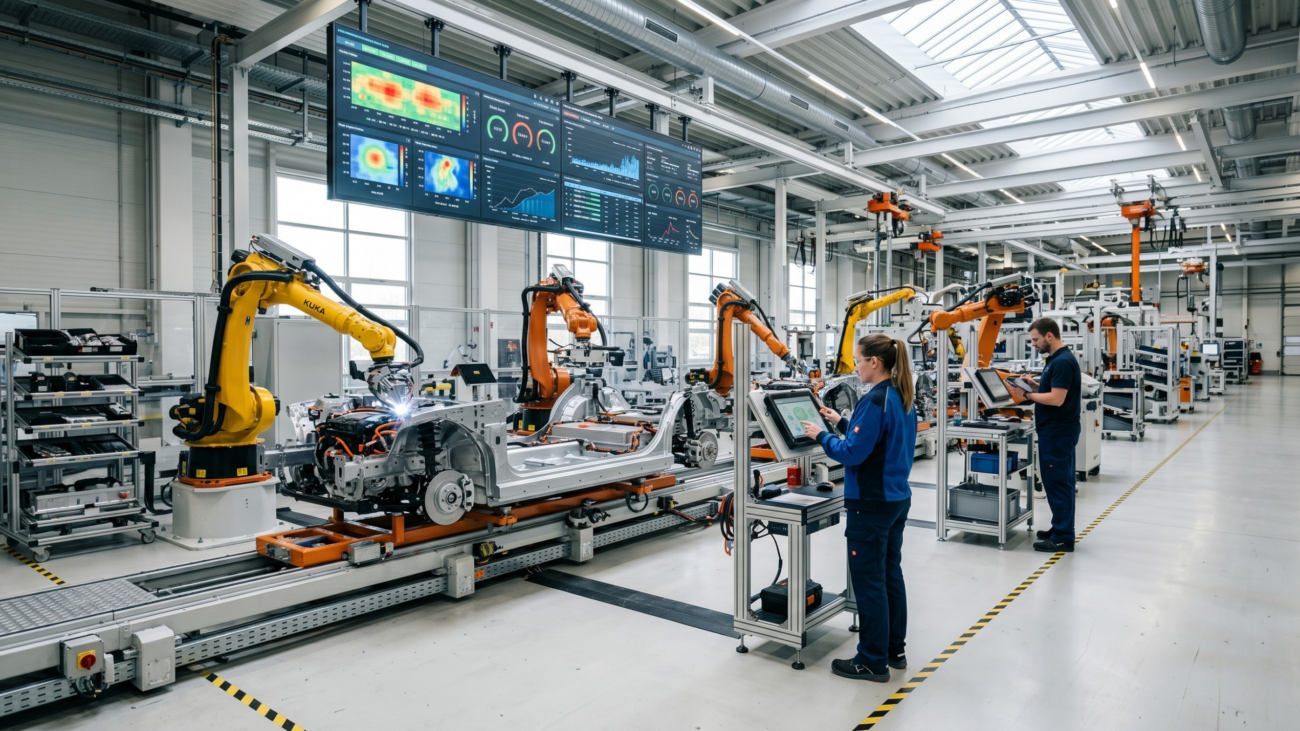
Kľúčové trendy v Industry 4.0 – Čo očakávať v roku 2026? | Key Trends in Industry 4.0 – What to Expect in 2026?

Key Trends in Industry 4.0 – What to Expect in 2026?

If you manage a manufacturing company, 2026 probably did not start very calmly for you. The pressure on efficiency is higher than ever before. Energy prices are no longer the shock they were two years ago, but geopolitical uncertainty, trade measures, and tensions in global markets are making planning increasingly difficult. At the same time, the responsibility for results still rests on you.

In such an environment, it may seem that the best strategy is to wait. To be conservative. Not to invest. However, it is precisely in times of uncertainty that it becomes clear who will maintain competitiveness and who will begin to fall behind. If you want to know which Industry 4.0 trends will bring real value in 2026 and which are just marketing noise, read on.

Kľúčové trendy v Industry 4.0 – Čo očakávať v roku 2026? | Key Trends in Industry 4.0 – What to Expect in 2026?

Why Is Tracking Industry 4.0 Trends Especially Important Today?

Companies that follow modern trends and the real possibilities of their application do not operate more efficiently because they want to appear “innovative.” They operate more efficiently because they can identify opportunities earlier where time can be saved, costs reduced, or performance increased—without immediately having to invest in new machines or expand production capacity.

An example is the use of artificial intelligence in procurement processes. Today, systems can easily contact 15 suppliers, summarize price offers, and prepare a comparison. What once took a person days can now be completed by a system within hours.

Without monitoring trends, you would arrive at such efficiency improvements five years later, most likely at a time when it has already become the market standard and you are simply catching up. And this is not some futuristic scenario. It is a practical acceleration of processes that reduces administrative burden and frees up people’s capacity for more valuable tasks.

A very similar situation can be seen in manufacturing digitalization. Companies that build a solid data foundation will be able to respond more quickly to market fluctuations, optimize capacities, and make decisions with lower risk. On the other hand, those that follow trends only passively will be implementing in a few years what their competitors are already using as a standard today.

What Challenges Will Companies Face in 2026?

1️⃣ Geopolitical Uncertainty and Difficult Predictability

The year 2026 is characterized by a high level of unpredictability. Threats of trade restrictions, sudden tariff changes, and tensions between global players can have an immediate impact on supply chains, input costs, and material availability. In a highly globalized environment, a single geopolitical decision can affect the entire market.

For many companies, success may simply mean maintaining the status quo. Not in the sense of stagnation, but in terms of stability. Maintaining margins, performance, and delivery reliability despite external shocks. And it is precisely the companies that have a clear overview of their capacities, efficiency, energy consumption, and bottlenecks that can respond to market fluctuations without panic.

2️⃣ Pressure for Flexibility and Rapid Adaptation

In the past, it was possible to plan production months in advance. Today, the situation is different. Orders fluctuate, customers change priorities, delivery times are shortening, and input prices can change practically overnight. What was true last quarter may no longer apply today. Companies therefore need to be prepared to quickly adjust production capacity, redirect production, or optimize costs.

Such flexibility, however, does not emerge from improvisation. It emerges when you have a clear overview of the real utilization of machines, where downtime occurs, and where hidden reserves exist. A company without data reacts reactively, solving problems only after they arise. A data-driven company, on the other hand, can act preventively, before the problem affects results.

3️⃣ ESG, Energy Efficiency, and Regulation

ESG is no longer just a topic for large multinational corporations. Increasingly, it also affects medium-sized manufacturing companies, either directly through legislation or indirectly through the requirements of customers and partners. If a company wants to comply with standards such as ISO 50001, it must be able to systematically monitor energy consumption at the level of individual devices, evaluate energy efficiency, implement specific measures, and demonstrate their benefits.

In 2026, however, ESG is not just a “reputational” topic. Energy represents a significant cost component. Yet many companies still cannot say exactly which machine consumes the most energy, where unnecessary peaks occur, or what the relationship is between production performance and energy consumption. Without this data, energy management is only an estimate. A company that does not have energy under control also does not have a significant part of its margin under control.

What Risks Do Companies Face If They Neglect Innovation?

A company that changes nothing today may feel stable. After all, machines are running, people are working, and orders are being fulfilled. At first glance, nothing dramatic seems to be happening. The problem is that the loss of competitiveness does not happen suddenly, but gradually. First, costs increase by a few percent. Then delivery times become longer. Later, margins decrease. Eventually, it becomes clear that competitors can produce cheaper, faster, or more flexibly.

Companies that fail to innovate systematically therefore risk:

Greater risk, because in times of crisis, reserves are often what determine survival.
Low ability to respond to market fluctuations, where improvisation replaces real adaptation.
Higher invisible losses, as operating costs increase without companies even realizing it.

One thing is important, however: It is never too late to start. Not all innovations require major investments. Often, it is about systematic work with data, identifying hidden reserves, and gradually improving processes. And perhaps in times of an unpredictable market, focusing on efficiency improvements is wiser than waiting for “a better time.” Because a data-driven company handles uncertainty much more calmly.

Key Industry 4.0 Trends in 2026

👉 1. Automated Data Collection

Manually recording data on paper or in Excel should no longer be the norm today. Digitalization is not new, nor is it rocket science. It is the foundation of efficient management. If a company has not started yet, in 2026 it is high time to map processes, define priorities, and most importantly appoint an internal digitalization ambassador.

👉 2. OEE (Overall Equipment Effectiveness)

If digitalization is the foundation, OEE is the next logical step. The OEE indicator can reveal hidden reserves of 20–30%. And honestly, no AI will deliver such an immediate impact. However, beware of a common misconception: the fact that your machine shows OEE on its display does not mean you are digitalized. If these data remain isolated and are not connected to reporting, you are still operating “on paper.”

👉 3. Energy Efficiency Through EMS and BMS Systems

Energy management is no longer just a “nice to have.” Systems such as EMS and BMS allow companies to monitor consumption at the level of individual machines, optimize operations based on tariffs, identify inefficient equipment, and also prepare operations for ISO 50001.

👉 4. Transition from Reactive to Predictive Maintenance

Reactive maintenance (“we fix it when it breaks”) is today a costly luxury. Transitioning to predictive maintenance means collecting operational data, analyzing trends, and most importantly planning interventions before a failure occurs. Combined with a CMMS system, this creates a managed maintenance ecosystem that reduces downtime, emergency interventions, and the secondary damage associated with them.

👉 5. Unified Platforms (Ignition)

There is no need to discard existing systems. However, if a company is starting from scratch, it is wise to choose a platform that can scale. Ignition is an example of a solution that connects all critical systems, enables ETL processes, and simplifies data integration. A unified platform reduces chaos and increases the clarity of data flows.

👉 6. Digital Workforce and High Performance HMI

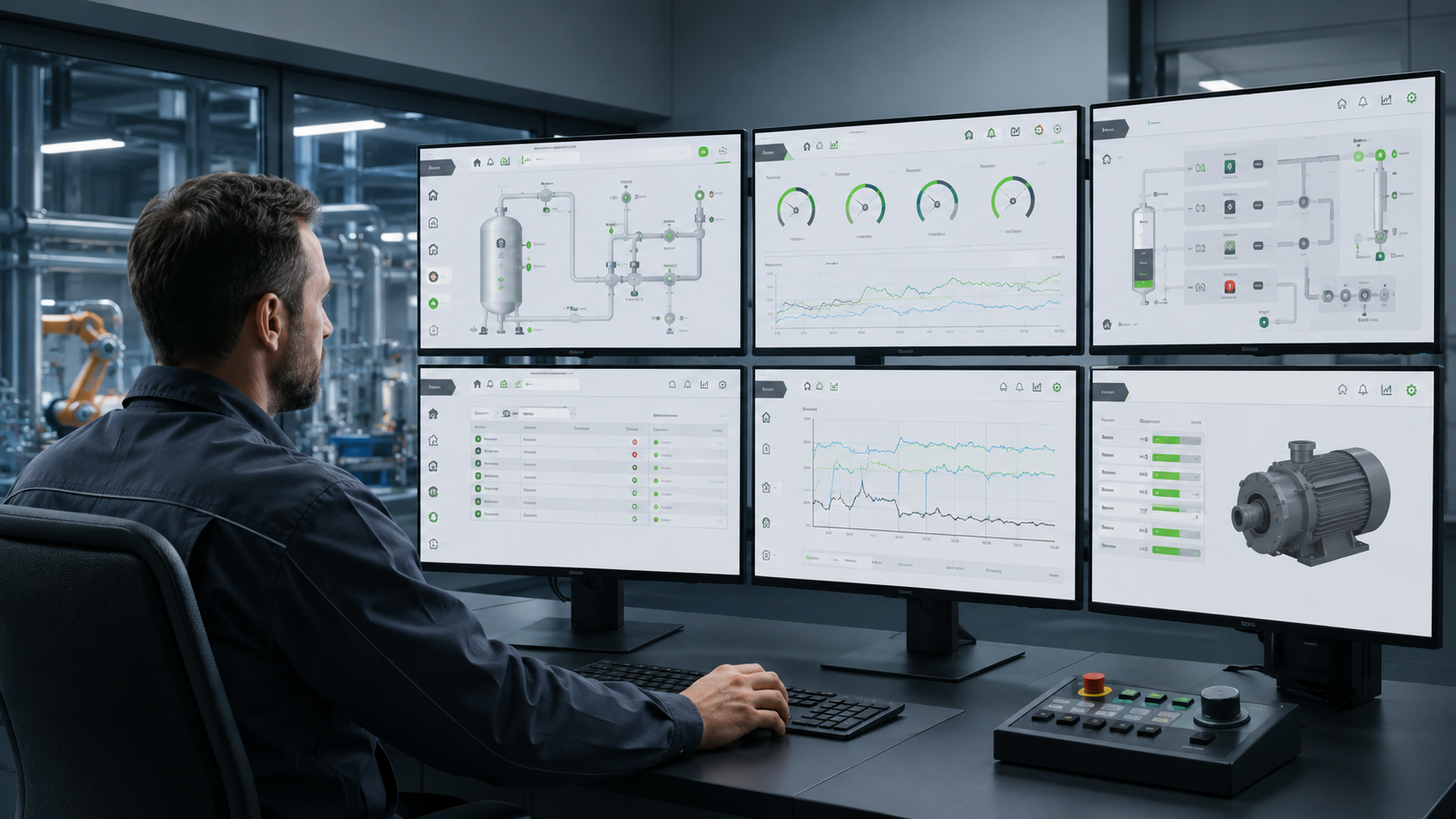
This topic is discussed far less than it deserves, yet its impact in practice is enormous. The ISA-101 standard defines High Performance HMI principles such as fewer colors, more context, highlighting only critical states—all designed to reduce the cognitive load on operators. A modern interface should not be about 3D graphics and blinking flames, but about the operator making fast and correct decisions.

👉 7. Cybersecurity as an Inherent Part of Projects

The question today is no longer: “Will a company become a target of an attack?” but rather: “When will it become a target?” Cybersecurity therefore must be an inherent part of every project, just as natural as occupational safety, without compromise. Not as a separate add-on, but as a fundamental architectural layer of the solution.

👉 8. Big Data and Advanced Analytics

Big Data only make sense when a company is fully digitalized, the data are reliable, and the processes work properly. At that point, connecting data with AI can bring an additional 2–3% optimization. However, as we described in the article How Big Data Helps Reduce Costs and Boost Performance in Manufacturing Enterprises, advanced analytics is an extension, not a replacement for fundamental digitalization.

👉 9. AI as a Tool, Not a Goal

Artificial intelligence is currently experiencing enormous hype, perhaps even greater than Big Data once did. It is clear that AI is here to stay and will have its place in industry. However, at the moment it is often overestimated and applied in situations where it does not deliver real value.

Companies should not start with the question “How do we implement AI?”, but rather “What problem do we want to solve?”. And the solution does not automatically have to be artificial intelligence. Often, automated data collection and basic process digitalization are enough. The real value lies in the correct and justified use of technology, not in the technology itself.

How to Prepare for These Trends?

If digitalization or innovation is to be successful, it cannot be random or driven only by current trends. It requires a clear structure, realistic expectations, and a process that minimizes risk while maximizing benefits. A properly designed approach also ensures that the investment will not become a one-time project, but rather a long-term tool for optimization.

A proven approach therefore looks as follows:

  • 1️⃣ Audit and process mapping
  • 2️⃣ Identification of priorities and benefits
  • 3️⃣ Solution design
  • 4️⃣ PoC (Proof of Concept)
  • 5️⃣ Implementation
  • 6️⃣ Long-term monitoring and optimization

When deciding on innovations, the greatest challenge is often to objectively evaluate one’s own processes. Internal teams are naturally immersed in daily operations, and many inefficiencies gradually become the “norm” that no one questions anymore. That is why it is beneficial to involve an external partner with practical experience, who can bring an independent perspective, reduce the risk of incorrect decisions, and accelerate the path to measurable results.

Even 2026 Cannot Stop Progress

Market uncertainty should not be a reason for stagnation. On the contrary, it is an impulse to focus on areas that increase flexibility and efficiency. Digital transformation is not a trend for show. It is a tool that enables companies to respond to unexpected situations faster than their competitors. If you want to find out where the greatest potential lies within your production, let’s start with a non-binding consultation.

“We may not know what global politics will bring. We may not know how markets will evolve. But one thing is certain. The world will not stop. Companies may decide to be more conservative, yet there is still room for innovations that deliver real value.” – Matej Medvecký, Founder & Technical Lead, IoT Industries Slovakia

Why Choose IoT/IIoT Implementation with IoT Industries?

Traditional companies typically specialize in OT (operational technologies, such as production lines and devices) or classic enterprise IT systems. However, we are able to connect both of these worlds. Our unique expertise in integrating OT and IT allows us to deliver innovative solutions in digital transformation, enhancing efficiency, reliability, and competitiveness for manufacturing companies.
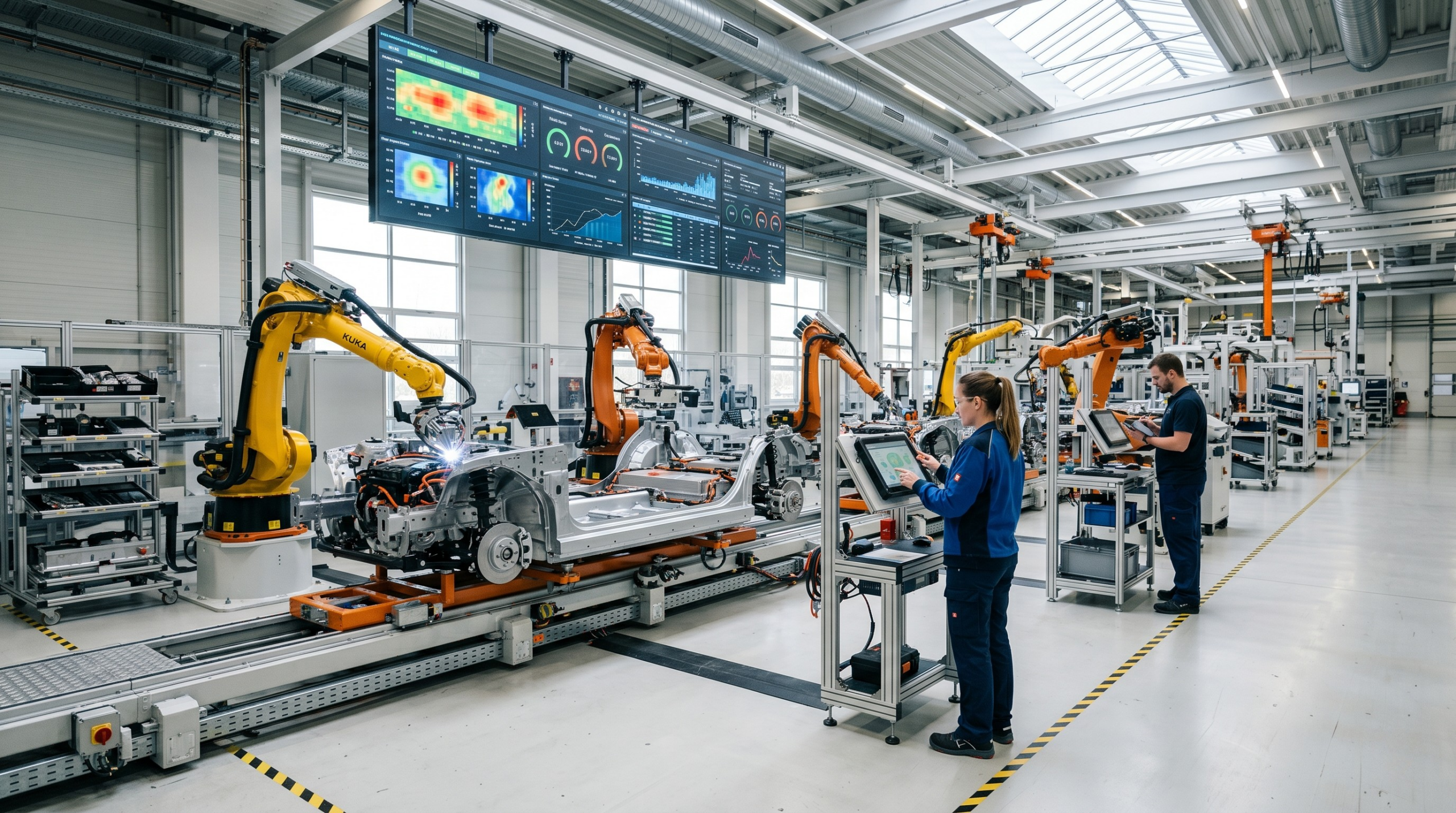
Digitálna transformácia - Nevyhnutný krok pre výrobné podniky, ktoré chcú byť konkurencieschopné | Digital Transformation – An Essential Step for Manufacturing Companies That Want to Stay Competitive

Digital Transformation – An Essential Step for Manufacturing Companies That Want to Stay Competitive

Are you an owner, executive, or manager of a manufacturing company who feels that responsibility keeps increasing—while confidence in decision-making keeps decreasing? Production is planned, machines are running, people are working… yet costs continue to rise, productivity declines, and justifying results to management, owners, or shareholders becomes more and more difficult.

Every day, you make decisions worth thousands of euros, but often without up-to-date and reliable data. Information arrives late, from multiple sources, and frequently contradicts itself. At that point, the issue is no longer about individual capability—it’s about how the entire system is set up. And this is exactly where digital transformation becomes essential.

Digital transformation represents a systematic change in how a company collects data, works with it, and turns it into concrete, data-driven decisions. In an environment of rising energy prices, labor shortages, and constant pressure to improve efficiency, it is no longer just a competitive advantage—it has become an absolute necessity.

Digitálna transformácia - Nevyhnutný krok pre výrobné podniky, ktoré chcú byť konkurencieschopné | Digital Transformation – An Essential Step for Manufacturing Companies That Want to Stay Competitive

What Does Digital Transformation Really Mean?

Digital transformation means that a company starts working with data systematically as the foundation of management. At its core, it is about connecting people, technologies, and data into one functional ecosystem. Data is no longer isolated, but automatically collected, processed, and made available in a way that provides clear meaning for different management levels, from operators to top management.

Such a connected ecosystem makes it possible to:

  • have a real-time overview of what is happening in production,
  • make decisions based on consistent and accurate data instead of estimates,
  • react quickly to deviations and prevent problems,
  • systematically reduce costs and increase productivity,
  • turn collected data into concrete actions with measurable outcomes.

Put simply, digital transformation is about moving from “looking for information” to working with it intentionally. Data thus becomes a natural part of decision-making, not just an additional background document. And this is where the true value of digital transformation lies.

Why Do Companies Postpone Digital Transformation?

Many manufacturing companies are aware that their current way of operating is not sustainable in the long term. At the same time, they often postpone digital transformation. Not because they don’t believe in it, but because they naturally have concerns. In most cases, the main obstacles are not technical but mental barriers.

The most common reasons we encounter are:

  • Production is running fine, we don’t want to interfere with it.”
  • It will be expensive and the ROI is uncertain.”
  • We have older machines, that won’t work here.”
  • We don’t have internal capacity to deal with this.”
  • We don’t want to open Pandora’s box and find out how many issues we really have.”

Paradoxically, the biggest losses often occur precisely in companies that feel they are doing well. Digital transformation does not mean a sudden disruption of production or a massive one-off investment. It is a gradual process that can start small and grow based on real results. Its goal is not to point fingers at mistakes and create extra workload, but to simplify management, relieve people, and bring more confidence into decision-making.

What Does a Typical Plant Look Like Before Digital Transformation?

In many manufacturing companies, production appears to be running smoothly, yet there is no real transparency or control. Information exists, but it is scattered across various systems and documents or stored in people’s heads. As a result, management lacks a single, up-to-date view of reality that would enable fast and accurate decision-making.

A typical scenario in many plants:

  • Data is collected manually and in isolation, without forming a coherent picture.
  • Management receives it with delay, and it is often incomplete, inaccurate, or “polished”.
  • Problems are not prevented, but solved retrospectively—after the losses have already occurred.
  • Energy costs keep rising with no obvious cause and no real option for optimization.
  • Without quality data and production monitoring, it is impossible to deploy advanced technologies.

The result is an environment where issues are handled operationally, not systematically. The potential of machines, people, and processes remains largely untapped, and without data it is impossible to identify or develop this potential in a targeted way. Production may be running, but there is no guarantee that it is efficient and sustainable in the long term.

How Does Digital Transformation Work in Practice?

Digital transformation does not start with a huge project, but with a well-chosen first step. Its goal is to gradually build a reliable flow of data from shop-floor equipment all the way to management decisions. Each phase builds logically on the previous one and creates a foundation for further expansion. Importantly, the entire process can be executed step by step, without disrupting production.

The typical course of digital transformation includes the following steps:

  • Process and existing data analysis
  • Selection of a pilot project with fast payback
  • Robust architecture design that can be scaled in the future
  • Pilot deployment, its evaluation, and subsequent rollout
  • Integration with other systems such as MES, SCADA, OEE, CMMS, EMS/BMS, or BI

With this approach, digital transformation becomes a natural part of how the company is managed, not a one-time initiative. Data is used not only to monitor production but also to actively improve it in real time. Digital transformation thus turns into a continuous cycle of Sense → Collect → Analyze → Act.

What Concrete Benefits Does Digital Transformation Bring?

Digital transformation brings transparency, confidence, and the ability to react to change in time. It enables companies to discover where losses really occur and where hidden potential lies. With real-time data, decision-making moves from a world of estimates into a world of facts. The outcome is more stable management and better control over both costs and performance.

Companies that take a systematic approach to digital transformation achieve:

  • higher productivity without the need for large investments in new technologies,
  • lower operating costs thanks to better resource utilization,
  • faster and better-quality decision-making based on accurate, up-to-date data,
  • better readiness for Industry 4.0 and further innovation,
  • greater long-term competitiveness both domestically and internationally.

Crucially, these benefits do not appear only after several years. The first results are often visible within a few weeks of deploying the initial solutions. Every subsequent step of the transformation then increases the value of the entire system and extends its usability. Digital transformation thus becomes a strategic growth tool, not just another IT project.

How to Start Digital Transformation Without Unnecessary Risk?

If you’re not sure where to begin, the answer is not buying technology, but choosing the right partner. At IoT Industries, we help companies identify the greatest potential for savings, design a tailored solution, implement a pilot project, and continuously optimize production based on data. If you want to discover where unused potential is hidden in your production, get in touch with us. We’ll be happy to show you how digital transformation can work in your business as well.

Why Choose IoT/IIoT Implementation with IoT Industries?

Traditional companies typically specialize in OT (operational technologies, such as production lines and devices) or classic enterprise IT systems. However, we are able to connect both of these worlds. Our unique expertise in integrating OT and IT allows us to deliver innovative solutions in digital transformation, enhancing efficiency, reliability, and competitiveness for manufacturing companies.
ISA-101 – Štandard pre moderné a prehľadné HMI rozhrania | ISA-101 – Standard for Modern and Clear HMI Interfaces

ISA-101 – The Standard for Modern, High-Performance HMI Interfaces

Many manufacturing companies invest heavily in modern technologies, yet the interfaces people work with every day often lag behind. Screens are inconsistent, each one looks different, colors have no clear meaning, and critical information gets lost in a sea of details. The result is higher error rates, lower safety, and unnecessary cognitive load for operators. The ISA-101 standard was created as a response to these issues. It provides clear guidelines for how industrial displays should be designed so they are understandable, easy to read, and help people in manufacturing make the right decisions at the right time.

ISA-101 – Štandard pre moderné a prehľadné HMI rozhrania | ISA-101 – Standard for Modern and Clear HMI Interfaces

What is ISA-101?

ISA-101 is an international standard that defines how human–machine interfaces, known as HMI (Human-Machine Interface), should be designed. These are the screens through which operators monitor production status, control technological processes, and respond to faults. In practice, ISA-101 represents a set of principles and recommendations for a consistent and understandable visual “language” that allows operators to immediately recognize what is operating normally and what is not.

Think of it like road signage. No matter where you drive or what car you use, traffic signs have the same meaning everywhere, so drivers don’t have to think about what they mean. ISA-101 works in the same way—just for industrial screens.

The goal of ISA-101 is to reduce clutter and chaos on screens. Instead of excessive colors, icons, and animations, it relies on simple and clear visualizations where every color or highlight has a clearly defined meaning. When something goes wrong, the problem immediately stands out and cannot be overlooked. In other words, ISA-101 helps people make fewer mistakes and respond faster.

The acronym ISA stands for the International Society of Automation, the organization that develops these standards. The number 101 refers to the specific standard focused on HMI design.

An important milestone is that ISA-101 has recently been adopted as the international standard IEC 63303. This officially places its principles among recognized standards used across industries worldwide. For companies, this provides confidence that ISA-101 is not a “trend” or a subjective design approach, but a practice-proven standard backed by international standardization.

Why was the ISA-101 standard created?

The ISA-101 standard emerged from real-world experience in manufacturing plants. In practice, it repeatedly became clear how inconsistent and cluttered screens lead to errors, delays, and unnecessary stress in production. The problem was often not the technology itself or a lack of data, but the way data was presented to the people who worked with it every day.

Each screen looked different, colors had different meanings, and operators had to learn how to “read” each machine separately. Visual chaos—too many colors, icons, and animations—meant that everything on the screen appeared equally important. When a real deviation or issue occurred, it could easily get lost among other information.

ISA-101 was created as a response to these situations. It introduced clear rules for how information should be displayed so that it can be understood at a glance. The goal was not to create “prettier HMIs,” but interfaces that reduce mental load, shorten reaction time, and help people make the right decisions—even under pressure.

Traditional HMI approachesISA-101
Many colorsMinimalist, meaning-based colors
AnimationsSimple, clear elements
ChaosConsistent structure
Reactive problem handlingPrevention and fast situational awareness
HMI Before
HMI After

The High Performance HMI Principle

One of the key pillars of the ISA-101 standard is the High Performance HMI principle. It is based on a simple but often overlooked fact: the human brain has a limited capacity to process large amounts of visual information at once.

High Performance HMI therefore changes the way we think about HMI design. The goal is no longer “to display everything”, but to display what truly matters, in the right way. The normal operating state of a process should be visually calm and unobtrusive, so operators do not have to constantly monitor every detail. In contrast, deviations, faults, or risky conditions must be clearly and immediately recognizable, without searching or overthinking.

A crucial role in this approach is played by ISA-101 color usage. In High Performance HMI, colors are not decorative—they are signals. Gray and neutral tones represent the normal state, while yellow and orange indicate warnings and deviations. Red is reserved exclusively for critical conditions. This ensures that each color has a clear and consistent meaning.

ISA-101 also takes into account a real-world factor that is often overlooked in practice: color blindness. Approximately 8% of men suffer from some form of color vision deficiency, which means such operators are commonly present in manufacturing environments. For this reason, ISA-101 does not rely on color alone to convey meaning. Critical states and alarms are also supported by shapes, symbols, and clear visual elements, ensuring information is understandable to everyone, regardless of their ability to distinguish colors.

Equally important is the hierarchy of information. High Performance HMI works with multiple screen levels—from high-level overview screens down to detailed views of individual devices. The operator first sees where a problem is occurring, then what is causing it, and only then how to resolve it. The interface guides the user logically and systematically, instead of overwhelming them with information.

What Are the Practical Benefits of ISA-101?

The result of applying ISA-101 is an HMI that supports so-called situational awareness—the ability to quickly understand the current state of production, its development, and potential risks. Operators are not forced to constantly “read the screen”, but react only when necessary. This reduces mental load, shortens reaction time, and significantly minimizes the likelihood of human error.

From a business perspective, ISA-101 High Performance HMI also delivers long-term benefits. New employees can be trained faster, operator substitution between production lines becomes easier, and technology changes can be implemented without introducing visual chaos. The HMI thus becomes a stable and reliable tool that grows together with the production system.

Companies that modernize their HMI according to ISA-101 gain:

  • faster operator response times,
  • lower error rates,
  • higher safety,
  • better use of production data,
  • readiness for the next steps of digital transformation.

Where to Get the ISA-101 Download?

The official ISA-101 download is available on the ISA organization’s website. It is a paid document that includes detailed HMI design rules, recommended practices, screen examples, terminology, and methodology. For serious projects, working with the official documentation is essential—especially if the goal is long-term sustainability of the solution.

How Does ISA-101 Fit into Industry 4.0?

Industry 4.0 brings enormous amounts of data into manufacturing. However, data alone is not enough. If people cannot see it in a clear and understandable form, it remains just numbers hidden in systems that are not effectively used in practice.

This is where ISA-101 plays a critical role, because it ensures that information from SCADA, MES, OEE, EMS, and other systems is presented in a way that operators and management can immediately understand. Thanks to a consistent and clear HMI, data from digital manufacturing is transformed into fast decisions and concrete actions, not just additional reports.

At IoT Industries, we therefore do not see ISA-101 as a standalone “HMI topic”, but as a natural part of digital transformation and Industry 4.0. When designing solutions, we focus on ensuring that screens are not only technically correct, but also readable, consistent, and usable in real operational conditions. The result is a production environment where technology, data, and people work together as one.

A Comprehensive, Tailor-Made Solution from IoT Industries

At IoT Industries, we do not approach ISA-101 only from an implementation perspective. We are also actively involved in its development as members of the ISA-101 committee, which contributes directly to the creation and evolution of this standard. This means that we understand exactly why individual principles were created, how they should be applied correctly, and where the standard is heading next.

Thanks to the combination of international standards, real-world operational experience, and active participation in their development, we are able to design HMI interfaces that are not just “compliant with the standard,” but truly effective in everyday manufacturing operations. If you want to elevate your HMI interfaces to a professional level and prepare your production for the future, get in touch with us. We’ll be happy to show you how ISA-101 works in practice.

Why Choose IoT/IIoT Implementation with IoT Industries?

Traditional companies typically specialize in OT (operational technologies, such as production lines and devices) or classic enterprise IT systems. However, we are able to connect both of these worlds. Our unique expertise in integrating OT and IT allows us to deliver innovative solutions in digital transformation, enhancing efficiency, reliability, and competitiveness for manufacturing companies.
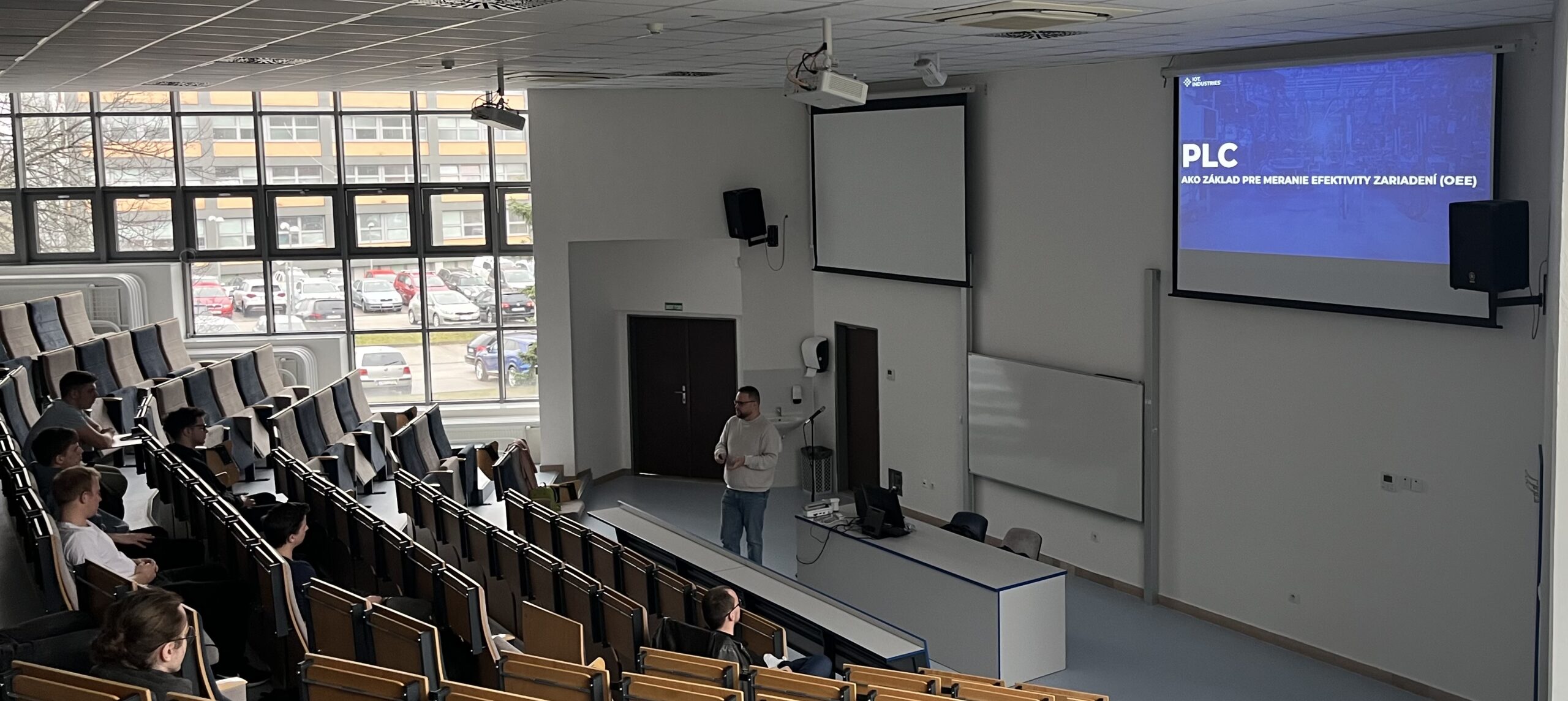
Data mining – Ako z výrobných dát vyťažiť skutočnú hodnotu | Data mining – How to extract real value from manufacturing data

Data Mining – How to Extract Real Value from Manufacturing Data

In today’s manufacturing companies, enormous amounts of data are generated every day. Yet despite this, many organizations feel that they are “getting nothing” out of their data. Data is collected, numbers are tracked, reports exist—but the real relationships, trends, and root causes of problems remain hidden. This is where data mining comes into play—a systematic way to uncover insights in data that are not visible at first glance. In modern industry, data mining becomes a practical tool that helps reduce costs, increase efficiency, and support better decision-making based on facts rather than intuition.

Data mining – Ako z výrobných dát vyťažiť skutočnú hodnotu | Data mining – How to extract real value from manufacturing data

Definition of Data Mining

Data mining is the process of discovering patterns, relationships, trends, and anomalies in large volumes of data. Its goal is not merely to collect and display data, but to uncover hidden connections that are not visible in standard tables, charts, or reports. Simply put, while reporting answers the question “what happened?” and analysis answers “why did it happen?”, data mining goes even further and answers questions such as “what will happen if…?” or “where does the same problem keep recurring?”.

The Importance of Data Mining in Practice

The importance of data mining lies in its ability to transform large volumes of fragmented data into concrete insights that have a real impact on business operations. Without data mining, companies often react only after a problem occurs. With data mining, however, organizations move into a position where they can anticipate problems instead of merely firefighting their consequences. This predictive capability is where its true strategic value lies.

Different Data Mining Techniques

Data mining techniques represent specific analytical methods and procedures used to extract meaningful insights from large datasets. Each technique focuses on a different type of problem—some identify patterns, others relationships, trends, or anomalies. Thanks to these techniques, data mining goes beyond traditional reporting and reveals connections that would otherwise remain unnoticed in tables or charts.

The most common data mining techniques include:

  • Classification – assigning data to predefined categories
  • Clustering – identifying natural groupings in data without predefined rules
  • Association rules – discovering relationships such as “if A occurs, B often follows”
  • Regression analysis – identifying relationships between variables
  • Anomaly detection – identifying abnormal behavior or failures

Their value lies in the fact that they enable automated analysis of thousands to millions of records and the discovery of recurring patterns in data. In manufacturing, this means the ability to identify root causes of defects, uncover inefficient process settings, or detect early signals of impending failures. Without these techniques, data may exist, but its potential remains untapped. With them, data is transformed into actionable insights with a direct impact on costs, efficiency, and production reliability.

Why Data Mining Alone Is Not Enough

Data mining is an extremely powerful tool, but its value only emerges when it has access to high-quality, up-to-date data. If data is collected manually or with delays, analytical results will not reflect reality. That is why data mining makes the most sense as part of a broader digital transformation process that ensures automated and reliable data collection directly from production. Only then can analyses deliver real impact.

One of the most important—yet often underestimated—steps in data mining is data preprocessing. If this step is missing, even the best analytical models will produce distorted or unreliable results. The rule is simple: poor-quality data leads to poor-quality decisions. That is why data preprocessing is the foundation of every successful data mining project.

Before analysis, data must be:

  • cleaned of errors and duplicates,
  • aligned in terms of formats and units,
  • completed with missing values,
  • stripped of irrelevant information,
  • connected across multiple data sources.

How Data Mining and Business Intelligence Are Connected

It is important to distinguish between data mining and Business Intelligence. BI tools, such as Power BI, provide clear dashboards, visualizations, and reports. They show what is happening in production—either in real time or retrospectively. Data mining goes deeper. It works directly with raw data and uses statistical and analytical methods to identify patterns, dependencies, and deviations. Data mining generates insights, while BI then makes those insights accessible in an understandable form.

A Comprehensive Data Approach from IoT Industries

At IoT Industries, we do not view data mining as an isolated analytical activity. For us, it is a natural continuation of production data collection and processing. We help companies build the entire data value chain—from automated data collection and preprocessing, through analysis, to clear visualizations. Our goal is to ensure that manufacturing companies transform data into decisions, decisions into actions, and actions into measurable results.

If you want to discover the potential hidden in your data, get in touch with us and we’ll be happy to show you how data mining can work in your manufacturing environment as well.

Why Choose IoT/IIoT Implementation with IoT Industries?

Traditional companies typically specialize in OT (operational technologies, such as production lines and devices) or classic enterprise IT systems. However, we are able to connect both of these worlds. Our unique expertise in integrating OT and IT allows us to deliver innovative solutions in digital transformation, enhancing efficiency, reliability, and competitiveness for manufacturing companies.
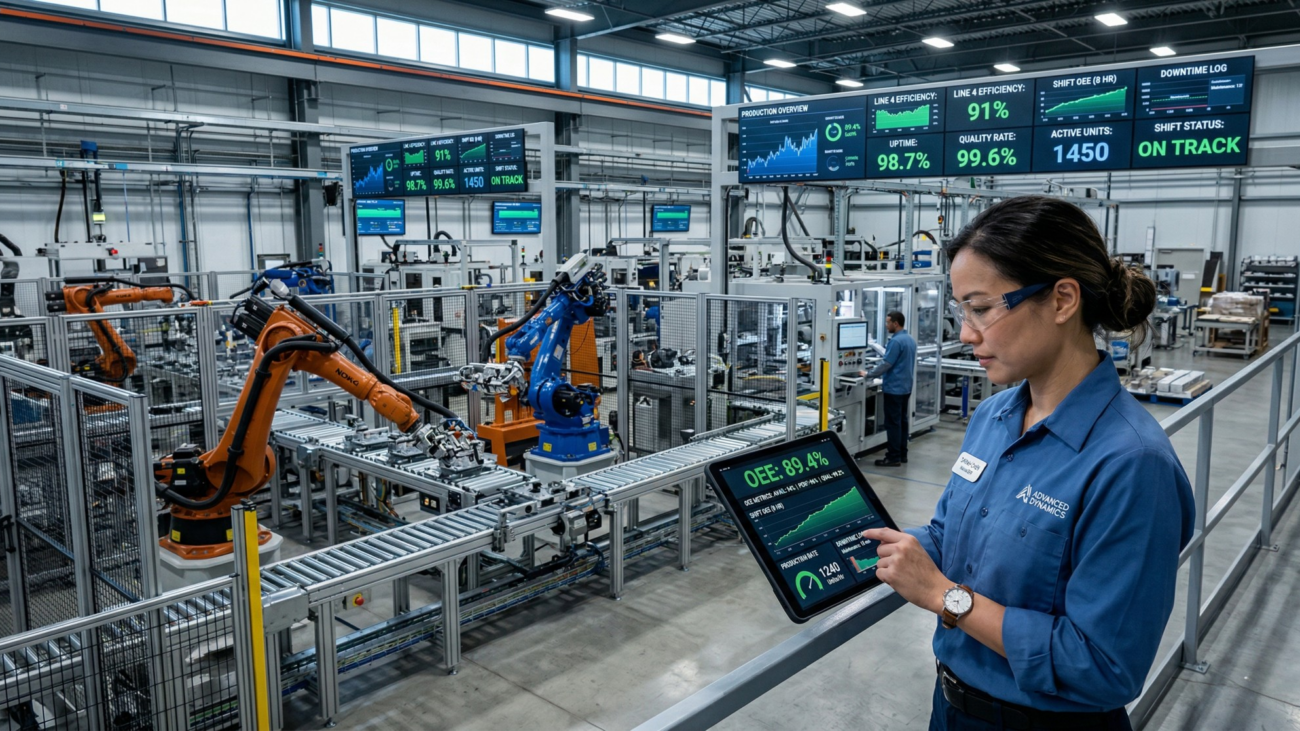
Ako začať s implementáciou Industrial Internet of Things (IIoT) vo výrobe? | How to Get Started with Implementing the Industrial Internet of Things (IIoT) in Manufacturing?

How to Get Started with Implementing the Industrial Internet of Things (IIoT) in Manufacturing?

In today’s manufacturing environment, few people still doubt that data is the key to higher productivity, lower costs, and better decision-making. The real problem is that while most companies know they need the Industrial Internet of Things (IIoT), they often have no clear idea how to actually start implementing it.

You may be facing the same situation. You collect some data, but don’t know how to use it effectively. Pilot projects you tried in the past ended up as isolated solutions with no real path to expansion. You lack reliable data for decision-making. Bottlenecks, downtime, or energy losses are still based on gut feeling rather than facts. And IT and production teams often struggle to agree even on the first basic steps.

In cases like this, the question is not whether you need IIoT. The real question is:

How do you take the first step in a way that makes sense, can be implemented quickly, and delivers real results? How do you ensure that the project doesn’t end as just another expensive pilot with no outcome — but becomes an effective technology that can scale across the entire plant?

Ako začať s implementáciou Industrial Internet of Things (IIoT) vo výrobe? | How to Get Started with Implementing the Industrial Internet of Things (IIoT) in Manufacturing?

The Most Common Dead Ends in Industrial Internet of Things (IIoT) Implementation

Before moving on to the right approach, it’s important to understand the mistakes where most IIoT projects fail. Recognizing them early can save you months of work, thousands of euros, and help you start in a way that has a real chance to grow into a scalable solution.

❌ 1. Starting with technology instead of the problem

Companies often invest in technology without clearly defining what they actually want to solve. Industrial Internet of Things (IIoT) becomes a goal in itself rather than a tool to address specific business problems. The result? Data is collected, but never truly used.

❌ 2. A pilot project that cannot scale

A Proof of Concept (PoC) may work on a single machine, but the architecture is not prepared to scale to dozens more. The problem is often the network infrastructure — remote areas or halls with heavy metal structures lack stable connectivity, making expansion difficult or impossible.

❌ 3. Poor collaboration between IT and OT

Many IIoT projects stall due to conflicting priorities between IT and OT. IT focuses on cybersecurity, encryption, and keeping data inside the corporate network, while OT prioritizes availability and uninterrupted production. Without a shared language and agreed rules, a gap forms that slows down every next step.

❌ 4. Creation of data silos

Another common mistake is building IIoT as a standalone solution, disconnected from MES, SCADA, OEE, CMMS, or ERP systems. Data may be collected, but without context. The company ends up with more data — yet no real value, no unified view of production, and no actionable improvements.

❌ 5. Weak adoption and missing KPIs

After deployment, success depends on daily use. Proper training, ongoing maintenance, and clearly defined KPIs are essential. Without measurable outcomes, management support fades and the project quickly turns into another “IT experiment” with no real impact.

A 5-Step Roadmap to Start IIoT the Right Way

To ensure IIoT becomes a working technology with measurable results — not just another failed pilot — a structured approach is essential. The following five steps represent a proven roadmap we use in real-world projects.

✅ 1. Define the problem, not the technology

Industrial Internet of Things (IIoT) is not about sensors. It’s about solving problems. Decisions about data and sensors should only follow after clear goals are defined.

Start by answering three key questions:

  • Why do we actually need IIoT?
  • What problem are we solving?
  • What specific outcome do we expect?

Examples of meaningful goals:

  • Reduce unplanned downtime
  • Lower energy consumption outside active production
  • Reduce scrap rate on a critical line
  • Gain visibility into real machine efficiency
  • Eliminate manual data collection

✅ 2. Choose a pilot project with fast ROI (Quick Win)

A pilot should not be a “toy.” The right pilot delivers measurable results and visible improvements — understandable even to management. This builds trust, accelerates decision-making, and turns IIoT into a strategic investment.

A good pilot should have:

  • measurable outcomes
  • clearly defined roles and responsibilities
  • fast implementation (2–8 weeks)
  • easy scalability
  • no risk to production stability

Common Quick Win pilots:

  • Machine status monitoring linked to OEE → fastest way to uncover downtime, bottlenecks and hidden productivity potential
  • Energy monitoring → detection of hidden consumption, often 15–20% savings after first deployment
  • Digitalization of manual data collection → immediate error reduction and dozens of hours saved monthly

✅ 3. Design a scalable architecture from the start

Your first pilot must not become a dead end. The architecture should grow seamlessly — from one machine to entire production lines and plants. A strong initial design makes future scaling faster, cheaper, and more stable.

A scalable IIoT architecture typically includes four layers:

Edge layer

  • Identification of devices to be connected to IIoT
  • Selection of appropriate hardware such as sensors, IoT modules, and PLC devices that collect data from machines, production lines, or buildings.

Network layer

  • Verification of network availability or design of alternative solutions if needed
  • Secure data transmission using OPC UA, MQTT, or Modbus
  • Data encryption, network segmentation, and access control

Platform layer

  • Definition of the types of data to be collected, how they will be used, and how they will be presented within the IIoT system
  • Implementation of the platform (Ignition) for data collection, storage, analysis, and visualization

Application layer

  • Transformation of data into information in the form of dashboards, trend analyses, automated alerts, predictions, and reports
  • At the moment when information starts to flow, the most important phase begins — turning insights into decision-making

✅ 4. Launch the pilot project

The pilot validates the solution in real conditions. It reveals technical limits, verifies data quality, and tests how the system fits existing processes — while providing hard evidence for management.

At this stage:

  • IIoT is deployed on selected machines or processes
  • Communication stability is tested
  • Data accuracy and consistency are validated
  • Initial results and production benefits are evaluated

✅ 5. Scale from one machine to the entire plant

The biggest mistake is letting the pilot remain just a pilot. A properly designed IIoT solution should expand to additional machines, lines, buildings, and sites. At this stage, the value of IIoT grows exponentially — not linearly.

How IoT Industries Can Help

Successful digitalization doesn’t start with technology — it starts with the right process. At IoT Industries, we don’t just install sensors and platforms. We build functional, sustainable, and scalable systems with measurable results.

We will:

  • Clarify goals and expectations together, so you know exactly what you want to solve and what value IIoT should bring
  • Perform an IIoT readiness audit (technology, network, processes, IT/OT) to ensure the project is built on solid foundations
  • Design a scalable architecture that can easily expand to dozens of additional machines, production lines, or buildings
  • Deliver the first pilot (PoC) with fast return on investment, so you can see real results within weeks
  • Provide clear dashboards, alerts, and visualizations that enable data-driven work across all management levels
  • Train users, establish data workflows, and ensure the system is used correctly on a daily basis
  • Operate continuous monitoring and optimization, ensuring that IIoT remains reliable, secure, and delivers growing value over time

Comprehensive Tailor-Made Solution from IoT Industries

If you want to see what Industrial Internet of Things (IIoT) can deliver in your specific environment, don’t hesitate to get in touch with us.

Why Choose IoT/IIoT Implementation with IoT Industries?

Traditional companies typically specialize in OT (operational technologies, such as production lines and devices) or classic enterprise IT systems. However, we are able to connect both of these worlds. Our unique expertise in integrating OT and IT allows us to deliver innovative solutions in digital transformation, enhancing efficiency, reliability, and competitiveness for manufacturing companies.
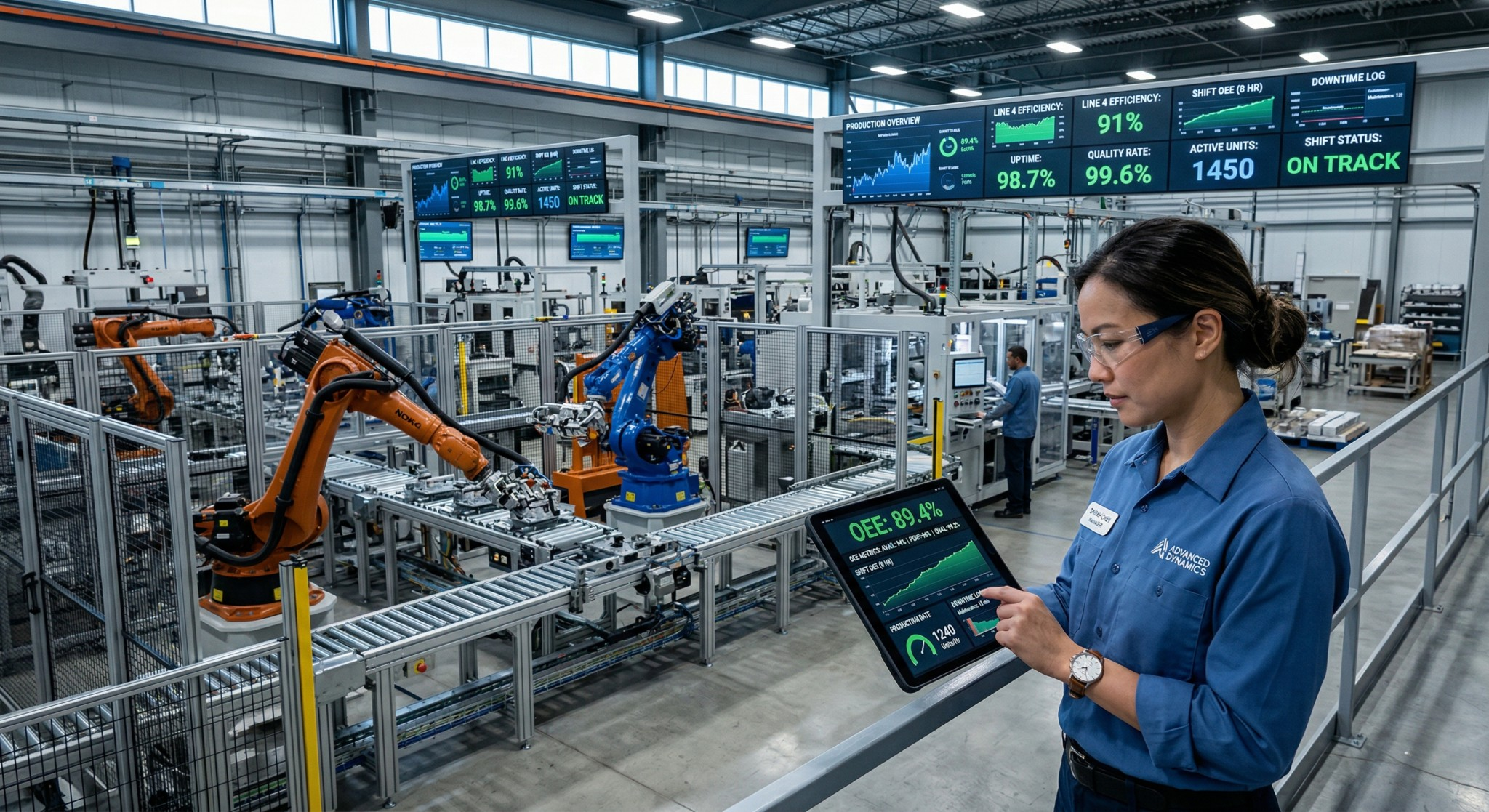
Analysis of Security Risks Brought by Digital Transformation and How to Address Them

Analysis of Security Risks Brought by Digital Transformation and How to Address Them

Digital transformation is now reaching every area of industry. Manufacturing companies are connecting their machines, systems, and departments to increase efficiency, reduce costs, and gain better control over production. However, every new connection also introduces new security risks. And if these risks are underestimated, a single incident can be enough to cause a data breach, disrupt production, and cost the company tens of thousands of euros — along with the trust of its customers.

Why Is Security So Important in Digital Transformation?

The shift from paper-based processes to digital ones means that a company begins to generate and store exponentially more data. At the same time, this data starts flowing between different systems — and every such connection becomes a potential point of attack. Since digital transformation connects the world of IT (information technology) with the world of OT (operational technology), it creates a complex environment where the failure of a single component can impact the entire production process.

What Threatens Companies That Neglect Security?

  • ⚠️ Leakage or loss of sensitive data (customer information, production know-how)
  • ⚠️ Virus or ransomware attacks leading to operational paralysis
  • ⚠️ Production shutdowns and financial losses
  • ⚠️ Damage to reputation and loss of trust from business partners
  • ⚠️ In extreme cases, even emergency situations impacting human safety

What Are the Most Common Security Risks in Digital Transformation?

❌ Connecting outdated systems to the network

Digitalization often begins by connecting old devices to the network to collect data. However, legacy PLCs, computers running Windows XP, or unsupported applications pose a major risk. They lack security updates, don’t support modern encryption, and often operate on outdated communication protocols.

In practice, this means that even a single such element can serve as an open gateway to the entire network. Therefore, every connection of an older system should undergo a security assessment by the IT department, or the entire system should be migrated or modernized to meet current standards.

❌ Direct connection of machines to the internet

It is common practice for machine manufacturers to enable remote diagnostics so that their technicians can quickly resolve malfunctions or update the system’s software. The problem arises when such connections are established without the knowledge of the IT department. This creates so-called “backdoors” through which anyone—whether accidentally or intentionally—can access the system.

If remote access is necessary, it should always be time-limited, encrypted, monitored, and performed only with IT’s approval.

❌ Unsecured Data Transfer to the Cloud

As part of digitalization, cloud services are increasingly used for data collection and visualization. However, the customer (in this case, the manufacturing company) does not always know where their data is being sent or how it is protected. If communication is not encrypted, or if a shared account with a simple password is used, the data may become publicly accessible.

It is equally risky when a supplier operates the cloud outside the EU without informing the customer. Every cloud solution should therefore include encrypted communication (HTTPS, VPN), individual user access, and clearly defined data ownership and server location. Without these measures, the company risks losing control over information that may be strategically sensitive.

❌ Outdated Firmware and Software

Many companies postpone updates with the argument that “the system works fine, so there’s no need to touch it.” However, outdated software and firmware are among the most common entry points for cyberattacks. Older versions often contain known vulnerabilities that are publicly available online. Attackers actively search for and exploit these weaknesses without needing physical access to the system.

The solution? Implement a regular update management process, ideally within a test environment to verify compatibility before deployment. Modern platforms such as Ignition allow fast, seamless updates without downtime — often completed within just a few minutes.

❌ Weak Access Management

Shared accounts, simple passwords, and the lack of login records are still common in many organizations. When an incident occurs, it’s often impossible to determine who made a specific change and when. In addition to the risk of unauthorized access, this also makes post-incident analysis and remediation much more difficult.

Modern systems should therefore use centralized identity management (e.g., Active Directory, SAML, OAuth, OIDC), two-factor authentication, and detailed logging of all user actions. The fundamental principle should be “least privilege”every user has access only to what they truly need to perform their role.

❌ Insufficient Collaboration Between IT and OT

IT and OT are two very different worlds. The IT department protects the company’s network, servers, and data — their top priority is data confidentiality. OT (operational technology), on the other hand, ensures the smooth running of production, where the main priority is system availability. Without proper communication between the two, a gap emerges — one that attackers are quick to exploit.

IT teams often lack understanding of industrial protocols and production logic, while OT teams are not always familiar with cybersecurity principles. The key is to establish a shared framework of security policies, ensuring that IT and OT collaborate already at the design stage of digital solutions, not only when incidents occur.

❌ Human Factor

No firewall or antivirus can prevent human negligence. Clicking on a phishing email, sharing login credentials, or being inattentive while working with a system — these are among the most common causes of cybersecurity incidents. Attackers today use sophisticated social engineering techniques and often target maintenance staff or system administrators directly.

That’s why regular training and awareness programs are just as important as technical safeguards. Every employee should know how to recognize suspicious communication, handle passwords securely, and report unusual or potentially harmful activity to the right person.

How to Prevent Security Risks?

✅ Security as Part of Every Project

Cybersecurity should never be treated as a separate chapter that comes only after a project is completed. On the contrary, every digital project should include a security analysis from the very beginning. Customers should require their supplier to provide a system interconnection diagram detailing interfaces and communication protocols. This allows the IT department to evaluate the security of the solution before deployment, not after an incident occurs.

✅ Regular Updates and Continuous Monitoring

Every system should be continuously monitored and regularly updated. It’s important to track not only server status, but also the availability of connected devices, firmware versions, and communication changes. For example, Ignition allows a quick update to the latest version without downtime — the system can be updated and secured within minutes.

✅ Access Rights Management

No generic usernames, passwords, or shared accounts. Each user should have their own account with clearly defined permissions, following the “least privilege” principle — access only to what is absolutely necessary. Ideally, identity management should be centralized (e.g., Active Directory, LDAP) to ensure full traceability of who accessed the system and when.

✅ Training and Awareness

Security is not only about technology — it’s mainly about people. Employees should understand the basics of cyber hygiene and know what to do in case of an incident. Equally important is to train IT teams in the field of OT, so they understand the specifics of industrial technologies and can respond appropriately to differing priorities (AIC vs. CIA model). All types of software, interfaces, and communication protocols should be evaluated and approved before being deployed.

Case Study: The Cyberattack That Halted Production at Jaguar Land Rover

At the end of August 2025, automotive manufacturer Jaguar Land Rover faced a massive cyberattack that disrupted its production facilities worldwide — including the plant in Nitra, Slovakia. For safety reasons, the company had to immediately shut down several internal IT systems, including those directly controlling production.

The result was a complete production stoppage and subsequent delays in vehicle deliveries across the entire supply chain. In addition to the production downtime, a data breach was also reported, turning the incident into a complex crisistechnical, logistical, and reputational.

Although the exact causes of the attack were not publicly disclosed, the case clearly demonstrated how fragile interconnected digital infrastructures can be. A single unprotected interface, missing update, or weak access point can have global consequences.

This event serves as a warning for every industrial enterprise undergoing digital transformation. Cybersecurity is not an add-on to digital transformation — it is an essential part of it. For digitalization to truly deliver value, it must be secure. Companies that address security from the very beginning not only minimize the risk of incidents but also strengthen trust among their customers and partners.

Comprehensive Tailor-Made Solution from IoT Industries

If you are planning to digitalize your production, think about security from the very first step. At IoT Industries, we help you not only with implementation but also with security analysis, infrastructure design, team training, and long-term system monitoring — ensuring your digital transformation is both efficient and resilient.

Why Choose IoT/IIoT Implementation with IoT Industries?

Traditional companies typically specialize in OT (operational technologies, such as production lines and devices) or classic enterprise IT systems. However, we are able to connect both of these worlds. Our unique expertise in integrating OT and IT allows us to deliver innovative solutions in digital transformation, enhancing efficiency, reliability, and competitiveness for manufacturing companies.