Digitálna transformácia - Nevyhnutný krok pre výrobné podniky, ktoré chcú byť konkurencieschopné | Digital Transformation – An Essential Step for Manufacturing Companies That Want to Stay Competitive

Digital Transformation – An Essential Step for Manufacturing Companies That Want to Stay Competitive

Are you an owner, executive, or manager of a manufacturing company who feels that responsibility keeps increasing—while confidence in decision-making keeps decreasing? Production is planned, machines are running, people are working… yet costs continue to rise, productivity declines, and justifying results to management, owners, or shareholders becomes more and more difficult.

Every day, you make decisions worth thousands of euros, but often without up-to-date and reliable data. Information arrives late, from multiple sources, and frequently contradicts itself. At that point, the issue is no longer about individual capability—it’s about how the entire system is set up. And this is exactly where digital transformation becomes essential.

Digital transformation represents a systematic change in how a company collects data, works with it, and turns it into concrete, data-driven decisions. In an environment of rising energy prices, labor shortages, and constant pressure to improve efficiency, it is no longer just a competitive advantage—it has become an absolute necessity.

Digitálna transformácia - Nevyhnutný krok pre výrobné podniky, ktoré chcú byť konkurencieschopné | Digital Transformation – An Essential Step for Manufacturing Companies That Want to Stay Competitive

What Does Digital Transformation Really Mean?

Digital transformation means that a company starts working with data systematically as the foundation of management. At its core, it is about connecting people, technologies, and data into one functional ecosystem. Data is no longer isolated, but automatically collected, processed, and made available in a way that provides clear meaning for different management levels, from operators to top management.

Such a connected ecosystem makes it possible to:

  • have a real-time overview of what is happening in production,
  • make decisions based on consistent and accurate data instead of estimates,
  • react quickly to deviations and prevent problems,
  • systematically reduce costs and increase productivity,
  • turn collected data into concrete actions with measurable outcomes.

Put simply, digital transformation is about moving from “looking for information” to working with it intentionally. Data thus becomes a natural part of decision-making, not just an additional background document. And this is where the true value of digital transformation lies.

Why Do Companies Postpone Digital Transformation?

Many manufacturing companies are aware that their current way of operating is not sustainable in the long term. At the same time, they often postpone digital transformation. Not because they don’t believe in it, but because they naturally have concerns. In most cases, the main obstacles are not technical but mental barriers.

The most common reasons we encounter are:

  • Production is running fine, we don’t want to interfere with it.”
  • It will be expensive and the ROI is uncertain.”
  • We have older machines, that won’t work here.”
  • We don’t have internal capacity to deal with this.”
  • We don’t want to open Pandora’s box and find out how many issues we really have.”

Paradoxically, the biggest losses often occur precisely in companies that feel they are doing well. Digital transformation does not mean a sudden disruption of production or a massive one-off investment. It is a gradual process that can start small and grow based on real results. Its goal is not to point fingers at mistakes and create extra workload, but to simplify management, relieve people, and bring more confidence into decision-making.

What Does a Typical Plant Look Like Before Digital Transformation?

In many manufacturing companies, production appears to be running smoothly, yet there is no real transparency or control. Information exists, but it is scattered across various systems and documents or stored in people’s heads. As a result, management lacks a single, up-to-date view of reality that would enable fast and accurate decision-making.

A typical scenario in many plants:

  • Data is collected manually and in isolation, without forming a coherent picture.
  • Management receives it with delay, and it is often incomplete, inaccurate, or “polished”.
  • Problems are not prevented, but solved retrospectively—after the losses have already occurred.
  • Energy costs keep rising with no obvious cause and no real option for optimization.
  • Without quality data and production monitoring, it is impossible to deploy advanced technologies.

The result is an environment where issues are handled operationally, not systematically. The potential of machines, people, and processes remains largely untapped, and without data it is impossible to identify or develop this potential in a targeted way. Production may be running, but there is no guarantee that it is efficient and sustainable in the long term.

How Does Digital Transformation Work in Practice?

Digital transformation does not start with a huge project, but with a well-chosen first step. Its goal is to gradually build a reliable flow of data from shop-floor equipment all the way to management decisions. Each phase builds logically on the previous one and creates a foundation for further expansion. Importantly, the entire process can be executed step by step, without disrupting production.

The typical course of digital transformation includes the following steps:

  • Process and existing data analysis
  • Selection of a pilot project with fast payback
  • Robust architecture design that can be scaled in the future
  • Pilot deployment, its evaluation, and subsequent rollout
  • Integration with other systems such as MES, SCADA, OEE, CMMS, EMS/BMS, or BI

With this approach, digital transformation becomes a natural part of how the company is managed, not a one-time initiative. Data is used not only to monitor production but also to actively improve it in real time. Digital transformation thus turns into a continuous cycle of Sense → Collect → Analyze → Act.

What Concrete Benefits Does Digital Transformation Bring?

Digital transformation brings transparency, confidence, and the ability to react to change in time. It enables companies to discover where losses really occur and where hidden potential lies. With real-time data, decision-making moves from a world of estimates into a world of facts. The outcome is more stable management and better control over both costs and performance.

Companies that take a systematic approach to digital transformation achieve:

  • higher productivity without the need for large investments in new technologies,
  • lower operating costs thanks to better resource utilization,
  • faster and better-quality decision-making based on accurate, up-to-date data,
  • better readiness for Industry 4.0 and further innovation,
  • greater long-term competitiveness both domestically and internationally.

Crucially, these benefits do not appear only after several years. The first results are often visible within a few weeks of deploying the initial solutions. Every subsequent step of the transformation then increases the value of the entire system and extends its usability. Digital transformation thus becomes a strategic growth tool, not just another IT project.

How to Start Digital Transformation Without Unnecessary Risk?

If you’re not sure where to begin, the answer is not buying technology, but choosing the right partner. At IoT Industries, we help companies identify the greatest potential for savings, design a tailored solution, implement a pilot project, and continuously optimize production based on data. If you want to discover where unused potential is hidden in your production, get in touch with us. We’ll be happy to show you how digital transformation can work in your business as well.

Why Choose IoT/IIoT Implementation with IoT Industries?

Traditional companies typically specialize in OT (operational technologies, such as production lines and devices) or classic enterprise IT systems. However, we are able to connect both of these worlds. Our unique expertise in integrating OT and IT allows us to deliver innovative solutions in digital transformation, enhancing efficiency, reliability, and competitiveness for manufacturing companies.
ISA-101 – Štandard pre moderné a prehľadné HMI rozhrania | ISA-101 – Standard for Modern and Clear HMI Interfaces

ISA-101 – The Standard for Modern, High-Performance HMI Interfaces

Many manufacturing companies invest heavily in modern technologies, yet the interfaces people work with every day often lag behind. Screens are inconsistent, each one looks different, colors have no clear meaning, and critical information gets lost in a sea of details. The result is higher error rates, lower safety, and unnecessary cognitive load for operators. The ISA-101 standard was created as a response to these issues. It provides clear guidelines for how industrial displays should be designed so they are understandable, easy to read, and help people in manufacturing make the right decisions at the right time.

ISA-101 – Štandard pre moderné a prehľadné HMI rozhrania | ISA-101 – Standard for Modern and Clear HMI Interfaces

What is ISA-101?

ISA-101 is an international standard that defines how human–machine interfaces, known as HMI (Human-Machine Interface), should be designed. These are the screens through which operators monitor production status, control technological processes, and respond to faults. In practice, ISA-101 represents a set of principles and recommendations for a consistent and understandable visual “language” that allows operators to immediately recognize what is operating normally and what is not.

Think of it like road signage. No matter where you drive or what car you use, traffic signs have the same meaning everywhere, so drivers don’t have to think about what they mean. ISA-101 works in the same way—just for industrial screens.

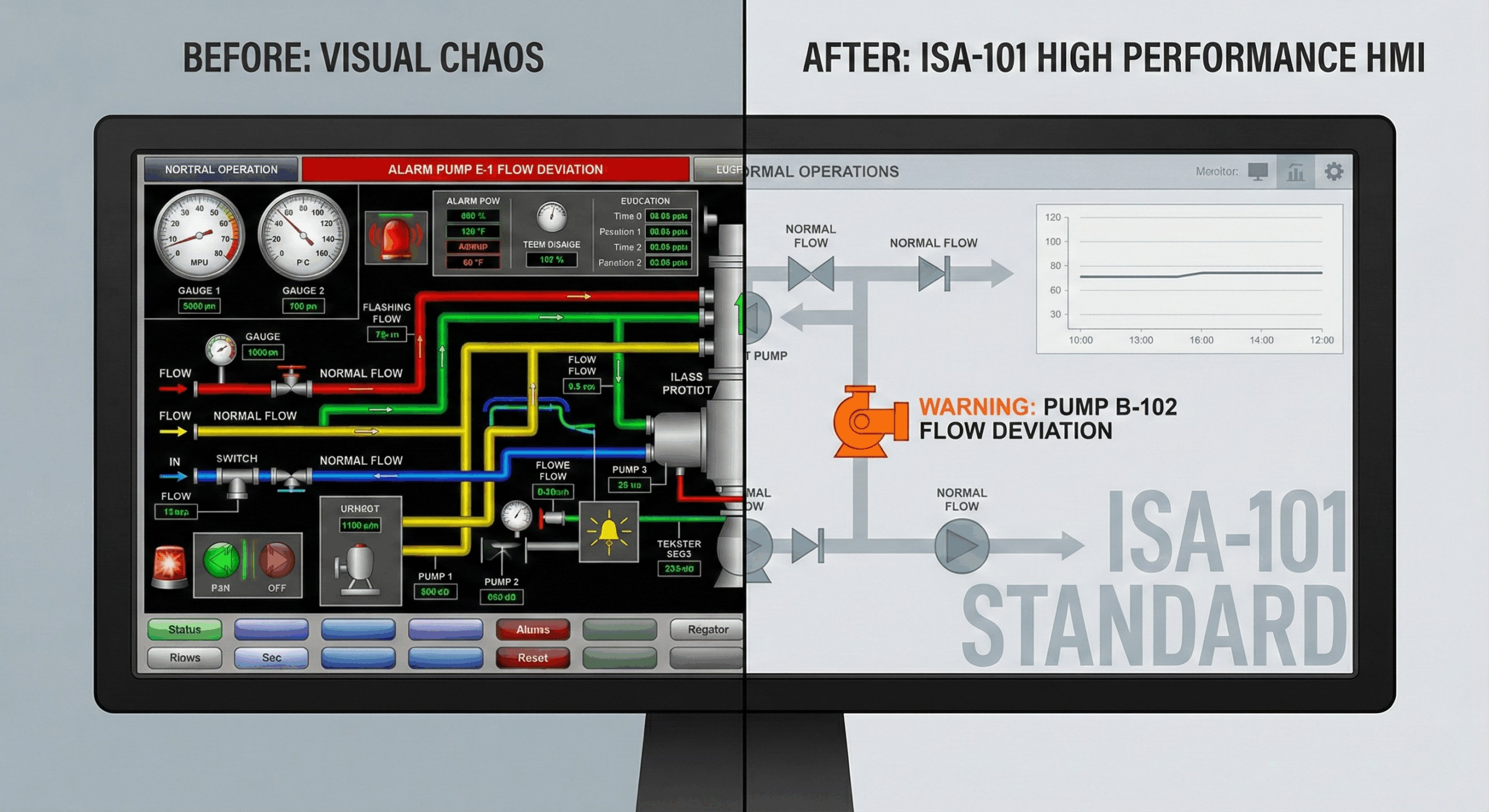
The goal of ISA-101 is to reduce clutter and chaos on screens. Instead of excessive colors, icons, and animations, it relies on simple and clear visualizations where every color or highlight has a clearly defined meaning. When something goes wrong, the problem immediately stands out and cannot be overlooked. In other words, ISA-101 helps people make fewer mistakes and respond faster.

The acronym ISA stands for the International Society of Automation, the organization that develops these standards. The number 101 refers to the specific standard focused on HMI design.

An important milestone is that ISA-101 has recently been adopted as the international standard IEC 63303. This officially places its principles among recognized standards used across industries worldwide. For companies, this provides confidence that ISA-101 is not a “trend” or a subjective design approach, but a practice-proven standard backed by international standardization.

Why was the ISA-101 standard created?

The ISA-101 standard emerged from real-world experience in manufacturing plants. In practice, it repeatedly became clear how inconsistent and cluttered screens lead to errors, delays, and unnecessary stress in production. The problem was often not the technology itself or a lack of data, but the way data was presented to the people who worked with it every day.

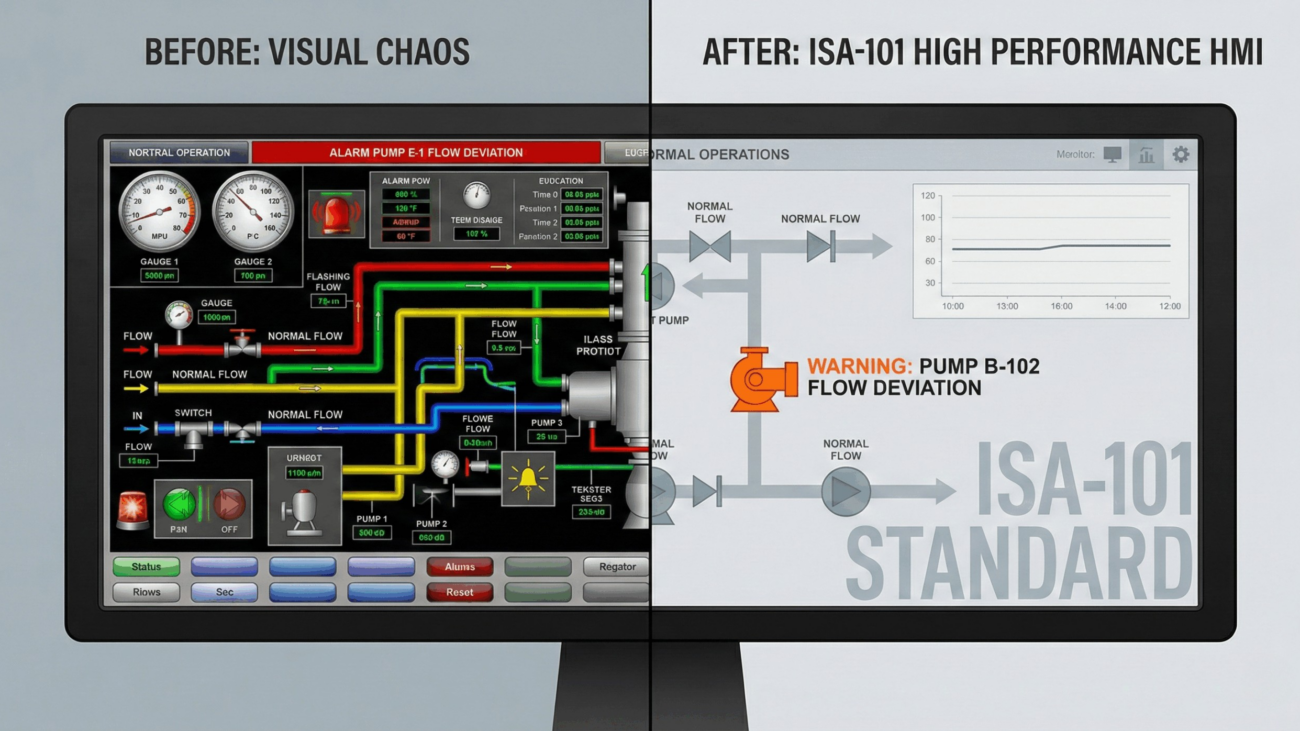
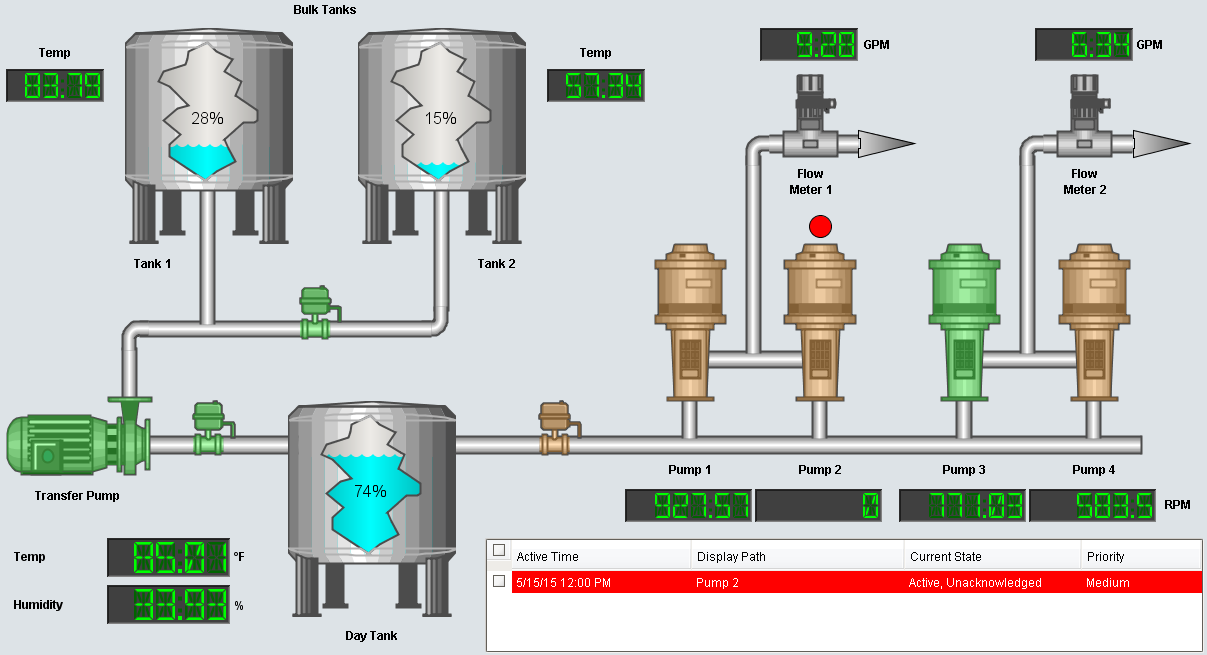
Each screen looked different, colors had different meanings, and operators had to learn how to “read” each machine separately. Visual chaos—too many colors, icons, and animations—meant that everything on the screen appeared equally important. When a real deviation or issue occurred, it could easily get lost among other information.

ISA-101 was created as a response to these situations. It introduced clear rules for how information should be displayed so that it can be understood at a glance. The goal was not to create “prettier HMIs,” but interfaces that reduce mental load, shorten reaction time, and help people make the right decisions—even under pressure.

Traditional HMI approachesISA-101
Many colorsMinimalist, meaning-based colors
AnimationsSimple, clear elements
ChaosConsistent structure
Reactive problem handlingPrevention and fast situational awareness
HMI Before
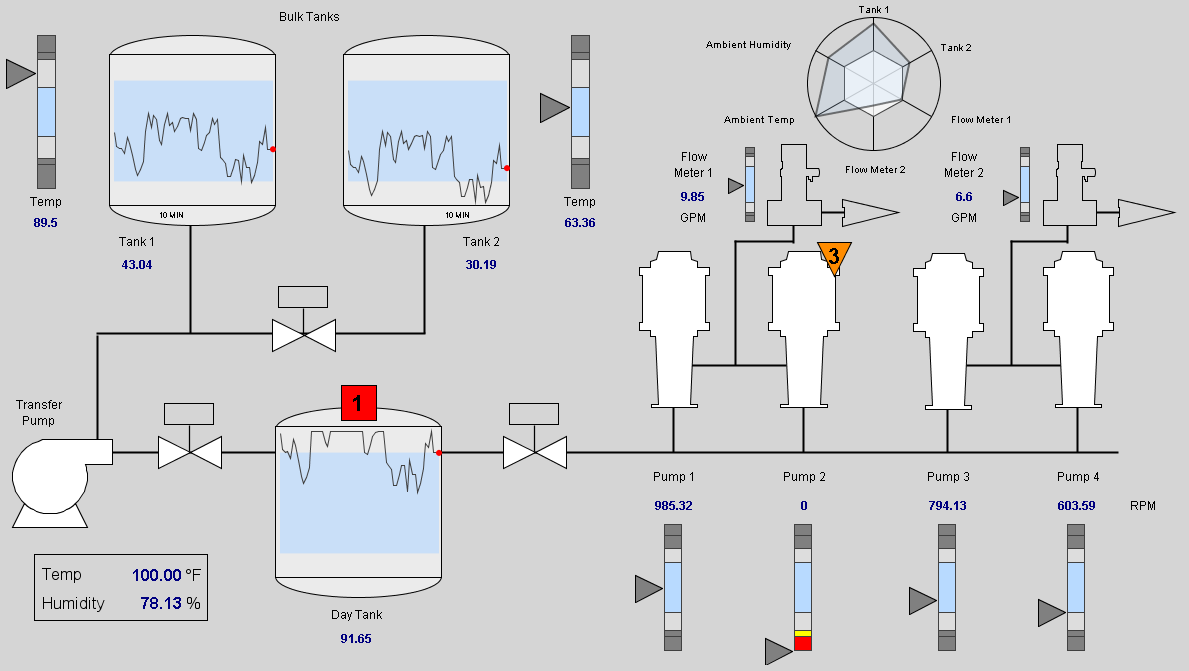
HMI After

The High Performance HMI Principle

One of the key pillars of the ISA-101 standard is the High Performance HMI principle. It is based on a simple but often overlooked fact: the human brain has a limited capacity to process large amounts of visual information at once.

High Performance HMI therefore changes the way we think about HMI design. The goal is no longer “to display everything”, but to display what truly matters, in the right way. The normal operating state of a process should be visually calm and unobtrusive, so operators do not have to constantly monitor every detail. In contrast, deviations, faults, or risky conditions must be clearly and immediately recognizable, without searching or overthinking.

A crucial role in this approach is played by ISA-101 color usage. In High Performance HMI, colors are not decorative—they are signals. Gray and neutral tones represent the normal state, while yellow and orange indicate warnings and deviations. Red is reserved exclusively for critical conditions. This ensures that each color has a clear and consistent meaning.

ISA-101 also takes into account a real-world factor that is often overlooked in practice: color blindness. Approximately 8% of men suffer from some form of color vision deficiency, which means such operators are commonly present in manufacturing environments. For this reason, ISA-101 does not rely on color alone to convey meaning. Critical states and alarms are also supported by shapes, symbols, and clear visual elements, ensuring information is understandable to everyone, regardless of their ability to distinguish colors.

Equally important is the hierarchy of information. High Performance HMI works with multiple screen levels—from high-level overview screens down to detailed views of individual devices. The operator first sees where a problem is occurring, then what is causing it, and only then how to resolve it. The interface guides the user logically and systematically, instead of overwhelming them with information.

What Are the Practical Benefits of ISA-101?

The result of applying ISA-101 is an HMI that supports so-called situational awareness—the ability to quickly understand the current state of production, its development, and potential risks. Operators are not forced to constantly “read the screen”, but react only when necessary. This reduces mental load, shortens reaction time, and significantly minimizes the likelihood of human error.

From a business perspective, ISA-101 High Performance HMI also delivers long-term benefits. New employees can be trained faster, operator substitution between production lines becomes easier, and technology changes can be implemented without introducing visual chaos. The HMI thus becomes a stable and reliable tool that grows together with the production system.

Companies that modernize their HMI according to ISA-101 gain:

  • faster operator response times,
  • lower error rates,
  • higher safety,
  • better use of production data,
  • readiness for the next steps of digital transformation.

Where to Get the ISA-101 Download?

The official ISA-101 download is available on the ISA organization’s website. It is a paid document that includes detailed HMI design rules, recommended practices, screen examples, terminology, and methodology. For serious projects, working with the official documentation is essential—especially if the goal is long-term sustainability of the solution.

How Does ISA-101 Fit into Industry 4.0?

Industry 4.0 brings enormous amounts of data into manufacturing. However, data alone is not enough. If people cannot see it in a clear and understandable form, it remains just numbers hidden in systems that are not effectively used in practice.

This is where ISA-101 plays a critical role, because it ensures that information from SCADA, MES, OEE, EMS, and other systems is presented in a way that operators and management can immediately understand. Thanks to a consistent and clear HMI, data from digital manufacturing is transformed into fast decisions and concrete actions, not just additional reports.

At IoT Industries, we therefore do not see ISA-101 as a standalone “HMI topic”, but as a natural part of digital transformation and Industry 4.0. When designing solutions, we focus on ensuring that screens are not only technically correct, but also readable, consistent, and usable in real operational conditions. The result is a production environment where technology, data, and people work together as one.

A Comprehensive, Tailor-Made Solution from IoT Industries

At IoT Industries, we do not approach ISA-101 only from an implementation perspective. We are also actively involved in its development as members of the ISA-101 committee, which contributes directly to the creation and evolution of this standard. This means that we understand exactly why individual principles were created, how they should be applied correctly, and where the standard is heading next.

Thanks to the combination of international standards, real-world operational experience, and active participation in their development, we are able to design HMI interfaces that are not just “compliant with the standard,” but truly effective in everyday manufacturing operations. If you want to elevate your HMI interfaces to a professional level and prepare your production for the future, get in touch with us. We’ll be happy to show you how ISA-101 works in practice.

Why Choose IoT/IIoT Implementation with IoT Industries?

Traditional companies typically specialize in OT (operational technologies, such as production lines and devices) or classic enterprise IT systems. However, we are able to connect both of these worlds. Our unique expertise in integrating OT and IT allows us to deliver innovative solutions in digital transformation, enhancing efficiency, reliability, and competitiveness for manufacturing companies.
Optimalizácia nákladov vo výrobných podnikoch vďaka digitálnej transformácii | Cost optimization in manufacturing companies thanks to digital transformation

Cost Optimization in Manufacturing Through Digital Transformation

With the rising costs of materials, labor, and energy, cost optimization has become a matter of survival for manufacturing companies. It is no longer enough to cut costs by reducing staff, limiting overtime, or postponing investments. The key to sustainable savings lies in digital transformation — enabling companies to make better use of existing resources, uncover hidden inefficiencies, and turn them into measurable savings.

However, success doesn’t come from a single tool. It’s achieved by connecting the entire infrastructure — from data collection (MES), through production monitoring and control (SCADA), performance tracking (OEE), predictive maintenance (PdM), energy and building management (EMS/BMS), all the way to data processing and reporting (BI).

Optimalizácia nákladov vo výrobných podnikoch vďaka digitálnej transformácii | Cost optimization in manufacturing companies thanks to digital transformation

Why Traditional Cost-Saving Methods Are No Longer Enough

Conventional cost-cutting approaches — such as reducing staff, limiting overtime, or postponing investments — deliver only short-term results and often weaken a company’s competitiveness. These methods don’t address the root causes of high costs; they merely mask the problem temporarily.

Digital transformation, on the other hand, enables companies to identify and eliminate hidden inefficiencies directly within their production processes — from inaccurate planning and unnecessary downtime to excessive energy consumption. With modern systems in place, management gains a precise, real-time overview of production and can make informed decisions that lead to sustainable cost reductions and improved competitiveness.

Where Do Hidden Costs Lurk in Manufacturing?

💸 Without digitalized production processes, companies rely on manual data collection and paper-based planning. This leads to inefficient production management, delayed orders, or — on the other hand — excessive inventory levels.

💸 When remote control and real-time monitoring of equipment are missing, downtimes last longer than necessary. Without historical data, it’s also impossible to analyze the causes of failures and prevent them in the future.

💸 Without tracking machine availability, performance, and quality, companies lose the ability to identify bottlenecks and inefficiencies. As a result, machines operate below their potential, overall productivity drops, and costs rise.

💸 Without predictive maintenance, problems are only addressed after a breakdown occurs. Reactive maintenance means longer downtimes, more expensive repairs, and unplanned costs that could have been easily avoided.

💸 Without systematic monitoring of energy consumption and building systems, companies use more resources than necessary. Without optimization, energy bills rise — and the company risks failing to meet legislative or environmental requirements.

💸 Without proper data analysis and reporting, management makes critical decisions based on inaccurate or delayed information. The result: poor cost optimization, lower productivity, and a weakened competitive position.

What Does Cost Optimization Through Digital Transformation Look Like?

💰 MES (Manufacturing Execution System) connects automated production planning with real-time shop floor activity. It reduces costs by eliminating manual data entry, improving resource utilization, and preventing overproduction or delays.

💰 SCADA (Supervisory Control and Data Acquisition) enables real-time monitoring of production equipment and immediate response to deviations or failures. Historical data storage helps uncover root causes of problems and prevent them from recurring.

💰 OEE (Overall Equipment Effectiveness) measures the availability, performance, and quality of machines. It often reveals that equipment operates at only 50–60% of its actual potential. By increasing OEE, companies can achieve savings comparable to investing in new machinery.

💰 Reactive maintenance is costly and causes unnecessary downtime. In contrast, PdM (Predictive Maintenance) uses sensors and analytics to forecast failures before they occur. This lowers maintenance costs, extends equipment lifespan, and increases production reliability.

💰 EMS (Energy Management System) and BMS (Building Management System) monitor and control energy consumption and building operations in real time. They help reduce energy bills and operating costs while supporting compliance with environmental and regulatory standards.

💰 Business Intelligence (BI) acts as the layer that ties all systems together. It collects, analyzes, and visualizes data, giving management clear answers to key questions: Where do the biggest losses occur? Where can costs be optimized? Which measures bring the greatest savings?

Cost optimization doesn’t always mean budget cuts. It often means uncovering and eliminating inefficiencies, waste, and downtime. But this is only possible when a company works with accurate data and reliable tools. If you want to reduce costs, increase productivity, and prepare your business for Industry 4.0, the path forward lies in digital transformation.

Comprehensive Tailor-Made Solution from IoT Industries

At IoT Industries, we’ll help you every step of the way — from designing your data architecture, integrating systems, and connecting technologies to creating custom interactive dashboards tailored to your operations.
Contact us and discover how modern digital solutions can save your company tens of thousands of euros every year.

Why Choose IoT/IIoT Implementation with IoT Industries?

Traditional companies typically specialize in OT (operational technologies, such as production lines and devices) or classic enterprise IT systems. However, we are able to connect both of these worlds. Our unique expertise in integrating OT and IT allows us to deliver innovative solutions in digital transformation, enhancing efficiency, reliability, and competitiveness for manufacturing companies.
Produktivita práce pod lupou 🔎 Odhaľte skryté straty vo vašej výrobe | Productivity Under the Microscope 🔎 Uncover Hidden Losses in Your Production

Productivity Under the Microscope 🔎 Uncover Hidden Losses in Your Production

At first glance, everything seems to be working as it should. Machines are running, people are working, orders are being fulfilled. You might feel that you’re already getting the most out of your available capacities—that this is the maximum your operation can deliver. But this is often where the greatest potential lies hidden.

Many companies today operate under the impression that they’re running at full capacity, while in reality, they may be losing tens of percent of their true potential. Losses hidden in minor downtimes, underutilized resources, or inefficient processes often go unnoticed because they aren’t visible at first glance. This is why labor productivity is crucial—not as an abstract concept, but as a concrete metric that shows where real improvements are possible.

Produktivita práce pod lupou 🔎 Odhaľte skryté straty vo vašej výrobe | Productivity Under the Microscope 🔎 Uncover Hidden Losses in Your Production

What is labor productivity and why should you start measuring it?

Labor productivity shows how much value your company can create in a given period. Whether it’s the number of units produced, completed orders, or the volume of services delivered, it always answers the same essential question: What is the output compared to the time, people, and technology required?

That’s why productivity is one of the most important indicators of efficiency. If it’s low, the company must invest more energy, time, and money to achieve the same result, which translates into higher costs, lower competitiveness, and weaker business outcomes. On the other hand, increasing productivity allows you to achieve more with what you already have—without unnecessary investment in new machines or the need to hire more people.

There are various ways to measure productivity. These include metrics such as GDP per employee, GDP per hour worked, output per worker, or machine utilization efficiency (OEE). The right metric depends on the type of production and the goals you aim to achieve.

Since proper measurement is the foundation of all improvement, we’ll cover this topic in more detail in a dedicated article, “How to Calculate Labor Productivity.”

Labor productivity in the EU and Slovakia

Looking at the numbers, Slovakia has long lagged behind the EU average in terms of labor productivity. According to Eurostat, the Slovak economy reaches only about 70 to 80% of the average labor productivity in the EU. This means the average Slovak worker produces less value per hour than their counterpart in Western Europe.

For manufacturing companies, this is not only a warning sign but also a huge opportunity. The productivity gap isn’t necessarily due to a lower quality workforce. More often, it’s the result of insufficient use of technology, a lack of automation, poor production planning, or missing reliable data for decision-making. Simply put, Slovak firms often work more, but achieve less.

Common problems in companies that don’t measure productivity

If a company doesn’t measure labor productivity or relies only on estimates, the same scenario tends to repeat itself. Production may be running, but results don’t match the effort. Everything might look fine on the surface, but beneath that, small inefficiencies accumulate into major losses.

❌ 1. Unclear Downtimes

Without precise measurement, no one knows exactly when and why machines stop, how long downtimes last, or what their real impact is. Planned, unplanned, and short downtimes are accepted as “just part of the job” instead of being systematically reduced or eliminated.

❌ 2. Rapidly Rising Costs Without Clear Cause

Unnecessary waiting, material waste, overproduction, inefficient production cycles, and reduced machine speeds all increase costs, even when no one seems to be doing anything wrong. If these losses aren’t tracked and analyzed, they can’t be identified, quantified, or strategically reduced.

❌ 3. Invisible Quality Losses

Without consistent measurement, only the biggest failures are reported, while smaller but frequent errors during startup or in-process often go unnoticed. These can add up to significant losses. If they aren’t tracked, they won’t be addressed—and remain hidden costs.

❌ 4. Lack of Transparency in Production Processes

If performance, downtimes, and other key data are recorded manually (on paper or in spreadsheets), the outputs are often inaccurate, delayed, and don’t reflect real-time conditions. There’s no clear view of what’s happening on the floor, making it hard to respond quickly. This lack of agility is a serious disadvantage today.

❌ 5. Ineffecient Reporting and Intuition-Based Decisions

Without reliable performance data, decisions are made based on estimates, experience, or gut feeling. The result is often poor planning, unbalanced workloads, unnecessary stress, and ultimately, increased losses.

These problems result in tangible long-term consequences:

  • Lower efficiency
  • Higher operating costs
  • Reduced competitiveness at home and abroad

How to increase productivity without unnecessary investments

The good news is that higher productivity doesn’t necessarily mean buying new machines, hiring more staff, or pushing people to work faster at the cost of quality. In many cases, it’s the opposite. The greatest impact often comes from better use of what you already have. The key is to know where losses arise, why they happen, and how to reduce or eliminate them.

✅ 1. Start by measuring productivity precisely

The foundation of improvement is accurate data. Without measurement, you can’t know where losses occur or how much they impact your performance. In many cases, productivity increases by 10 to 15% immediately after measurement begins—a phenomenon known as the “halo effect,” where people naturally perform better because they know their output is being tracked.

✅ 2. Automate data collection and eliminate manual errors

If you’re still recording downtimes, breakdowns, and other data manually, you’re leaving room for errors and delays. The solution is automated data collection from machines, production lines, and sensors, using IIoT systems or traditional SCADA/MES platforms. These provide real-time, accurate insights into what’s happening in production.

✅ 3. Focus on uncovering hidden losses

Wasted time, frequent interruptions, poor planning—these are common but often overlooked productivity killers. The “Six Big Losses” model helps categorize these losses into availability, performance, and quality. What makes this model powerful isn’t just naming the six main losses, but assigning clear reduction goals to each. Some can be eliminated completely, while others should be minimized.

✅ 4. Optimize production planning

When you have real-time visibility into machine capacities, line status, and resource availability, you can align production with actual demand—avoiding overloads and downtimes. Integrating MES with ERP or BI systems lets you manage production, maintenance, logistics, and inventory as a unified, data-driven process.

✅ 5. Use visualization and clear reporting

Data is only useful when it’s accessible and understandable. Interactive dashboards in tools like Ignition or Power BI give managers and line operators instant insights into production status, performance, and the root causes of downtime. These insights must be available not just at weekly meetings, but in real time and to everyone who needs them.

✅ 6. Make productivity improvement an ongoing effort

A common mistake is to treat productivity improvements as one-time projects. Successful companies know it’s a continuous process. Regular performance reviews, KPI tracking, and strategic adjustments help maintain improvements and adapt quickly to new challenges.

Labor productivity isn’t about making people work more, but about empowering them to work smarter. To reduce downtime, prevent overloads, and make decisions based on real data—not guesses. That’s why measuring productivity isn’t just another metric. It’s a tool for better decisions, sustainable growth, and a stronger operation.

A Custom Solution from IoT Industries

At IoT Industries, we help you gain precise insights into the performance of your machines and processes, uncover hidden losses, and set measurable goals for boosting productivity. We bring experience with automated data collection, SCADA, MES, OEE implementation, and more—so you can make decisions based on facts, not assumptions. Contact us to find out where your biggest improvement opportunities lie—and how to unlock them. Let’s take your production to the next level.

Why Choose IoT/IIoT Implementation with IoT Industries?

Traditional companies typically specialize in OT (operational technologies, such as production lines and devices) or classic enterprise IT systems. However, we are able to connect both of these worlds. Our unique expertise in integrating OT and IT allows us to deliver innovative solutions in digital transformation, enhancing efficiency, reliability, and competitiveness for manufacturing companies.

Optimalizácia výrobných procesov, ktorá prináša reálne výsledky | Manufacturing Process Optimization That Delivers Real Results

Manufacturing Process Optimization That Delivers Real Results

Manufacturing is changing faster than ever. A globalized market, fluctuating demand, rising costs, and increasing pressure on lead times and flexibility — all of this means that simply producing is no longer enough. You need to produce efficiently. Every unnecessary step, every underutilized resource, every inaccuracy in planning or maintenance leads to a loss of time, money, resources, reputation — and ultimately competitiveness.

Optimalizácia výrobných procesov, ktorá prináša reálne výsledky | Manufacturing Process Optimization That Delivers Real Results

What is the key to sustainable efficiency? It’s not about pushing people harder or investing in new technologies without a clear strategy. The key is optimizing your manufacturing processes. But this isn’t a one-time project — it’s a systematic approach that constantly identifies bottlenecks, uncovers hidden reserves, and transforms data into tangible improvements in real time. That’s what drives lower costs, higher productivity, and overall better performance across your operations.

Why does manufacturing process optimization often fail?

Many companies have tried to “streamline” production in the past. They’ve modernized machines, adjusted shifts, introduced KPIs… Yet problems persist. Delays continue, costs rise, competitiveness drops. Why?

Because without reliable data, it’s impossible to objectively identify where the problems arise, what causes them, or how to fix them. Optimization efforts often stop at the symptoms — not the root cause.

And that brings us to the most common reason why optimization fails: many manufacturers still work with inaccurate or incomplete data. Data is collected manually, reports arrive late, and the numbers often don’t add up. As a result, decisions are based on guesswork, gut feeling, or outdated templates — not current reality. And without real data, there can be no real optimization.

What does truly effective optimization look like?

Manufacturing process optimization isn’t just about doing things faster or cheaper. It’s a far more strategic and systematic effort. It means understanding the entire value stream — from the moment raw material enters your facility to the final shipping of finished goods. The goal is to identify and eliminate anything that doesn’t add value for the customer. In practice, this includes several key steps:

Gain complete and transparent visibility of your operations in real time. Because only with accurate, up-to-date data can you identify bottlenecks and make decisions based on facts, not assumptions.

Minimize all forms of waste. Whether it’s time, material, machinery, human capital, or energy — any waste represents untapped potential and unnecessary cost.

Optimize planning and production management. Instead of relying on ideal models or historical templates, you need to plan based on current priorities and real capacity — including staff, machines, and materials.

Shift from reactive to predictive and condition-based maintenance. That means using real-time data about the current technical state and performance of machines — not waiting until failures occur.

What role does digital transformation play in this?

Thanks to digital transformation, data is no longer collected manually — it’s gathered automatically, straight from machines, production lines, sensors, and measurement devices. These insights are immediately connected with other systems like ERP, warehouse management, maintenance, or quality control.

The result is a Single Source of Truth (SSOT) — a consistent and reliable data layer that every level of management can trust, from operators to the CEO.

But to make such complex data flows work as one cohesive ecosystem, you need the right tools. This is where modern digital solutions like SCADA, MES, or EMS come into play. These systems together create an interconnected, centralized environment where data can be collected, analyzed, and visualized across the entire production process — in real time, from one place.

With this approach, data is no longer buried in complex tables — it’s transformed into clear, interactive dashboards that instantly show material availability, equipment status, energy consumption, production progress, or deviations from the plan. No more waiting for weekly reports or gathering data from multiple departments — everything is available instantly, in one place.

When efficiency drops, equipment fails, or anomalies occur, management can respond immediately. Manufacturing optimization thus becomes a proactive management tool, not just reactive analysis. Companies can prevent issues before they escalate. And even more importantly, optimization becomes a continuous, data-driven improvement process — not a one-off initiative.

A tailored solution from IoT Industries

At IoT Industries, we believe that real manufacturing process optimization starts with accurate data and well-connected systems. We help manufacturing companies set up their entire data pipeline — from collection to visualization — so they can make smarter, faster, and more confident decisions.

If you want to identify exactly where your losses are and how to turn them into savings and performance gains, we’re here to help. Let’s talk.

Why Choose IoT/IIoT Implementation with IoT Industries?

Traditional companies typically specialize in OT (operational technologies, such as production lines and devices) or classic enterprise IT systems. However, we are able to connect both of these worlds. Our unique expertise in integrating OT and IT allows us to deliver innovative solutions in digital transformation, enhancing efficiency, reliability, and competitiveness for manufacturing companies.

10 dôvodov, prečo je implementácia systémov SCADA a MES kľúčom k úspechu vášho podniku | 10 Reasons Why Implementing SCADA and MES Systems is the Key to Your Business Success

10 Reasons Why Implementing SCADA and MES Systems is the Key to Your Business Success (Part 2)

In the first part of this article, we discussed the major challenges that manufacturing companies face. The solution to these challenges lies in implementing SCADA and MES systems. These systems enable transparent management and optimization of production processes. While SCADA focuses on monitoring and controlling production equipment, MES is dedicated to production management, planning, tracking efficiency, and ensuring smooth production operations.

10 dôvodov, prečo je implementácia systémov SCADA a MES kľúčom k úspechu vášho podniku | 10 Reasons Why Implementing SCADA and MES Systems is the Key to Your Business Success

➡️ SCADA

SCADA (Supervisory Control and Data Acquisition) serves as the eyes and hands of operators. It provides real-time oversight of manufacturing technology. It primarily communicates with PLC (Programmable Logic Controller) systems, which control individual machines. However, in the IoT environment, SCADA can also communicate directly with sensors via protocols such as MQTT and OPC UA.

✅ Immediate Response to Failures

One of the key advantages of SCADA is its ability to immediately respond to failures, minimizing downtime and reducing production losses. If a machine shuts down unexpectedly, experiences performance drops, or technological deviations (e.g., unacceptable temperatures or pressures), operators can quickly intervene and restore production.

✅ Remote Control of Technology

Another key feature of SCADA is remote control of technology. It allows operators to turn equipment on and off remotely, as well as adjust parameters such as speed, pressure, and temperature directly from their interface without having to be physically present at the machine.

✅ Historical Data Storage for Analysis and Optimization

SCADA also stores historical data, enabling not only retrospective analysis of problems but also long-term improvements in production processes.

❓ When is SCADA (Not) Suitable for a Business?

If a SCADA system were not implemented, operators in smaller plants might be able to manage oversight manually. However, in large-scale enterprises, this would significantly extend response times and cause losses. Additionally, without data collection, it would be impossible to generate accurate reports, further complicating strategic decision-making at the management level.

➡️ MES

While SCADA monitors technological equipment, MES (Manufacturing Execution System) manages the production process itself. It integrates machines, materials, and workers to provide a comprehensive view of the entire production process — from planning and execution to storage. While SCADA collects data at intervals of seconds, MES links them to orders, allowing managers to monitor production status in real-time and respond to deviations immediately.

✅ Digitalization and a Unified Data Source

The MES system replaces paper-based processes with electronic data collection, ensuring that all information is available in real-time and eliminating errors caused by manual data handling.

It allows both automated and manual data entry throughout the entire production process, creating a single source of truth (SSOT). All data is centrally recorded and accessible at every level of management, eliminating delays, inaccuracies, and adjustments caused by manual reporting. Decision-making is based on hard real-time data.

✅ Automated Production Planning

One of the main benefits of MES is automated production planning. The system uses data from ERP (e.g., SAP) to manage manufacturing operations based on orders and available resources, providing a complete real-time overview of production status (WIP – Work in Progress). MES also synchronizes production data with ERP systems, ensuring seamless data exchange between the company and the shop floor without the need for manual intervention.

✅ Efficient Workforce Management

The system ensures that only qualified employees are assigned to production operations. By logging into the MES system, employees verify their credentials, and the system checks whether they meet the requirements for operating a specific machine or performing a particular task. This process eliminates errors caused by unqualified workers and reduces the likelihood of workplace accidents.

✅ Optimization of Resource Utilization

MES provides detailed insights into the use of production resources, whether it be machines, materials, or personnel. It monitors equipment conditions, reports failures, and alerts to potential shortages of materials. If necessary, the system automatically notifies the warehouse to replenish materials before production is disrupted. This approach minimizes downtime and maximizes resource utilization.

✅ Production and Product Traceability

Every manufactured unit or batch is linked to all production data — from raw materials and individual operations to the final product. This system allows for full traceability in the event of a complaint, which is crucial in industries with strict regulations, such as pharmaceuticals and food production.

✅ Quality and Performance Management

MES actively monitors the quality of production processes. It detects deviations from standards and immediately signals them, minimizing the risk of production errors. Quality data can be integrated with external software for Statistical Process Control (SPC) or Laboratory Management Systems (LMS), ensuring even more precise quality management.

The system also calculates OEE (Overall Equipment Effectiveness), identifying production bottlenecks and providing tools for their optimization.

✅ Digitalization of Documentation

MES automates document management, ensuring that workers have access to all necessary information, such as work instructions, technical drawings, and safety guidelines, at the right time. Documentation is available electronically, often via QR codes placed directly on machines, reducing the need for physical documents and increasing operational efficiency.

✅ Efficient Maintenance Management

MES plays a significant role in maintenance management. The system enables preventive maintenance planning, reducing unexpected failures and minimizing costs associated with reactive maintenance. Maintenance staff can log interventions, plan tasks, and monitor equipment status directly in the system.

MES also analyzes historical equipment performance data, allowing businesses to predict potential failures before they occur. In combination with SCADA, businesses can gradually transition to predictive maintenance, leveraging advanced analytical algorithms to detect anomalies and prevent failures before they happen.

❓ When is MES (Not) Suitable for a Business?

Not every business requires all MES system functionalities. While some companies implement only selected modules to address specific issues, industries such as pharmaceuticals or food production (F&B) often require a comprehensive MES system. These sectors must ensure batch traceability, quality control, and strict regulatory compliance, as even the smallest mistake can have serious consequences for consumer health.

Companies that aim to improve efficiency, reduce costs, and increase competitiveness can no longer rely on outdated manual processes and paper-based records. SCADA and MES are not just technologies—they are strategic tools that enable businesses to transition to smart manufacturing, driven by real-time data and automated processes. Are you ready to take the next step?

10 Reasons to Implement SCADA and MES

📌 1. Increased transparency in production processes

📌 2. Faster and more accurate reporting

📌 3. Precise inventory management

📌 4. Immediate response to issues

📌 5. Reduced downtime and prevention of unplanned failures

📌 6. Improved workforce management and error reduction

📌 7. Higher product quality and elimination of production defects

📌 8. Complete traceability and tracking of production processes

📌 9. Increased efficiency, productivity, and optimization of production resources and costs

📌 10. Readiness for Industry 4.0 and future innovations

Why Choose IoT/IIoT Implementation with IoT Industries?

Traditional companies typically specialize in OT (operational technologies, such as production lines and devices) or classic enterprise IT systems. However, we are able to connect both of these worlds. Our unique expertise in integrating OT and IT allows us to deliver innovative solutions in digital transformation, enhancing efficiency, reliability, and competitiveness for manufacturing companies.

10 dôvodov, prečo je implementácia systémov SCADA a MES kľúčom k úspechu vášho podniku | 10 Reasons Why Implementing SCADA and MES Systems is the Key to Your Business Success

10 Reasons Why Implementing SCADA and MES Systems is the Key to Your Business Success (Part 1)

SCADA and MES systems are key pillars of modern manufacturing companies striving to optimize production processes, increase efficiency, and minimize costs. Despite their advantages, many businesses still rely on outdated manual processes, paper-based records, and inaccurate estimates. To enhance competitiveness and adapt to changing market demands, implementing SCADA and MES is no longer just an option. It is a necessity.

10 dôvodov, prečo je implementácia systémov SCADA a MES kľúčom k úspechu vášho podniku | 10 Reasons Why Implementing SCADA and MES Systems is the Key to Your Business Success

Challenges Faced by Companies Without SCADA and MES

❌ Lack of Transparency in Production Processes

The biggest challenge in such companies is the lack of transparency in production. Without a comprehensive system for monitoring and managing manufacturing, efficiency is often estimated based on manual records, Excel spreadsheets, or inaccurate reports.

However, these data do not reflect the real situation. When companies try to optimize costs or increase production, they lack clear data to pinpoint bottlenecks and identify where the biggest time or financial losses occur.

❌ Inefficient Reporting and Production Tracking

One of the main consequences of a lack of transparency is inefficient reporting. Many companies struggle with slow and inaccurate reporting. Obtaining the necessary data can take days or even weeks. By the time management receives reports, they are often outdated and do not reflect the current state of production. In many cases, reports are distorted or embellished because data is collected manually, making accuracy dependent on subjective reporting from employees.

This issue is particularly evident in tracking work-in-progress. At the end of the month, an ERP system like SAP might record a lower number of produced units than planned. However, the company may struggle to quickly determine whether the products have been manufactured or are still in production. This leads to delays, inefficient planning, and difficulties in meeting deadlines.

A similar issue arises in production planning. If a production plan changes, many companies still rely on printed documents. These must be physically distributed to workers on the shop floor, and changes must be explained in person. This results in unnecessary delays and the risk that some employees may miss critical updates.

❌ Material Tracking and Inventory Management Issues

Another significant challenge is material tracking and inventory management. In many cases, production teams realize they are out of materials only when workers on the production line run out. When an operator reports a material shortage, it often takes hours to resolve the issue. The material must be manually picked from storage, checked, transported to the right location, and prepared for further processing. During this time, production slows down or completely stops, causing downtime and disrupting delivery schedules.

The absence of a digital system also affects the accuracy of material usage. There is no mechanism to ensure that workers use the correct material in the required quantity. Without automated verification, operators may use incorrect components or incorrect dosing, leading to defective products or even damage to machinery.

❌ Delayed Fault Detection and Reactive Maintenance

In large and complex manufacturing facilities, it is impossible to have everything physically monitored at all times. Production often relies on workers noticing a malfunction and contacting maintenance, leading to time losses and unplanned downtime.

Without proactive monitoring, companies cannot detect warning signs before a failure occurs. For example, an increase in oil temperature in a machine may indicate an impending issue. However, if there is no monitoring system in place, maintenance only reacts when an actual failure happens. This approach, known as reactive maintenance, means problems are only addressed after they have already caused disruptions.

Additionally, when a failure occurs, the root cause is often unclear. There are no historical records indicating which parameters were out of range, what actions preceded the failure, and what interventions operators attempted. As a result, companies simply “extinguish the fire” and hope the issue does not recur, rather than preventing it proactively.

❌ Limited Remote Control of Production

Without a SCADA system, controlling production equipment is only possible locally. Operators must be physically present at the machines to make adjustments. If an error occurs or a process is configured incorrectly, there is no way to address the issue remotely, leading to extended response times and costly consequences.

For instance, if a worker misconfigures the routing of a manufactured product, employees must manually transfer materials to the correct location. This causes delays and disrupts production planning. Moreover, many local control panels do not require operator authentication, meaning that if an error occurs, there is no way to trace who was responsible. This lack of accountability prevents targeted prevention measures such as training.

❌ Limitations in Workforce Management

Many companies aim to optimize labor costs, but without accurate data, this becomes extremely challenging. Without an MES system, it is impossible to track individual worker efficiency, evaluate performance, and analyze how much time is spent on specific operations. In most companies, productivity is measured only at the team or department level, making it difficult to identify areas for optimization.

HR records may indicate which employees are trained to operate specific machines, but production equipment itself does not use this information. This means that an unqualified worker may access and operate machinery, increasing the risk of production errors, lowering product quality, and, in the worst cases, leading to workplace accidents.

❌ Lack of Traceability in Production Information

Another critical issue is the lack of traceability in production records. If a product defect is discovered, companies often struggle to determine which other products may have the same issue. There are no detailed records of when the product was manufactured, which machine was used, what settings were applied, or what materials were used.

For example, if a production deviation occurs on a specific machine, the company cannot simply recall the affected batch of 1,500 units. Instead, they must recall all 10,000 products made during the same period as a precaution. This results in significant financial losses and unnecessary waste.

❌ Limitations in Energy Management

Companies may have ambitious plans to implement an Energy Management System (EMS) to monitor energy consumption and reduce operating costs. However, even if energy meters are installed on all machines, their effectiveness is limited without centralized data collection and visualization.

If a company cannot track and analyze this data in real time, the only option is manual regulation—employees would have to physically check and turn off machines that are not in use, which is inefficient and impractical. Energy savings are not just about data collection but also about real-time response and automated interventions, which are impossible without SCADA and MES.

❌ Inability to Implement Advanced Technologies

Without comprehensive data collection and production monitoring, adopting advanced technologies such as artificial intelligence and predictive maintenance is unrealistic.

SCADA and MES systems provide the foundation necessary for expanding production monitoring. For example, predictive maintenance relies on machine learning algorithms to analyze machine vibrations and detect anomalies early. However, this approach is ineffective if the company lacks a basic system to monitor key parameters such as temperature, pressure, and speed.

SCADA and MES as a Solution to Manufacturing Challenges

In this part of the article, we explored the biggest challenges that slow down manufacturing companies and lead to unnecessary costs. In the second part, we will look at specific solutions and show how SCADA and MES systems help optimize production management and reduce losses.

Why Choose IoT/IIoT Implementation with IoT Industries?

Traditional companies typically specialize in OT (operational technologies, such as production lines and devices) or classic enterprise IT systems. However, we are able to connect both of these worlds. Our unique expertise in integrating OT and IT allows us to deliver innovative solutions in digital transformation, enhancing efficiency, reliability, and competitiveness for manufacturing companies.

Ako znížiť režijné náklady vo výrobe pomocou digitálnej transformácie? | How to Reduce Overhead Costs in Manufacturing with Digital Transformation?

How to Reduce Overhead Costs in Manufacturing with Digital Transformation?

Overhead costs make up a significant portion of manufacturing expenses, yet many companies fail to give them sufficient attention. While direct production costs, such as material expenses and wages, are easily measurable, overhead costs often remain hidden in excessive energy consumption, unnecessary downtime, and inefficient processes. The result is higher expenses, lower productivity, and reduced competitiveness.

With modern digital solutions like SCADA (Supervisory Control and Data Acquisition), MES (Manufacturing Execution System), EMS (Energy Management System), and BMS (Building Management System), companies can not only accurately identify sources of unnecessary overhead costs but also significantly reduce them.

Ako znížiť režijné náklady vo výrobe pomocou digitálnej transformácie? | How to Reduce Overhead Costs in Manufacturing with Digital Transformation?

What Are Overhead Costs in Manufacturing?

Overhead costs include all expenses that are not directly linked to producing a specific product but still impact the entire manufacturing process. These typically include:

  • Energy costs – electricity, gas, water, cooling, heating
  • Maintenance and repairs – unplanned downtime, machine failures, service interventions
  • Inefficient production planning – downtime, material waste, underutilized workforce

Many companies accept these expenses as an unavoidable part of manufacturing. However, the truth is that modern technologies can significantly optimize them.

What Are the Most Common Issues That Increase Overhead Costs?

❌ High Energy Consumption and Inefficient Operational Costs

Manufacturers often lack a detailed overview of which machines consume the most energy and where waste occurs. It is common for machines to remain powered even when idle, heating and lighting to run in unused spaces, and production cycles to be poorly optimized for energy efficiency. As a result, energy expenses continue to rise.

❌ Inefficient Maintenance and Frequent Downtime

Many companies still rely on reactive maintenance fixing machines only after they break down. This leads to unplanned downtime, delays, and increased costs for urgent repairs. A more effective approach is implementing digital planned maintenance and condition-based maintenance, which monitors key parameters such as oil temperature or bearing vibrations, allowing companies to address issues before they result in breakdowns. Once these levels are established, businesses can advance to predictive maintenance using advanced data analysis.

❌ Poor Planning and Underutilized Production Capacity

Lack of accurate data results in inefficient production planning. Machines operate with low efficiency, employees wait for materials, and inventory levels spiral out of control. Poor planning also means that production is not flexible enough to quickly respond to shifts in demand.

How Can Digital Transformation Reduce Overhead Costs?

✅ Optimizing Energy Consumption with EMS and BMS

An Energy Management System (EMS) provides companies with real-time insights into energy consumption across different production areas. A Building Management System (BMS) uses this data to automate energy regulation, shut down unnecessary machines, and optimize production cycles to significantly reduce energy costs.

✅ Immediate Failure Response and Smart Maintenance with SCADA and MES

Supervisory Control and Data Acquisition (SCADA) continuously monitors production equipment and allows for immediate responses to malfunctions through remote control. It also provides essential data for optimizing maintenance strategies—whether planned, condition-based, or predictive. Manufacturing Execution System (MES) further integrates this data into the broader production context.

✅ More Efficient Production Planning with MES

MES connects ERP systems with real-time production data, improving the efficiency of manufacturing operations. This reduces downtime, enhances workforce utilization, and optimizes material inventory, leading to significant cost savings.

Overhead Costs – Example of Savings Calculation

A company that pays €30,000 per month for electricity can reduce consumption by 15–20% using EMS and BMS, resulting in annual savings of up to €72,000. Similar savings can be achieved in maintenance, logistics, and overall production process optimization.

The Key to Successful IoT/IIoT Implementation

Many companies struggle with where to start when optimizing their overhead costs. The solution lies in a detailed analysis of manufacturing processes and the implementation of intelligent control systems. At IoT Industries, we offer tailored solutions – from cost analysis and the implementation of MES, SCADA, EMS, and BMS systems to long-term support and production optimization. Contact us to find out how you can reduce your overhead costs.

Why Choose IoT/IIoT Implementation with IoT Industries?

Traditional companies typically specialize in OT (operational technologies, such as production lines and devices) or classic enterprise IT systems. However, we are able to connect both of these worlds. Our unique expertise in integrating OT and IT allows us to deliver innovative solutions in digital transformation, enhancing efficiency, reliability, and competitiveness for manufacturing companies.