Optimalizácia nákladov vo výrobných podnikoch vďaka digitálnej transformácii | Cost optimization in manufacturing companies thanks to digital transformation

Cost Optimization in Manufacturing Through Digital Transformation

With the rising costs of materials, labor, and energy, cost optimization has become a matter of survival for manufacturing companies. It is no longer enough to cut costs by reducing staff, limiting overtime, or postponing investments. The key to sustainable savings lies in digital transformation — enabling companies to make better use of existing resources, uncover hidden inefficiencies, and turn them into measurable savings.

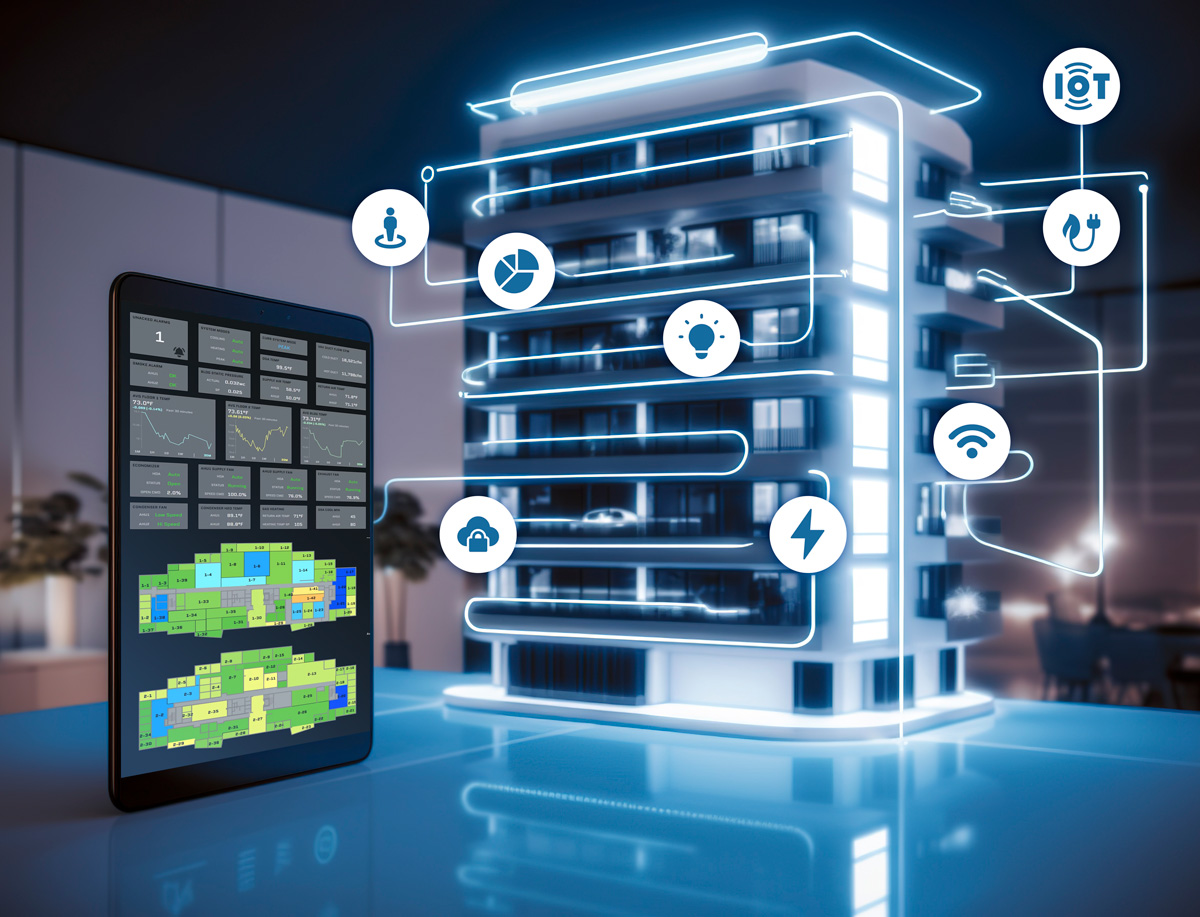
However, success doesn’t come from a single tool. It’s achieved by connecting the entire infrastructure — from data collection (MES), through production monitoring and control (SCADA), performance tracking (OEE), predictive maintenance (PdM), energy and building management (EMS/BMS), all the way to data processing and reporting (BI).

Optimalizácia nákladov vo výrobných podnikoch vďaka digitálnej transformácii | Cost optimization in manufacturing companies thanks to digital transformation

Why Traditional Cost-Saving Methods Are No Longer Enough

Conventional cost-cutting approaches — such as reducing staff, limiting overtime, or postponing investments — deliver only short-term results and often weaken a company’s competitiveness. These methods don’t address the root causes of high costs; they merely mask the problem temporarily.

Digital transformation, on the other hand, enables companies to identify and eliminate hidden inefficiencies directly within their production processes — from inaccurate planning and unnecessary downtime to excessive energy consumption. With modern systems in place, management gains a precise, real-time overview of production and can make informed decisions that lead to sustainable cost reductions and improved competitiveness.

Where Do Hidden Costs Lurk in Manufacturing?

💸 Without digitalized production processes, companies rely on manual data collection and paper-based planning. This leads to inefficient production management, delayed orders, or — on the other hand — excessive inventory levels.

💸 When remote control and real-time monitoring of equipment are missing, downtimes last longer than necessary. Without historical data, it’s also impossible to analyze the causes of failures and prevent them in the future.

💸 Without tracking machine availability, performance, and quality, companies lose the ability to identify bottlenecks and inefficiencies. As a result, machines operate below their potential, overall productivity drops, and costs rise.

💸 Without predictive maintenance, problems are only addressed after a breakdown occurs. Reactive maintenance means longer downtimes, more expensive repairs, and unplanned costs that could have been easily avoided.

💸 Without systematic monitoring of energy consumption and building systems, companies use more resources than necessary. Without optimization, energy bills rise — and the company risks failing to meet legislative or environmental requirements.

💸 Without proper data analysis and reporting, management makes critical decisions based on inaccurate or delayed information. The result: poor cost optimization, lower productivity, and a weakened competitive position.

What Does Cost Optimization Through Digital Transformation Look Like?

💰 MES (Manufacturing Execution System) connects automated production planning with real-time shop floor activity. It reduces costs by eliminating manual data entry, improving resource utilization, and preventing overproduction or delays.

💰 SCADA (Supervisory Control and Data Acquisition) enables real-time monitoring of production equipment and immediate response to deviations or failures. Historical data storage helps uncover root causes of problems and prevent them from recurring.

💰 OEE (Overall Equipment Effectiveness) measures the availability, performance, and quality of machines. It often reveals that equipment operates at only 50–60% of its actual potential. By increasing OEE, companies can achieve savings comparable to investing in new machinery.

💰 Reactive maintenance is costly and causes unnecessary downtime. In contrast, PdM (Predictive Maintenance) uses sensors and analytics to forecast failures before they occur. This lowers maintenance costs, extends equipment lifespan, and increases production reliability.

💰 EMS (Energy Management System) and BMS (Building Management System) monitor and control energy consumption and building operations in real time. They help reduce energy bills and operating costs while supporting compliance with environmental and regulatory standards.

💰 Business Intelligence (BI) acts as the layer that ties all systems together. It collects, analyzes, and visualizes data, giving management clear answers to key questions: Where do the biggest losses occur? Where can costs be optimized? Which measures bring the greatest savings?

Cost optimization doesn’t always mean budget cuts. It often means uncovering and eliminating inefficiencies, waste, and downtime. But this is only possible when a company works with accurate data and reliable tools. If you want to reduce costs, increase productivity, and prepare your business for Industry 4.0, the path forward lies in digital transformation.

Comprehensive Tailor-Made Solution from IoT Industries

At IoT Industries, we’ll help you every step of the way — from designing your data architecture, integrating systems, and connecting technologies to creating custom interactive dashboards tailored to your operations.
Contact us and discover how modern digital solutions can save your company tens of thousands of euros every year.

Why Choose IoT/IIoT Implementation with IoT Industries?

Traditional companies typically specialize in OT (operational technologies, such as production lines and devices) or classic enterprise IT systems. However, we are able to connect both of these worlds. Our unique expertise in integrating OT and IT allows us to deliver innovative solutions in digital transformation, enhancing efficiency, reliability, and competitiveness for manufacturing companies.

BAS (Building Automation System) dokáže vyriešiť najčastejšie problémy pri správe budov | BAS (Building Automation System) can solve the most common building management challenges

BAS (Building Automation System) can solve the most common building management challenges

Efficient building management is crucial for companies not only in terms of costs but also in productivity, safety, and sustainability. Despite this, many businesses still operate without a centralized system to optimize their building operations. The result is high energy costs, frequent technical issues, and inefficient management of various systems. However, BAS (Building Automation System) can provide a solution.

BAS is a system that centrally manages all key processes in a building, from lighting and heating to security and fire protection systems. It not only optimizes energy consumption but also helps prevent failures, enhances workplace comfort, and simplifies managerial decision-making.

BAS (Building Automation System) dokáže vyriešiť najčastejšie problémy pri správe budov | BAS (Building Automation System) can solve the most common building management challenges

Common Challenges in Building Management That Companies Face

❌ Uncontrolled Energy Consumption and High Operating Costs

Companies often receive only a summary energy bill without a detailed breakdown of where exactly consumption occurs and where waste happens. Lights stay on when not needed, production halls are fully heated even on weekends, and air conditioning may be set to inefficient temperatures. Without automation, these losses cannot be effectively identified and eliminated.

❌ Manual Management and Resulting Time Losses

Without intelligent automation, employees must manually adjust lighting, temperature, or ventilation in different areas of the building. This leads to inefficiencies, time losses, and frequent errors. In case of malfunctions or unexpected situations, the response time is too long, and the costs of problem resolution unnecessarily increase.

❌ Lack of Integration Between Systems

In most companies, lighting, HVAC, security, and heating systems operate separately without communication between them. When managers need a comprehensive overview of the building’s status, they must monitor multiple systems and applications, which slows decision-making and reduces operational efficiency.

❌ Inability to Meet Environmental and Regulatory Standards

With increasing ESG (Environmental, Social, Governance) requirements and new legislation on carbon footprint reduction, businesses face mounting pressure. Without accurate data on energy consumption and CO₂ emissions, it is difficult to meet required standards, potentially leading to financial penalties and a loss of competitiveness.

How BAS (Building Automation System) Solves These Problems

✅ Optimized Energy Consumption and Lower Operating Costs

The Building Automation System (BAS) monitors energy consumption in real time and automatically adjusts settings to eliminate waste. It can reduce heating in unoccupied areas, turn off lights in empty rooms, or adjust air conditioning based on outdoor temperature. The result is significant energy savings.

✅ Automation and Intelligent Management

Instead of manual adjustments, BAS ensures automated control of all systems based on sensors and predefined rules. Heating, ventilation, and lighting automatically adapt to the current building conditions without requiring employee intervention.

✅ Integration of All Systems into a Single Platform

BAS integrates all key building systems—lighting, heating, air conditioning, ventilation, security, and fire protection—into one platform. Managers gain a complete overview of the building’s status in a single interface, eliminating the need to switch between multiple applications. This enables faster and more accurate decision-making based on real-time data.

✅ Compliance with Environmental and Regulatory Requirements

BAS helps businesses monitor and optimize their energy consumption and emissions, making it easier to comply with ESG standards and legal regulations. Automated reporting simplifies the auditing process and ensures compliance with environmental requirements.

IoT Industries – Your Partner for BAS Implementation

Implementing a Building Automation System (BAS) requires expertise, the right technology selection, and customization to fit a company’s specific needs. At IoT Industries, we provide tailor-made solutions that include analysis, design, implementation, and long-term optimization of BAS systems. If you want to reduce costs, increase efficiency, and gain maximum control over your building management, contact us today to learn how BAS can help you achieve your goals.

Why Choose IoT/IIoT Implementation with IoT Industries?

Traditional companies typically specialize in OT (operational technologies, such as production lines and devices) or classic enterprise IT systems. However, we are able to connect both of these worlds. Our unique expertise in integrating OT and IT allows us to deliver innovative solutions in digital transformation, enhancing efficiency, reliability, and competitiveness for manufacturing companies.

Systémy BMS a EMS a ich vplyv na energetickú efektívnosť a dlhodobú udržateľnosť | BMS and EMS Systems and Their Impact on Energy Efficiency and Long-term Sustainability

BMS and EMS Systems and Their Impact on Energy Efficiency and Long-term Sustainability

In today’s business environment, which faces increasing demands to reduce costs and improve productivity, reducing energy consumption and optimizing building management are crucial. Despite this, many companies still operate without centralized systems, leading not only to higher costs but also to issues with flexibility, competitiveness, and compliance with legislative requirements. However, BMS and EMS systems can effectively address these challenges.

Systémy BMS a EMS a ich vplyv na energetickú efektívnosť a dlhodobú udržateľnosť | BMS and EMS Systems and Their Impact on Energy Efficiency and Long-term Sustainability

What does company management look like without BMS and EMS systems?

Imagine a company that does not yet use centralized systems for energy and building management. Managers receive an energy bill every month but see only the total consumption without a detailed overview of where energy is used the most and where the greatest losses occur.

In such companies, most consumption data is collected manually. Employees walk around meters, write down their readings on paper or document them with photos, and then transfer the data into spreadsheets. This process is not only time-consuming but also prone to errors. Moreover, it does not provide ongoing consumption information, so if there is an unexpected cost increase, the company only learns about it at the end of the month—by which time it is too late to address the issue.

In various operational modes, such as weekends or during downtimes, a system without automation lacks flexibility. Systems cannot shut down or switch to energy-saving modes when not in use. As a result, lighting, air conditioning, or heating continue to operate even when no one is using them, leading to unnecessary consumption that the company could otherwise easily optimize.

For example, in one company monitoring energy consumption, it was discovered that even during a complete production shutdown, energy consumption decreased by only 50%. This revealed that some systems remained active and consumed energy despite not being in use — highlighting the need for more effective automation.
Another problem is the lack of integration between individual systems. Lighting, heating, ventilation, security, and fire systems operate independently, requiring separate management. If a manager needs an overview of the entire building’s status, they must log into multiple applications, significantly increasing response time when addressing issues and reducing management efficiency.

With increasing demands to reduce carbon footprints and achieve higher energy efficiency, there is also greater emphasis on meeting environmental and legislative standards. Without a quality system for monitoring consumption, a company can easily exceed set limits or fail to meet ESG (Environmental, Social, Governance) requirements. These are criteria that assess a company’s environmental, social, and governance impact. This can lead to penalties and reputational damage. Companies that cannot demonstrate compliance with environmental standards may also lose competitiveness in a market where environmentally responsible partners and customers increasingly prefer to work with sustainable businesses.

For many companies, a key issue is also the allocation of energy costs among departments, production lines, or tenants, such as external operations (e.g., cafeterias). Without an automated system for consumption allocation, the company still has to rely on manual readings, which causes time delays and may lead to inaccuracies.

What are BMS and EMS systems, and how do they help solve all these problems?

BMS (Building Management System), also known as a building automation system, primarily focuses on monitoring and managing building equipment such as lighting, heating, ventilation, air conditioning, security, and fire systems. BMS provides a centralized overview of the status of all key systems and enables their automation according to various operational modes. This allows a company to optimize energy consumption and, in turn, reduce costs. EMS (Energy Management System) focuses on measuring and analyzing energy consumption to identify areas where a company can reduce its energy costs. EMS enables continuous monitoring of consumption and detailed analysis of data from individual sources. This helps companies not only optimize their overall energy consumption but also allocate energy costs across different operations. Although both systems can operate independently, the ideal solution is their integration, which provides companies with maximum benefits. Ignition, a platform used by us at IoT Industries, combines BMS and EMS into a single unified system.

How does Ignition help with BMS
and EMS?

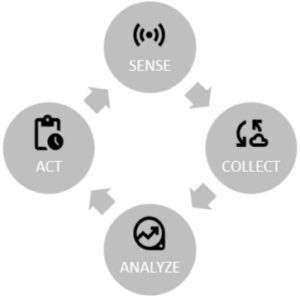
The Ignition platform provides a comprehensive tool for data collection, analysis, and automated management in real-time. This process consists of several key steps:

  1. Data Collection – Ignition can collect data from a wide range of devices and systems using protocols such as Modbus, BACnet, OPC UA, or MQTT. In the case of EMS, this includes data from measuring instruments that monitor electricity, water, gas, or heat consumption. For BMS, Ignition allows direct monitoring of devices such as lighting, air conditioning, or heating.
  2. Data Analysis – With clear graphs and visualizations on interactive dashboards, a company can analyze consumption trends, compare different periods, and identify areas where costs are highest. Within the EMS, the system allows for analyzing consumption down to the level of individual departments, production lines, or tenants, which simplifies cost allocation and facilitates financial planning.
    Practical Example: In one manufacturing company, a backup diesel generator automatically started after a power outage. When the main power was restored, the generator did not shut down, and because the old system sent too many notifications, employees failed to notice that the generator continued running. The diesel fuel was gradually depleted, and when the next power outage occurred, the backup source could no longer start. By implementing the Ignition platform, which centralizes data collection and analysis on a clear dashboard, managers can instantly see the current status of backup sources, other components, and data centers critical to the company’s operations with just one glance.
  3. Automation and Optimization – Ignition can automatically manage the operation of devices based on predefined rules or real-time data. For example, the system can reduce heating or turn off lighting during weekends or downtimes, thus optimizing consumption. This automation also ensures that the building operates efficiently without the need for manual intervention.
  4. Taking Action – The ultimate goal of data collection and analysis is to enable company management to take active measures based on current information. Ignition allows for quick and accurate decision-making, which helps prevent unnecessary costs and supports long-term efficiency.

    However, the entire process is not a one-time effort—it should be continuously evaluated and improved by repeating steps 1–4. In this way, the system is constantly refined, contributing to even higher levels of efficiency and sustainability.

Benefits of Implementing BMS and EMS Systems

Implementing Ignition as a platform for BMS and EMS brings immediate and long-term benefits to companies. The main advantages include:
  1. Reduced Energy Costs – Automated device management and energy consumption optimization help the company effectively reduce costs.
  2. Flexible Cost Allocation – Detailed monitoring enables fair distribution of costs among different departments, production lines, and tenants, while also facilitating financial planning.
  3. Compliance with Environmental and Legislative Standards – BMS and EMS help meet strict energy efficiency standards and promote environmental responsibility.
  4. Competitive Advantage – A modern energy management system is a sign of technological advancement and environmental responsibility, which can enhance the company’s attractiveness to business partners and customers.
For companies that want to gain insight into energy consumption, streamline building management, and maintain competitiveness, BMS and EMS systems are invaluable tools. Ignition combines the capabilities of these systems into a single platform that not only monitors and analyzes consumption but also automates and optimizes the operation of all key devices in real time. Investing in BMS and EMS provides companies with immediate cost savings, compliance with legislative requirements, and a sustainable path to long-term growth.

Why IoT Industries?

Traditional companies typically specialize in OT (operational technologies, such as production lines and equipment) or conventional enterprise IT systems. However, we are able to connect both these worlds. Our unique expertise in bridging OT and IT allows us to deliver innovative digital transformation solutions to clients, enhancing the efficiency, reliability, and competitiveness of manufacturing companies.