Najčastejšie úskalia implementácie IoT/IIoT a ako im predísť | The Most Common Pitfalls of IoT/IIoT Implementation and How to Avoid Them

The Most Common Pitfalls of IoT/IIoT Implementation and How to Avoid Them

In today’s world, where digital transformation is a necessary prerequisite for maintaining competitiveness, IoT (Internet of Things) and IIoT (Industrial Internet of Things) play a key role. These technologies enable businesses to collect, analyze, and utilize data to optimize processes, reduce costs, and improve efficiency.

However, the implementation of IoT/IIoT also brings certain challenges. If approached without a systematic plan, complications may arise that impact not only the progress of the project but also the long-term return on investment. In this article, we will outline the most common pitfalls that companies face before, during, and after implementing IoT/IIoT, and we will also provide specific steps on how to effectively avoid them.

Najčastejšie úskalia implementácie IoT/IIoT a ako im predísť | The Most Common Pitfalls of IoT/IIoT Implementation and How to Avoid Them

Why Does IoT/IIoT Implementation Often Become Complicated?

Complications Before Implementation

One of the biggest challenges is the lack of clearly defined goals and expectations at the start of the project. Many businesses know they want to leverage IoT to optimize processes, but they lack answers to key questions:

  • Why do we actually need IoT?
  • What problem are we trying to solve?
  • What specific outcome do we expect?

Businesses often perceive IoT as a goal in itself rather than a tool to achieve specific, measurable results. This misguided approach can ultimately lead to the project failing to deliver the expected benefits.

Complications During Implementation

Issues with Network Infrastructure

IoT projects heavily depend on reliable network infrastructure, which, however, is not a given in every location. While some areas have access to a robust corporate Wi-Fi network, others – such as remote locations or production halls with a large amount of metal structures – may face significant issues with connection stability.

In such cases, it is essential to use alternative solutions, such as:

  • Ethernet (wired connection) – ideal for locations where a stable network infrastructure with high speed and data transmission stability can be ensured,
  • GSM/Mobile networks – used for data transmission in areas without fixed connections,
  • LPWAN (Low-Power, Wide-Area Network) – low-energy technologies for long-distance data transmission, used in areas with limited coverage, including LoRaWAN, SigFox, or NB-IoT.

Although these solutions can address connectivity issues, they add to the overall complexity of the project – requiring specific hardware, and their implementation may increase costs.

IT Security and Approval Processes

Another common complication is the concerns of IT departments regarding the security of company networks. These concerns are understandable—protecting the corporate network is a top priority for any IT department. The most common requirements include:

  • Data encryption – ensuring that the data transmitted between devices and systems is protected,
  • Certification from trusted manufacturers – guaranteeing the quality and security of devices,
  • Data localization – some companies do not want their data to leave their internal servers.

Although these requirements are justified, the approval process can take weeks or even months, especially in large companies with complex internal processes.

A reliable IoT solutions provider should, however, consider these aspects from the early stages of the project. Our task is to ensure the selection of devices that meet security standards and to work closely with the IT department to expedite the process. A pilot project (Proof of Concept – PoC) is an ideal tool in this regard to verify the technical and security design before full implementation.

Complications After Implementation

After the successful implementation of IoT/IIoT solutions, the phase that determines the long-term success of the entire project begins – its daily use. Although modern IoT systems are designed with an emphasis on simplicity and intuitive user interfaces, effective utilization requires proper employee training. It is also crucial to ensure their long-term functionality through regular monitoring, verifying the accuracy of measured data, maintaining certain devices, and updating firmware.

How to Prevent These Issues?

1. Clarifying Goals and Expectations

IoT/IIoT implementation should begin by answering three fundamental questions:

  • What exactly do we want to achieve?
    • Do we need to refine energy measurement to optimize consumption?
    • Do we want to measure OEE (Overall Equipment Effectiveness) of machines that are currently not networked?
    • Are we interested in predictive maintenance using artificial intelligence to prevent failures and reduce downtime?
  • What technologies and processes will we use to achieve the goals?
    • This is primarily the responsibility of the supplier, who must design suitable devices, software solutions, and infrastructure to ensure the system works smoothly and reliably.
  • Why are we doing this? What results do we expect?
    • Do we want to reduce energy costs?
    • Increase the efficiency of machines and employees?

In this step, the supplier should help the customer clearly formulate their expectations. If the customer does not have specific expectations defined, it is necessary to work together to develop and fully understand them. For both the supplier and the customer, this is a crucial step – not only in terms of evaluating benefits but also for the design and development of the application itself.

2. Initial Audit and Solution Design

Every project should begin with a thorough analysis that includes:

  • Identification of devices to be connected to IoT/IIoT,
  • Network availability check, or the design of alternative solutions,
  • Selection of suitable hardware, which may include IoT modules (e.g., Advantech Wise), gateways (Ewon Flexy), and industrial PLCs (Siemens, Omron, Allen-Bradley, and others),
  • Definition of the types of data to be collected, their usage, and presentation in the IoT system.
    We use the proven and modern Ignition platform, which not only enables data collection and visualization but also allows for easy expansion with additional functionalities, such as SCADA, MES, EMS, BMS, and many other systems for managing and monitoring operations.

3. Pilot Project (Proof of Concept – PoC)

A pilot project allows for verifying the functionality of the solution on a smaller sample of devices or processes. It should include:

  • Connecting several production machines
  • Testing the network
  • Verifying data quality
  • Evaluating the initial results

This step minimizes the risk of issues and allows for identifying weak points before scaling the project to the entire operation.

4. Training and Long-Term Maintenance

The implementation of IoT/IIoT does not end with the deployment of the system. Following these next steps ensures that the systems will operate reliably and securely in the long term:

  • Employee Training: Thorough training on how to use the system, along with ongoing training when new features are introduced, ensures that the entire system will be used effectively.
  • Regular Monitoring: Monitoring whether all IoT devices are online and fully functional will be ensured by the Ignition platform. It includes a clear network monitoring overview via a web dashboard and email notifications that alert to any outages or unusual activity.
  • Occasional Data Accuracy Check: After a power outage or signal issues, measurement interruptions may occur. Once the system is restored, it may be necessary to compare the measured data from the devices with the data stored in the system to avoid discrepancies.
  • Device Maintenance: Devices with their own power supply, such as sensors using LPWAN technologies, may require battery replacement every few years, depending on the data transmission frequency.
  • Firmware Updates: Device manufacturers regularly release firmware updates that improve cybersecurity, increase reliability, and often introduce new features. Implementing these updates ensures that the system operates at peak efficiency and security in the long term.

Key to Successful IoT/IIoT Implementation

Implementing IoT/IIoT is not just about technology – it’s about proper planning, collaboration, and a long-term vision. Companies that implement these solutions with clearly defined goals and an experienced partner can achieve significant improvements in efficiency, cost reduction, and increased competitiveness. IoT Industries is ready to be your partner on this journey – from initial analysis to long-term support and solution expansion. If you want to take your business to the next level, don’t hesitate to contact us.

Why Choose IoT/IIoT Implementation with IoT Industries?

Traditional companies typically specialize in OT (operational technologies, such as production lines and devices) or classic enterprise IT systems. However, we are able to connect both of these worlds. Our unique expertise in integrating OT and IT allows us to deliver innovative solutions in digital transformation, enhancing efficiency, reliability, and competitiveness for manufacturing companies.

Systémy BMS a EMS a ich vplyv na energetickú efektívnosť a dlhodobú udržateľnosť | BMS and EMS Systems and Their Impact on Energy Efficiency and Long-term Sustainability

BMS and EMS Systems and Their Impact on Energy Efficiency and Long-term Sustainability

In today’s business environment, which faces increasing demands to reduce costs and improve productivity, reducing energy consumption and optimizing building management are crucial. Despite this, many companies still operate without centralized systems, leading not only to higher costs but also to issues with flexibility, competitiveness, and compliance with legislative requirements. However, BMS and EMS systems can effectively address these challenges.

Systémy BMS a EMS a ich vplyv na energetickú efektívnosť a dlhodobú udržateľnosť | BMS and EMS Systems and Their Impact on Energy Efficiency and Long-term Sustainability

What does company management look like without BMS and EMS systems?

Imagine a company that does not yet use centralized systems for energy and building management. Managers receive an energy bill every month but see only the total consumption without a detailed overview of where energy is used the most and where the greatest losses occur.

In such companies, most consumption data is collected manually. Employees walk around meters, write down their readings on paper or document them with photos, and then transfer the data into spreadsheets. This process is not only time-consuming but also prone to errors. Moreover, it does not provide ongoing consumption information, so if there is an unexpected cost increase, the company only learns about it at the end of the month—by which time it is too late to address the issue.

In various operational modes, such as weekends or during downtimes, a system without automation lacks flexibility. Systems cannot shut down or switch to energy-saving modes when not in use. As a result, lighting, air conditioning, or heating continue to operate even when no one is using them, leading to unnecessary consumption that the company could otherwise easily optimize.

For example, in one company monitoring energy consumption, it was discovered that even during a complete production shutdown, energy consumption decreased by only 50%. This revealed that some systems remained active and consumed energy despite not being in use — highlighting the need for more effective automation.
Another problem is the lack of integration between individual systems. Lighting, heating, ventilation, security, and fire systems operate independently, requiring separate management. If a manager needs an overview of the entire building’s status, they must log into multiple applications, significantly increasing response time when addressing issues and reducing management efficiency.

With increasing demands to reduce carbon footprints and achieve higher energy efficiency, there is also greater emphasis on meeting environmental and legislative standards. Without a quality system for monitoring consumption, a company can easily exceed set limits or fail to meet ESG (Environmental, Social, Governance) requirements. These are criteria that assess a company’s environmental, social, and governance impact. This can lead to penalties and reputational damage. Companies that cannot demonstrate compliance with environmental standards may also lose competitiveness in a market where environmentally responsible partners and customers increasingly prefer to work with sustainable businesses.

For many companies, a key issue is also the allocation of energy costs among departments, production lines, or tenants, such as external operations (e.g., cafeterias). Without an automated system for consumption allocation, the company still has to rely on manual readings, which causes time delays and may lead to inaccuracies.

What are BMS and EMS systems, and how do they help solve all these problems?

BMS (Building Management System), also known as a building automation system, primarily focuses on monitoring and managing building equipment such as lighting, heating, ventilation, air conditioning, security, and fire systems. BMS provides a centralized overview of the status of all key systems and enables their automation according to various operational modes. This allows a company to optimize energy consumption and, in turn, reduce costs. EMS (Energy Management System) focuses on measuring and analyzing energy consumption to identify areas where a company can reduce its energy costs. EMS enables continuous monitoring of consumption and detailed analysis of data from individual sources. This helps companies not only optimize their overall energy consumption but also allocate energy costs across different operations. Although both systems can operate independently, the ideal solution is their integration, which provides companies with maximum benefits. Ignition, a platform used by us at IoT Industries, combines BMS and EMS into a single unified system.

How does Ignition help with BMS
and EMS?

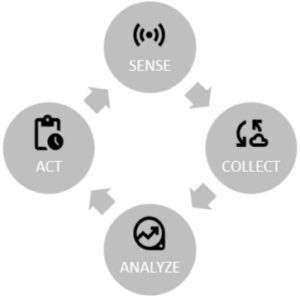
The Ignition platform provides a comprehensive tool for data collection, analysis, and automated management in real-time. This process consists of several key steps:

  1. Data Collection – Ignition can collect data from a wide range of devices and systems using protocols such as Modbus, BACnet, OPC UA, or MQTT. In the case of EMS, this includes data from measuring instruments that monitor electricity, water, gas, or heat consumption. For BMS, Ignition allows direct monitoring of devices such as lighting, air conditioning, or heating.
  2. Data Analysis – With clear graphs and visualizations on interactive dashboards, a company can analyze consumption trends, compare different periods, and identify areas where costs are highest. Within the EMS, the system allows for analyzing consumption down to the level of individual departments, production lines, or tenants, which simplifies cost allocation and facilitates financial planning.
    Practical Example: In one manufacturing company, a backup diesel generator automatically started after a power outage. When the main power was restored, the generator did not shut down, and because the old system sent too many notifications, employees failed to notice that the generator continued running. The diesel fuel was gradually depleted, and when the next power outage occurred, the backup source could no longer start. By implementing the Ignition platform, which centralizes data collection and analysis on a clear dashboard, managers can instantly see the current status of backup sources, other components, and data centers critical to the company’s operations with just one glance.
  3. Automation and Optimization – Ignition can automatically manage the operation of devices based on predefined rules or real-time data. For example, the system can reduce heating or turn off lighting during weekends or downtimes, thus optimizing consumption. This automation also ensures that the building operates efficiently without the need for manual intervention.
  4. Taking Action – The ultimate goal of data collection and analysis is to enable company management to take active measures based on current information. Ignition allows for quick and accurate decision-making, which helps prevent unnecessary costs and supports long-term efficiency.

    However, the entire process is not a one-time effort—it should be continuously evaluated and improved by repeating steps 1–4. In this way, the system is constantly refined, contributing to even higher levels of efficiency and sustainability.

Benefits of Implementing BMS and EMS Systems

Implementing Ignition as a platform for BMS and EMS brings immediate and long-term benefits to companies. The main advantages include:
  1. Reduced Energy Costs – Automated device management and energy consumption optimization help the company effectively reduce costs.
  2. Flexible Cost Allocation – Detailed monitoring enables fair distribution of costs among different departments, production lines, and tenants, while also facilitating financial planning.
  3. Compliance with Environmental and Legislative Standards – BMS and EMS help meet strict energy efficiency standards and promote environmental responsibility.
  4. Competitive Advantage – A modern energy management system is a sign of technological advancement and environmental responsibility, which can enhance the company’s attractiveness to business partners and customers.
For companies that want to gain insight into energy consumption, streamline building management, and maintain competitiveness, BMS and EMS systems are invaluable tools. Ignition combines the capabilities of these systems into a single platform that not only monitors and analyzes consumption but also automates and optimizes the operation of all key devices in real time. Investing in BMS and EMS provides companies with immediate cost savings, compliance with legislative requirements, and a sustainable path to long-term growth.

Why IoT Industries?

Traditional companies typically specialize in OT (operational technologies, such as production lines and equipment) or conventional enterprise IT systems. However, we are able to connect both these worlds. Our unique expertise in bridging OT and IT allows us to deliver innovative digital transformation solutions to clients, enhancing the efficiency, reliability, and competitiveness of manufacturing companies.
zber a analýza dát

BI Revolution – How business intelligence is changing decision-making in companies

Today, as companies face an increasingly fast pace of market changes and growing competition, the ability to make informed and accurate decisions is a key factor for success. Despite this, many companies still make decisions based on incomplete information, intuition, or personal preferences. Such an approach not only increases the risk of errors but also slows down responses to changes, significantly reducing competitiveness. This is precisely where Business Intelligence (BI) brings a revolution, fundamentally changing the way companies make decisions.

How does decision-making work without BI?

Imagine a company that still relies on manual data collection. Workers in production record the number of pieces produced, downtimes, or defects on paper forms, and at the end of the shift, this information is re-entered into Excel. It can then take several days for someone else to input it into the ERP (Enterprise Resource Planning) system, such as SAP. Even when the data finally makes it into the system, managers still do not have a complete picture of production performance.

Let’s say management finds out from the ERP system that during a work shift, the production line produced 1,000 pieces fewer than planned. Naturally, they want to find out why this happened. However, tracing the cause can take days or even weeks. Information on which part of the line caused the issue, who was operating it, or whether there was enough material or staff is not directly available in the ERP system. Management has to gather this information personally from employees, which further delays the process. Does this sound familiar?

This way of working is not only time-consuming but also prone to errors. Fatigue, inattention, or a misunderstanding of the situation can lead to inaccurate data. Additionally, some employees may be tempted to “embellish” the data to improve their performance or cover up problems that occurred during the shift. As a result, management is forced to make important decisions based on incomplete or skewed information. They often rely more on intuition or personal preferences, which can lead to inefficient processes, increased costs, and a decline in competitiveness.

Why is using a BI tool alone not enough?

It is also common for companies to have already implemented a business Intelligence tool, such as Microsoft Power BI. While it offers excellent capabilities for clear reports and visualizations, the main problem often lies not with the tool itself but with the data being fed into it. If the data is incomplete, inaccurate, or delayed, even the best BI tool cannot ensure high-quality, fast, and targeted decision-making.

How to ensure BI truly fulfills its purpose?

The implementation of modern systems, such as the industrial software platform Ignition, which we also use at IoT Industries, provides a solution that goes beyond simple data visualization. Ignition allows the automation of data collection directly from production equipment, minimizing the issues associated with manual data entry. For specific data that still requires manual input, the system offers electronic forms where workers can easily record this information. Ignition can also integrate data from various enterprise systems (ERP, SAP, MES, HR, quality, production, maintenance, warehouses, etc.) into one place for all relevant data – so-called Single Source of Truth (SSOT). This concept ensures that all data is accurate, available in real time, and serves as a comprehensive source of information for all management levels.

For instance, if a production issue arises, the shift supervisor can see what is happening in real-time and respond immediately. The production director can check the status of orders at any time, and even the CEO can review up-to-date financial indicators on a Friday afternoon without waiting for a report from their team. Everything is accurate, instantly accessible, and visualized in clear reports.

Benefits of BI for Companies

As you can see, the implementation of BI brings numerous benefits, which can be summarized into these five key advantages:

  1. Faster and More Informed Decision-Making: With access to up-to-date and accurate data, managers can make decisions faster and with greater confidence. They are no longer dependent on inaccurate or delayed reports and can respond to issues in real-time.
  2. Cost Reduction: Automating data collection and conducting precise analyses allow companies to identify inefficiencies in their processes. Whether it is unnecessary production downtime or incorrect resource planning, BI can detect and help eliminate these issues.
  3. Increased Productivity: Employees know that management has an accurate overview of everything happening. This simple fact increases productivity by approximately 10% even before any additional measures are taken.
  4. Prediction and Forecasting: Advanced BI systems can not only analyze past data but also predict future trends and needs. This means companies can better plan their capacities, orders, and optimize their resources.
  1. Improved Competitiveness: Companies that respond quickly to changes and base their decisions on accurate data gain a significant competitive advantage. Customers of such companies are also more satisfied because they have better insight into the status of their orders. This increases trust and competitiveness in the market.

Business Intelligence is now an integral part of modern companies. Tools like Ignition and Microsoft Power BI enable businesses to make decisions based on accurate, up-to-date, and comprehensive data. Transitioning from manual data collection and analysis to an automated system using BI brings immediate benefits—cost reduction, increased productivity, and enhanced competitiveness. For companies looking to keep pace with the times and respond quickly to market challenges, implementing BI is a key investment.

Why IoT Industries?

Traditional companies typically specialize in OT (operational technologies, such as production lines and equipment) or conventional enterprise IT systems. However, we are able to connect both these worlds. Our unique expertise in bridging OT and IT allows us to deliver innovative digital transformation solutions to clients, enhancing the efficiency, reliability, and competitiveness of manufacturing companies.

Protokol MQTT – Úvod do problematiky | MQTT Protocol – Introduction

MQTT Protocol – Introduction

What is MQTT?

MQTT (Message Queuing Telemetry Transport) is a communication protocol specifically designed for efficient and reliable communication between a wide range of devices, from simple sensors to complex control systems.

History and application

IBM developed MQTT in 1999, originally for monitoring pipelines and other critical infrastructures. In 2010, it was made freely available to the public. Since then, the protocol has rapidly expanded into other industries. Today, it is one of the key protocols for connecting IoT devices (Internet of Things).

How does MQTT Work?

At the center of MQTT communication is the broker, which acts as a central node for processing and distributing messages between clients. Clients are divided into two main categories:

  • Publishers: Devices that send data to the broker.
  • Subscribers: Devices that receive data from the broker.

The primary role of the broker is to ensure that messages from publishers are delivered to all relevant subscribers.

Advantages of MQTT

Reliability

One of the main advantages of MQTT is its ability to handle client outages without data loss. When a subscribed client goes offline, the broker stores messages for it until the connection is restored and the client acknowledges their receipt.

Flexibility

Messages in MQTT are directed to specific topics, providing a high degree of flexibility and scalability. A single message can be distributed to an unlimited number of recipients, allowing for efficient one-to-many communication. In this way, the same data can be made accessible to multiple devices or systems without unnecessary network congestion. MQTT also offers the ability to control who has permissions to subscribe to and publish to individual topics.

Efficiency

MQTT is optimized for low-capacity and high-latency networks, making it an ideal solution in all areas where fast and reliable real-time data exchange is crucial. Additionally, its implementation is quick and straightforward, facilitating integration with existing systems.

MQTT is our favorite protocol at IoT Industries, with which we have excellent experiences. It has established itself in the market as a key tool for modern IoT solutions, offering reliable, flexible, and efficient communication between devices. Integrating MQTT into your systems can significantly enhance the performance and security of your processes, taking your business to the next level